

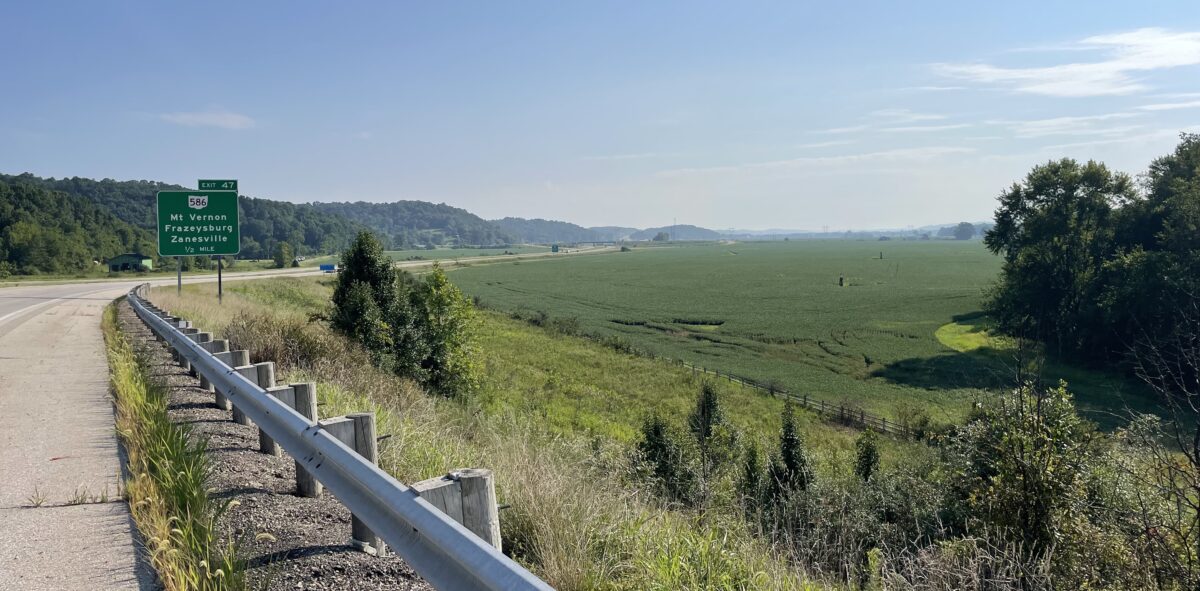
Big state grants for economic development projects in Muskingum and Coshocton counties are expected to generate jobs and tax revenue for those communities – and potential growth-management challenges for eastern Licking County townships.
The grant-funded projects could put Licking County in the position of being sandwiched between two industrial parks along the Rt. 161/16 corridor. First came the tech-heavy projects in western Licking County, including Intel’s chip-manufacturing campus that has drawn global attention to the New Albany International Business Park.
And now, there is the potential for significant growth to the east.
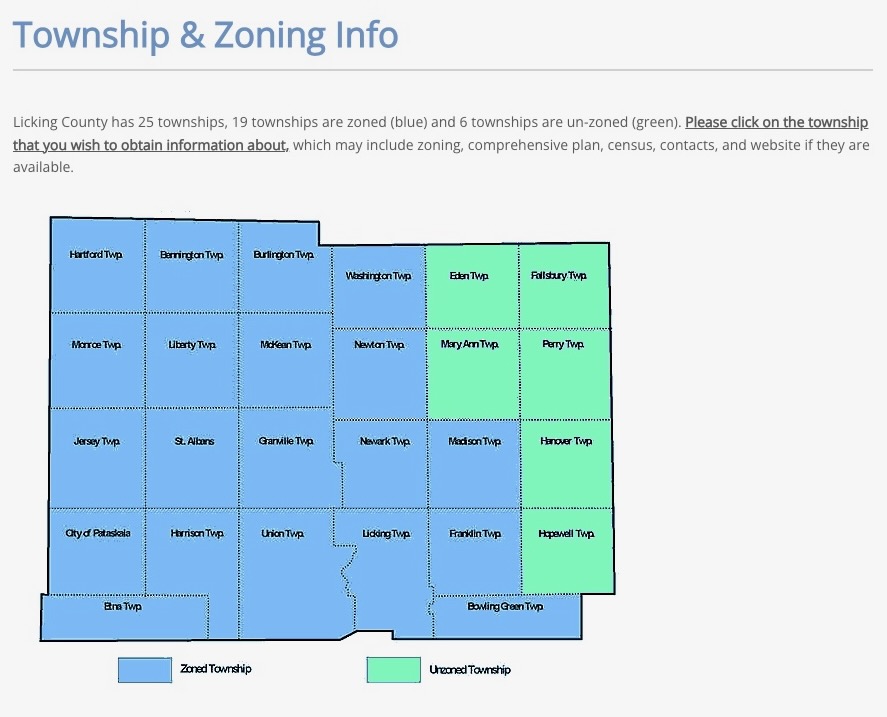
After seeing the growing pains faced by former farming communities in western Licking County, some folks in the rural townships along the eastern edge of Licking County – six of which currently have no zoning – are working to plan for and manage growth.
“This Rt. 16 corridor is going to grow,” said Michael McArtor, a Perry Township trustee. “It’s going to be a connector between Rt. 161 and I-77, and it’ll need some truck stops, eating joints and gas stations.”
Beyond that, he said, new jobs in the area will mean more people will want to live in the vicinity, and eastern Licking County is attractive because of its proximity to Rt. 16; its rolling, wooded hills; its low-density, agricultural character; and its relatively low cost of living in central Ohio.
That’s why Perry Township has been working on a proposal for zoning to help manage future growth. The trustees had hoped to put the zoning issue in front of voters this fall, but they pulled it from the ballot because the ballot language was confusing and needed some editing, McArtor said.
Perry, Madison and Hanover townships, and the Village of Hanover all have been working with Neighborhood Strategies, a central Ohio consulting firm, on planning ways to manage growth and development.
“They have been talking between townships to have a seamless connection between the communities,” said Stephanie McManus, managing principal with Neighborhood Strategies, which is working with all four of the governmental entities. “They meet quarterly to discuss the issues as a region – each working independently on their community’s plans, but also working together. They don’t always agree, but they work it out.”

She said the leaders of the townships and village saw what happened in western Licking County, where rapid-fire development projects caught some communities off guard and unprepared to manage it.
“They decided they needed to get prepared for development,” McManus said of leaders on the eastern side of the county. “It’s a very beautiful setting and attractive for residential or commercial development.
“They are a little concerned about what’s happening to the east, but maybe not as much as they might have been, because they have been working to prepare for this for several years,” she said.
State grants fuel development
In July, the Ohio Department of Development announced grants totalling nearly $80 million for water, sewer and road projects to spur commercial and industrial development on nearly 1,200 acres in Muskingum County, just east of the Licking County line, and more than 1,000 acres around the former American Electric Power Conesville power plant in Coshocton County.
The Coshocton County Port Authority was awarded $58,752,504 in support of the Conesville Industrial Park project. The funding will be used for roadwork, utility upgrades, and water and wastewater improvements to help prepare the site for future development.
The Zanesville-Muskingum Port Authority was awarded $20,701,384 to provide water and sanitary access to 600 acres in Jackson Township, within the Frazeysburg development area. The funding will support new public water and wastewater infrastructure to serve the site, including a water treatment plant and a wastewater treatment plant.
The grants were among more than $225 million awarded through the “All Ohio Future Fund” to improve infrastructure at sites in Coshocton, Lorain, Montgomery, and Muskingum counties.
“When major corporations are looking for somewhere to build, they want sites that are prepped and ready for construction,” Gov. Mike DeWine said in July in announcing the grants. “By investing to build infrastructure at the Conesville, Lorain, Dayton, and Frazeysburg sites, we’re making Ohio more competitive and positioning those regions to attract projects that create good-paying jobs and boost the state’s economy.”
Lt. Governor Jim Tressel said the state is “laying the groundwork for future jobs and economic development in these communities. We’ve already generated interest in these locations, and by proactively preparing them with needed infrastructure, these sites won’t be vacant for long.”
Muskingum County
As described on the website of JobsOhio, the state development office, “the Muskingum County development site is a flat, unique +/-664-acre site with excellent access to State Route 16.”
This Muskingum County land was part of a vision by the late basket-weaver turned home-goods mogul, Dave Longaberger, to create a basket-themed attraction stretching from the seven-story, basket-shaped home office in Newark deep into his home county to the east.
The land is at the intersection of Rts. 16 and 586, and “there are +/- 90 contiguous acres to the west of State Route 586 (Black Run Road) and +/-575 contiguous acres to the east of State Route 586,” the JobsOhio site says, adding that “additional acreage may be available up to 1,180 total.”
The Columbus & Ohio River Railroad runs along the site’s southern boundary, AEP has a large electrical transmission line crossing the site, natural gas transmission lines are nearby to the south, and a data trunk line runs along Rt. 16.
The only things missing were water and sewer lines to what are currently soybean and corn fields.
Eric Reed, executive director of the Zanesville Muskingum County Port Authority, said the nearly $20.1 million state grant is a game-changer in marketing the site to developers.
He said the land has been on the market for several years but got little traction from potential buyers because it lacked water and sewer service.
Reed said it will take at least a year to develop plans for the water and sewer lines before construction can begin. Muskingum County currently has five other business parks, but this one has the potential to be the largest when built out.
“That area is prime for development,” he said. “With infrastructure in place and access to roadways and housing, it’s a great opportunity.”
Another pitch by JobsOhio in selling the property is that “the direct highway access not only provides users with the ability to tap into a skilled workforce in Muskingum County (and adjacent communities), but also the nearby Columbus market to the west.”
Coshocton County
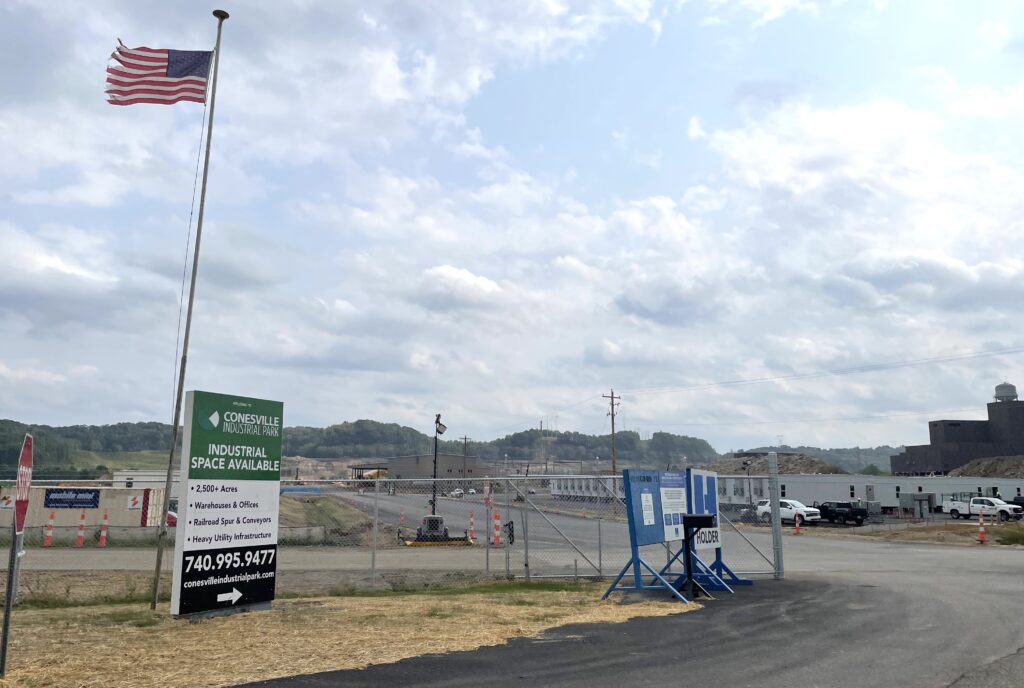
About 30 miles east of Licking County, leaders at the Coshocton County Port Authority are thrilled about the nearly $59 million grant that will allow it to run water and sewer lines to the 2,400-acre site of the former AEP Conesville electric-generating plant that shut down in 2020 and has been demolished.
The grant also will allow for construction of roadways that will provide direct routes to the site from Rts. 16 and 83, said Tiffany Swigert, executive director of the Coshocton County Port Authority.
“We’re working with the Ohio Department of Transportation, the railroad that serves this area and the county engineer to find the most direct routes possible,” she said.
She said the owner of the property, the Frontier Group of Companies, based in Buffalo, New York, has more than 1,000 acres of developable land on the market.
“We’re actively marketing 700 acres right now,” Swigert said. “To have that kind of acreage and capacity there has brought new hope to the Coshocton community to bring in some nice, diverse industry. We have had some really great conversations with companies in a diverse group of industries.”

The tall stacks at AEP’s Conesville plant were a fixture on the landscape of Coshocton County for 62 years. The plant and nearby coal mines provided jobs, and the plant contributed significantly to the local tax base.
All of that is gone now, along with some other companies that also provided good-paying jobs close to home for Coshocton County residents.
“We have a workforce leaving our county every day, and we would really like to give them opportunities here – and give them a 7-minute commute rather than 45 minutes,” Swigert said.
Some legacy companies that stayed in Coshocton County are growing. “They’re hiring, and it feels energizing and exciting to the community,” Swigert said.
And if the state grant results in more industries moving to Coshocton, it will help keep the next generation close to home, she said.
“Sixty percent of our high-school juniors go to the career center,” Swigert said. “The school is providing the curriculum here to train our workforce for jobs here – and in some cases, getting them on the floor in those jobs before they even graduate.”
“These are the kiddos we believe will stay here,” she said. “They are going to be buying houses in their 20s. My son is one of them. He stayed here, has a good job and bought a house.”
Next on the horizon is working with state leaders to promote the Rt. 16 corridor from its western end at Granville to I-77 and beyond, Swigert said.
It’s a four-lane roadway across most of that 60-mile route – except for about 10 miles of two-lane roadway from near Dresden to Coshocton – and a limited access highway for a portion of the route. But it still has traffic lights at intersections in Licking and Coshocton counties that slow traffic in places such as Newark and Coshocton.
“When you’re looking at the Rt. 16 corridor – that’s the Columbus to Pittsburgh corridor – it is a very under-utilized corridor,” Swigert said, adding that the port authority continues to talk with ODOT and partners in other counties about how to improve traffic flow and access.
“At the end of day,” she said about development along the Rt. 16 corridor, “what happens in Muskingum County is a benefit to Coshocton County and vice versa. We’re all cheerleaders for each other.”
Alan Miller writes for TheReportingProject.org, the nonprofit news organization of Denison University’s Journalism program, which is supported by generous donations from readers. Sign up for The Reporting Project newsletter here.