

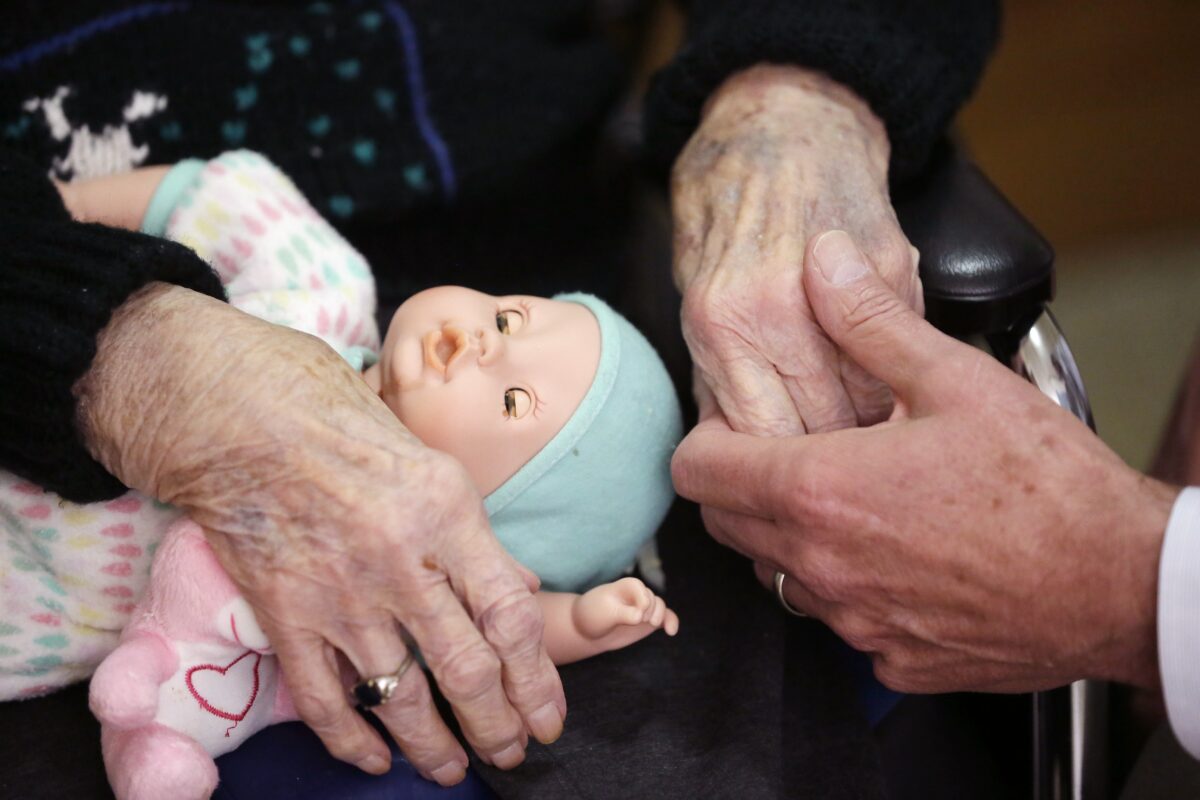
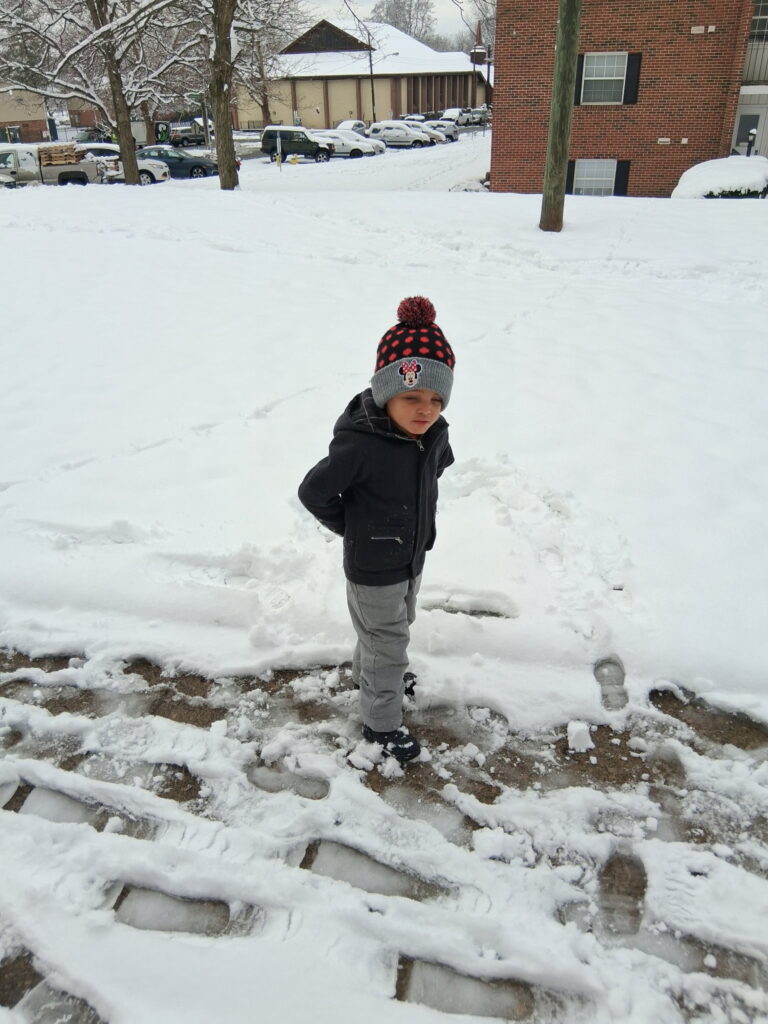
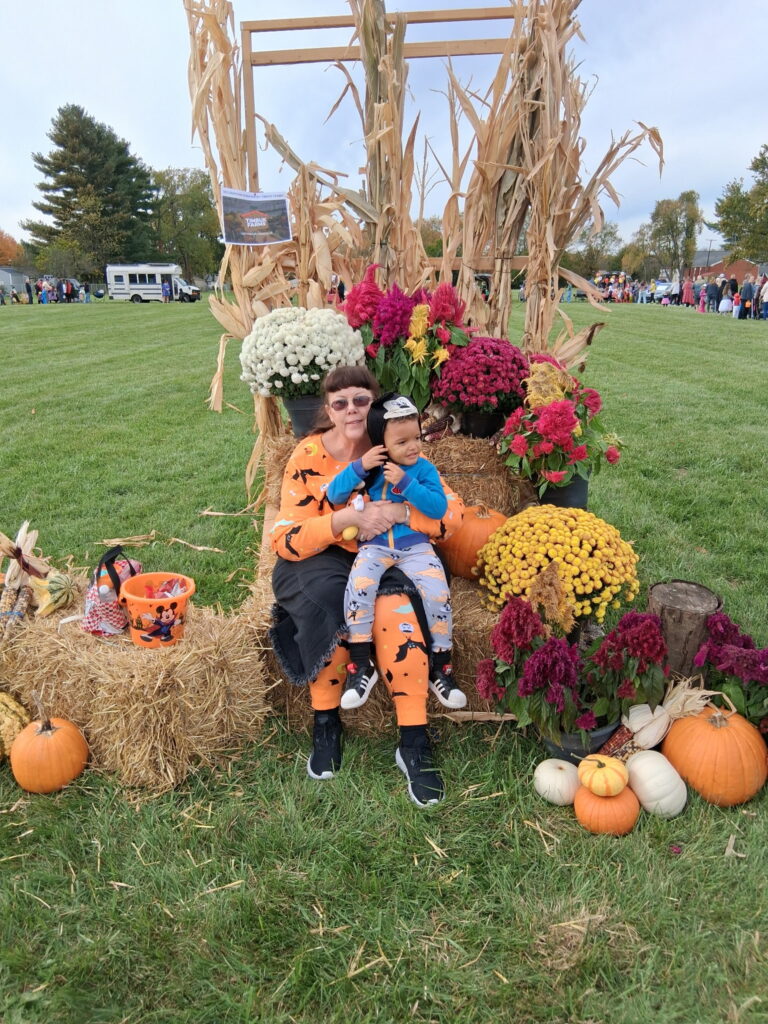
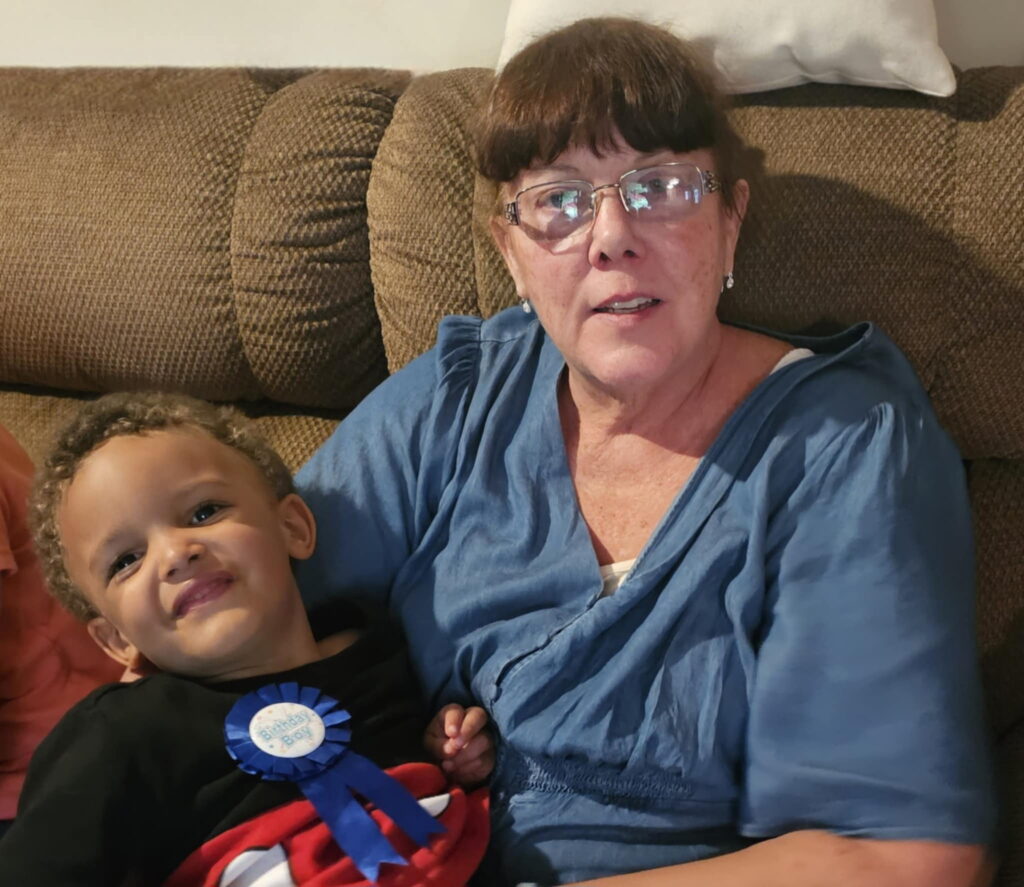
Ronda Maines knows the little boy she’s raising, Kamden, loves Mickey Mouse. His wallpaper is covered in big mouse ears. When it gets cold, he sports his Minnie Mouse hat. And this year, the 3-year-old went as Mickey Mouse for Halloween.
Someday, Maines hopes to take him to Disney World to meet Mickey.
But she worries that day will never come. At 62, she’s struggling with her health – and never anticipated she would be raising Kamden, her grandson, at her age.
Maines is not alone in her struggle: An estimated 1 in 3 grandparents – 3,883 people – in Licking County are living with and raising their grandchildren, and many of them are the sole caregivers for those grandchildren under the age of 18.
According to a community needs assessment report from Licking County Aging Partners released earlier this year, 3,883 grandparents in Licking County are living with their grandchildren. One in three grandparents are responsible for raising their grandchildren, with or without the parents in the house. Of grandparents who are responsible for their grandchildren, 42.1% percent are 60 or older and 15% percent have an income that is below poverty level.
“It’s a real quiet phenomenon in our communities,” said Kim Hosler of Licking County Aging Partners. “You’ve got to figure – it’s probably a lot of single parents that are maybe enlisting the support of their own parents to help them. They might be living with them, they might be providing support, but they care for them. For a majority, they’re saying that they’re the primary care provider.”
Maines is the sole caregiver for Kamden.
“I’ve had him since the day he was born,” Maines said. “I went a year through children’s services and all the courts and all the things I had to endure to take care of him. But that’s my blood. I won’t let some stranger take care of my baby. I need my grandson.”
Kamden was born in 2022.
According to records from the Licking County Court of Common Pleas, Maines was designated the “primary residential parent” of Kamden on June 1, 2023.
The decision to grant custody of a child to a non-biological parent through the court is not one that is made lightly. According to court documents in Kamden’s case, “reasonable efforts were made to prevent the need for the removal of the child and the continued removal of the child from the home. Such efforts include, but are not limited to, a case plan has been developed, locations efforts were made, recommendations have been made for substance abuse treatment, efforts have been made to conduct in person meetings and alternative placements have been explored.”
“He’s been a godsend,” Maines said. “He’s a beautiful little boy. He makes me happy. We travel, me and him. We do everything together. He is my little sidekick.”
But she’s actively looking for a new place for Kamden. She’s worried she won’t live long enough to provide for him.
“With my health issues, I’m probably going to have to give him up, because I got more years behind me than ahead of me,” Maines said plainly.
She has Graves’ Disease, an autoimmune disorder that can cause problems with the heart and bones, and she has a compromised immune system. Plus, she had heart surgery in February and began suffering from symptoms related to her health issues in April. She takes precautions but isn’t sure they’re enough. So she’s getting things in order, just in case.
“I’ve had a beautiful life,” she said. “I’ve been very blessed. Got to see some beautiful things in this world. And if God would take me, I’m ready. I just want Kamden to be taken care of.”
Maines, not currently able to work, is living on a fixed income with necessary appointments and procedures to monitor her health. She can’t afford a sitter, so she sends Kamden to her family friends for two or three days each month. In this time, she schedules all of her appointments.
Her daughter lives in an apartment close by. As the custody agreement states, she is able to visit Kamden. When she gives them a call to say she’s coming over, Kamden gets excited. The 3-year-old waits at the door for his mom.
“Where’s mommy?” he will ask Maines. Maines said his mom doesn’t always show up.
“Sometimes, I wonder if I did more harm than good by taking care of him, because she [Kamden’s biological mom] knows he’s being taken care of. She said, ‘Well, you won’t let me be a mom,’” Maines said. Then, her voice quiets. “I never stopped [her]. I never stopped her from being a mom.”
Each time her daughter calls, Maines has to prepare herself before she answers the phone.
“I hate what she’s done to our family, but I don’t hate her. She’s my child. I want her well,” Maines said, with a voice crack and tears rolling down her cheek.
Their relationship is strained. They fight a lot. They yell. But despite everything, Maines wants her daughter to get the help she needs.
“It’s sad; it has destroyed my life. There ain’t a minute that goes by that I don’t pray for her or think about her. Is she hungry? Has she got clothes? This is heartbreaking.”
Maines receives Social Security and money through TANF (Temporary Assistance for Needy Families) from the state of Ohio for Kamden. Those benefits last 36 months, and she has about three months left. She had money saved from when she was working. She doesn’t spend money on things she doesn’t need and always makes sure to use coupons. But still, finances are hard, especially around the holidays.
“I’m not going to have any money to buy him anything for Christmas,” she said. “He doesn’t know what Christmas is.”
For her, doing good means being able to pay the bills and put food on the table. She isn’t able to do much more.
As for her support system: “It’s me, him, and the good Lord above,” Maines said.
Shelli Barnhart and her two girls
Shelli Barnhart is a 57-year-old from Heath who is raising her two granddaughters. Although they are biologically her grandchildren, she calls the 5- and 8-year-old girls her daughters.
“When the oldest was at the age of 5, they chose to call me mom. For their mental health and for their stability, because I was doing all the things of a mother figure, I allowed them to make that choice and call me Mom,” Barnhart said. “They’re my girls.”
Barnhart’s son is the girls’ biological father. Both he and his wife were struggling with drug and alcohol problems.
“The children would’ve been victims of that situation to some extent, so I took on the responsibility,” Barnhart said.
Both parents and the two girls lived in Barnhart’s household at one point, but by the time the youngest was 6 months old, and the oldest was 3 and a half, neither parent was in the household. Barnhart said she had primary custody of her girls starting in 2018, although it wasn’t until October 2021 that she and her husband, Dan, received permanent legal guardianship.
“I think sometimes there’s these underlying criticisms of, ‘Why aren’t you making the parents be responsible for that?’ But the problem with that is that even as parents get healthy, you don’t know how long that’s going to last or whether you can trust that,” Barnhart said with a twinge of concern in her voice. “My focus is more on the impact on the kids.”
Her girls go to a private school in Licking County, and Barnhart is a remote employee. She used to travel for work, but coordinating with sitters and child care became too difficult.
She says her day centers around her girls. Working remotely, she can get her girls up and off to school, where she volunteers twice a week.
“It’s always a joy to see them and their friends during the day,” Barnhart said. “They have some extracurriculars that, since I’ve been remote, I’ve been able to get involved in. They do swimming, they dance and they do gymnastics.”
Barnhart shared that an unforeseen impact of raising her grandchildren has been the financial cost of child care.
“Child care, for the most part, is as much or more than my mortgages. And so to continue that at a later stage of life makes it difficult to then be able to set money aside for retirement. You would expect to have bigger and larger financial freedoms at this age,” Barnhart said.
Read more: More Licking Countians are struggling with economy, housing, childcare costs
And now, the cost of child care is higher than ever. According to a report from Child Care Aware of America, the average cost of center-based child care in Ohio is $13,780 per year for infants and $12,376 per year for toddlers. Even family-based child care has the average cost of around $10,000 per year.
And like in Barnhart’s case, when child care is needed for more than one child, the costs can often exceed the average cost of housing in Licking County.
Although Barnhart emphasized that she is blessed with an income that can handle the added financial responsibility, she thinks the county could implement programs to provide more financial assistance for child care.
“The state gives a stipend when you don’t get child support,” she said. “You either get child support or you get a stipend from the state, but over the summer, it didn’t even cover a fourth of what my child-care costs were.”
Barnhart said that since so many grandparents are doing this, more assistance would help ease difficulties of many in the county.
“Not that we wouldn’t pay anything, but that we would have assistance in that [child care] to take off some of that burden,” Barnhart said. “I think that would’ve been helpful.”
She prioritizes open communication between her and her girls, even on tough topics. They know they have a biological mom, but they haven’t seen her in four years.
We’ve talked about, ‘Well, your mom loves you, but she doesn’t know how to be a mom every day.’
Shelli Barnhart
Recently, Barnhart shared, her girls asked her if she got along with their biological mom. She responded to them honestly. “Yeah, we used to do all kinds of things together,” she told them. “But she had her issues, she couldn’t stay with us. She couldn’t be a parent.”
Barnhart reminds her girls that she is blessed to be able to care for them. She’s more active at this stage in her life because of them. She gets to cook with them, and spend time with them. But most of all, they have given her a sense of purpose.
“I would say that there is much of an emotional plus and benefit to me as I am to them. The joy and stability and all of those things have given me a purpose.”
According to Barnhart, her girls are stable and adjusted, but her kids haven’t had to move from house to house since they were old enough to remember. This makes her situation different from other families in similar circumstances, she said. Their primary caretaker changed, not their household. Their dad is still involved in their life, in a limited capacity. Together, they treat their normal as normal.
“My grandkids are not a burden,” she said confidently. “It’s not easy, but it’s not a burden.”
Margaret Jones and Owen
Editor’s note: The names in this story have been changed. Anonymity is rare in our reporting, but in this instance, The Reporting Project editors determined it was warranted to protect the privacy and identities of children and families undergoing extraordinary circumstances.
In July 2018, Margaret Jones got a call from her 8-year-old grandson, Owen.
The boy would call her and ask her to pick him up when his biological mom and her boyfriend were incapacitated from drug use. After the call that came in July, Jones knew it was time for her to step in.
Now 58, Margaret said that at the time, she represented herself in court. An attorney was too expensive, and she wanted to act fast.
“Thank God for Google,” she said with a laugh.
The final hearing was in December 2018, and she was granted permanent legal guardianship.
Owen’s biological mom’s boyfriend lived with him from the ages of 4-8. During this time, Owen was abused both mentally and physically. Almost 7 years later, the trauma still affects him daily.
Jones still holds onto the guilt that she didn’t notice for four years.
His mom is in recovery now, and she’s expected to graduate from a treatment program soon. Jones can’t bring herself to attend the ceremony.
“You would think the goal was to get them back together,” she said. “Now we’re here, it should be like the yellow brick road. And it’s troublesome to him.”
Jones wants what is best for her grandson. She is worried about him. Owen struggles with separation from Jones. Kids at school tease him about his trauma. He’s a good kid, Jones said, but sometimes he acts out.
Children who are victims of domestic violence and abuse are at “serious risk for long-term physical and mental health problems” that often present as behavioral issues, according to the federal government’s Office on Women’s Health.
“It’s hard, because you don’t know what the story’s going to be. It isn’t a storybook. That’s a difficult part, because you just want the kid to be happy. This is what we’ve worked for,” Jones said.
For Owen, grandma’s house used to be a sanctuary. Now, grandma plays a different role. Jones explained that she can’t be a typical grandparent to Owen. She can’t ignore a bad grade and give him popcorn, or ignore him acting out. Her role changed to that of a parent. Even after seven years, she still struggles with it.
“That’s a lot to keep from somebody you love,” she said. “I’m the one that saved him. I’m his savior, but yet I’m his punching bag, too,” she said. “They don’t have their mom or dad. Whoever they’re taken from, it hurts as a kid.”
No matter family adversity children have experienced, their parents are still their parents, a bond that holds tight, Jones said.
Jones emphasized that even though she has already raised children, raising her grandchild is different. People tell her, ‘I don’t know how you do it,’ to which she responds, “in my life, you don’t have a choice.”
At 15, Owen has grown a lot since he’s been with Jones. But she knows both she and Owen will carry this experience with them forever.
“I don’t even know afterwards if the grandparents’ life’s going to be free,” Jones said. “I don’t think I’ll ever be, because I’ll always have that part of the trauma that he went through.”
She is happy her daughter is in recovery, but she hasn’t forgiven her.
“We do it for the children, and then it’s just so hard when it’s your loved one doing this, the one that you raised – you raised her not to do this stuff.”
Owen recently had his first weekend visit with his biological mom since he’s been in Jones’s custody. Jones’s daughter is at the stage in her recovery program where visits are allowed. She came to spend time with Owen for Thanksgiving and is planning to visit on Christmas morning.
“I told him, for now, we’re just going with the flow to see,” Jones said. “It’s all about him.”
In the past seven years that Jones has been taking care of Owen, he’s grown. They have a household routine to help with hygiene and eating. Slowly but steadily healing, he is no longer aggressive toward other people, all trauma-informed behavior a result of past experiences. Once Jones had him, she had to teach him he was safe and that he was loved.
Maines, Barnhart and Jones are only three of 3,883 grandparents in Licking County raising their grandchildren. None of them expected to be raising a child at this point in their lives. And yet, they are. They take their kids to school, have hard conversations, put food on the table and raise them.
But most of all, here they are giving these children their constant unconditional love and support.
Resources for grandparents raising their grandchildren:
Ohio Grandparent/Kinship Coalition: https://ohiograndparentkinship.org/resources/
This organization is a coalition for kinship caregivers, including but not limited to grandparents, and advocates. Their resources page compiles a list of Ohio specific information and support.
National Youth Advocate Program: https://www.nyap.org/ohio
An organization focused on community based advocacy. This site has Ohio specific resources.
Licking County Aging Partners: https://www.lcap.org/resources
Licking County Aging Partners aims to improve the quality of life for Licking County seniors.
Licking County Children and Families First Council: https://www.lcfamilies.org/about-3-1
A Newark based organization, devoted to family support offers a support group for caregivers of children with needs such as mental health, developmental disabilities, health and more. This is not just for grandparents, but is open to all caregivers.
Ohio KAN (Ohio Kinship & Adoption Navigator): https://ohiokan.ohio.gov/
An Ohio program that helps kinship and adoptive caregivers find resources and navigate the legal system. Individuals can call (844) OHIOKAN or (844) 644-6526 to speak with an individual one on one.
Central Ohio Area Agency on Aging (COAAA): http://coaaa.org/
This organization published an extensive guide for kinship caregivers, including grandparents.
Licking County Library Pass: https://www.lickingcountylibrary.org/forms/library-card-request/
A Licking County Library membership has discounted and free experiences for members. For example, with one library card, 6 people can get into Dawes Arboretum for free.
This story was updated at 4 p.m. on Monday, Jan. 12 to correct the spelling of Kamden’s name and to include additional information from court records.
Ella Diehl writes for TheReportingProject.org, the nonprofit news organization of Denison University’s Journalism program, which is supported by generous donations from readers. Sign up for The Reporting Project newsletter here.