

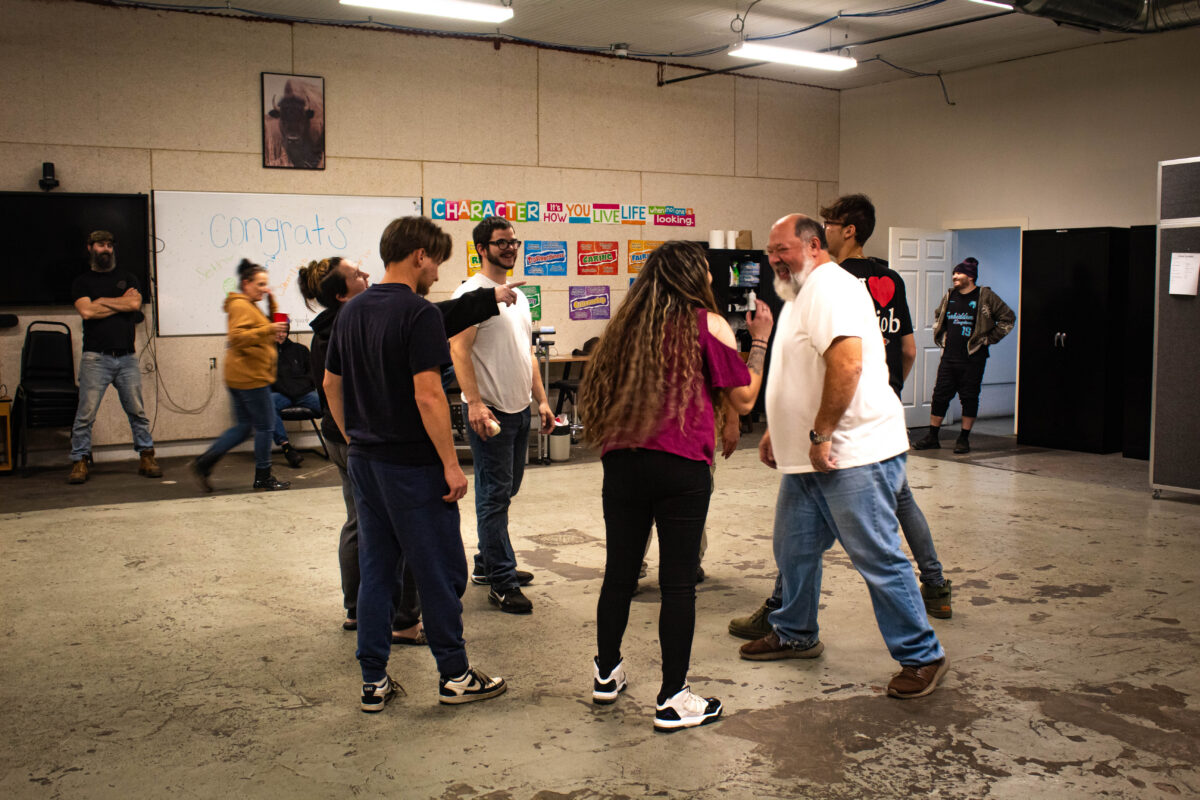
It was a big day for Seth Newell, Heavan Lehman, Carmin Church and Brian Moss as they read their graduation speeches for what may have been the last time. Cheers and applause rattled the brick walls of the Licking County Day Reporting—celebrating the completion of the four-month program.
“I feel great today,” Newell said. “I feel better than I felt in 31 years, honestly.”
Newell’s family came to support him as he held his certification with pride. After 15 years of dealing with substance use disorder and multiple felony counts—things are beginning to look up.
“I remember most nights I sat there and I was so numb,” Newell said. “I would cry because I just wanted to feel something.”
The Day Reporting program’s objective is to provide a therapeutic alternative for defendants in place of jail time. That therapeutic alternative is critical to breaking the cycle of recidivism, according to the National Institute on Drug Abuse (NIDA).
“An individual’s best or only option to receive addiction treatment should not have to be during incarceration,” according to a 2024 NIDA blog post. “In an ideal world, treatment and prevention systems in the U.S. would proactively address social drivers of health and mental health needs to stop the cycle between addiction and incarceration.”
They are evaluated to complete classes based on their needs.
Many of the participants who struggle with behavioral issues—such as violating suspension– have to be interviewed by an administrator. If they are accepted they will be court-ordered into the program through the Licking County Common Pleas Court and the Licking County Municipal Court.
That programming – which includes a wide range of classes like anger management classes, art journaling, mental health care, drug and alcohol counseling and GED classes over a 12-week period – is designed to help participants develop life skills and healthy coping mechanisms in which help them successfully transition back into the real world. Classes are held Monday through Friday from 8:45 a.m.-4:15 p.m. for participants without GEDs or high school diplomas, and from 10:45 a.m.-4:15 p.m. for participants with them.
Read more: Writing and rewriting the self
After four months of classes and counseling, participants like Newell, Lehman, Church and Moss celebrate their graduation from the program. These graduation ceremonies happen frequently in Licking County.
Program director Whitney Babbert acknowledged how important it is to help the participants get back on their feet.
“These people aren’t used to being up on time to get somewhere, so it really helps prepare them for just life in general, as a productive member of society,” Babbert said.
Babbert has been a probation officer for 11 years. She supervises individuals who are considered at high or very high risk of substance use disorder and severe mental illnesses.
“It’s just a good way to get people in here, it provides them that structure and the accountability that they lack when they’re out there in active use,” says Babbert.
The graduates were beyond ecstatic to complete the program. They all received gift bags with a various assortment of goodies.
Church shared her excitement as well. She was incarcerated for almost four years. Now, she is three years and eight months sober with a house in her name.
“Since I’ve been here in just four months, I’ve gotten my income back [and] I’ve got to live on my own,” Church said. “I’ve rebuilt connections with my family. They trust me all over again. They show me so much love and support. It’s been absolutely amazing.”
Church’s goals moving forward are to finish furnishing her house, pursue her GED and continue attending support groups.
“It takes a lot of work everyday, just take baby steps. You know?” Church said.
Day Reporters can be readmitted into the program instead of facing jail time. Lehman has experienced what it was like to return back to the program.
Upon re-entry, Lehman was able to recognize red flags, set boundaries, and utilize improved communication skills.
“I needed to change my language, so that I could change my actions, because you have to be aware of negative behavior and thinking to change it,” said Lehman. “I feel good. Accomplished for sure.”
During the speeches, Moss talked about his battle with drug use. He shared his past, stating that he would get high because, “that’s what the cool kids did.”
“I never thought I would stand here 123 days clean,” he said.
With journaling, learning about coping skills and looking at life with a positive mindset, Moss stands here today with confidence and a certification of completion.
“I’m proud of myself,” Moss said. “I really am.”
As the ceremony came to a close, graduates hugged friends and family members with tear-filled eyes. They weren’t sad, but overwhelmed by the realization that hard work does pay off—marking their growth.
“To have feelings today is like a huge accomplishment for me,” Newell said. “I can feel love, I can feel happiness, joy and sadness. I’m glad that I can actually feel something other than nothing.”
Brie Coleman writes for TheReportingProject.org, the nonprofit news organization of Denison University’s Journalism program, which is supported by generous donations from readers. Sign up for The Reporting Project newsletter here.