
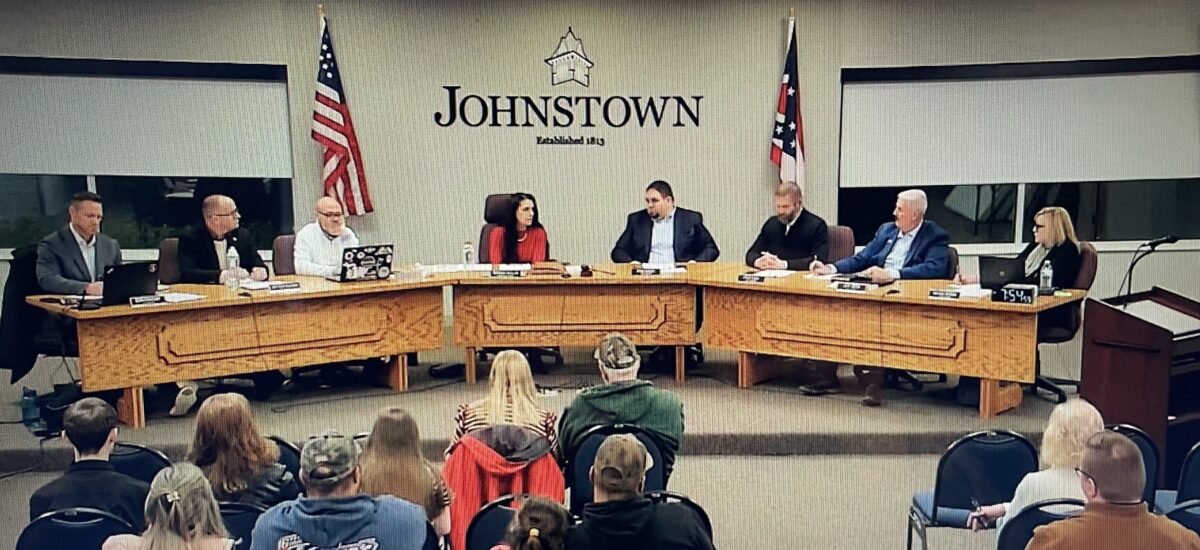

Soon after Johnstown City Council elected member Tiffany Hollis as the new mayor on Jan. 6, she made a motion to give 30 days notice that the city would leave the utility coalition Johnstown had helped form with the villages of Alexandria and Granville.
The tone of the new council’s first meeting of the year, as seen in a YouTube recording at Johnstown City Hall, quickly went from collegial swearing-in ceremony, complete with a time-out for photos, to tense and adversarial debate.
The vote was 5-2 in favor of Hollis’ resolution to direct City Manager Sean Staneart to notify Granville and Alexandria officials that Johnstown will withdraw from the Municipal Utility Coalition of Licking County, as allowed in a memorandum of understanding the three municipalities signed in 2023.
Granville Village Manager Herb Koehler said Wednesday morning, after learning about the Johnstown vote, that the coalition of Granville and Alexandria will move forward without Johnstown in its mission to provide water and sewer services as might be requested by residents of rural areas west and northwest of Granville and Alexandria. That would include Granville and St. Albans townships primarily, but also could include Liberty and Monroe townships and the northern portion of Union Township that is in the Granville school district.
Licking Regional Water District is the state’s designated service provider for a larger area of southern and western Licking County – more than 18,200 acres – but the coalition is seeking Ohio Environmental Protection Agency approval to be a service provider for some of that area because members say they can provide services at a lower cost and better manage growth if they also manage the utilities there.
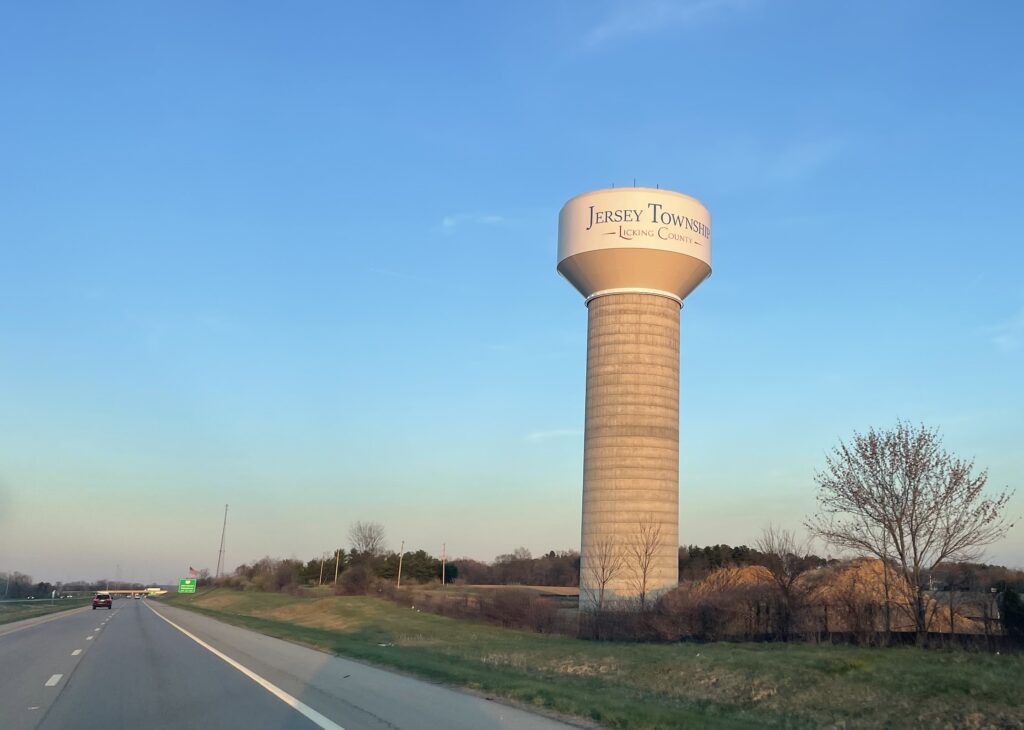
Licking Regional Water District leadership and officials in Jersey Township – where the utility’s newest water tower bears the name of Jersey Township – have opposed the coalition for various reasons, including that it is not the designated service provider.
Koehler said LRWD Executive Director Jim Roberts has rebuffed requests by coalition members, including himself, to talk with them about working together. Roberts said Wednesday that he has been open to conversations but that nothing had changed until the Johnstown council vote.
“We think they made a solid decision and we look forward to working with the new leadership there that’s decided to take that path,” Roberts said. “We’ll look forward to working with the leadership of Johnstown and see how we can partner with them for the good of both.”
Koehler, Alexandria Mayor Sean Barnes and former Johnstown Mayor Donald Barnard, who remains a council member, all expressed skepticism Wednesday about Licking Regional Water District’s intentions – especially about looking out for the best interests of the municipalities.
| Read more: EPA hearing on Feb. 12 seeks more public input on wastewater plant that would discharge into Moots Run
“While Licking Regional facilitates irresponsible development in search of short-term wins that could cause environmental harm, Granville and the coalition will be playing the long game in the best interests of the future of our communities and western Licking County,” Koehler said. “As Johnstown makes this pivot, I would caution their newly-seated council to pay attention to what happens next and who stands to benefit from it. It may not be Johnstown.”
To that point, the coalition filed lengthy records requests on Dec. 30 with Roberts and Jersey Township Administrator Rob Platte, a former member of the LRWD board of directors and both a vocal advocate for LRWD and opponent of the coalition.
The requests ask for records regarding communication between LRWD and Jersey Township and other entities, including lobbyists, as well as financial records, facilities plans and ethics statements.
“We did get that during the holidays,” Roberts said. “We have started to look through it. It’s a huge request and kind of insinuating some things” that he found offensive. LRWD responded by filing a similar records request with the coalition members.
Roberts also was offended but not surprised by the suggestion that LRWD might have influenced the Johnstown vote to leave the coalition.
“That does sound like the kind of accusation they might make,” Roberts said. “I have not met any of the new newly elected council members, and I’m not sure I even know their names.”
Barnard, who had been the Johnstown mayor until a few minutes before the council vote on Jan. 6, and newly elected council member Nicole Shook voted against leaving the coalition. Hollis, newly elected Council President Ryan Green, council member Jeffery Barr and new members Kyle Cook and Matthew D. Huggins voted in favor.
Hollis introduced the resolution after saying the city’s costs to support the coalition were a big part of budget discussions in recent council meetings and that the city had decided to reduce its allocations. And she said the new council needed to give strong direction to Staneart about the city’s involvement with the coalition.
Barnard and Barr asked for a briefing in the near future for the council – particularly the newly elected members – so that everyone would be fully informed before taking any action. Staneart said he could set that up within a short period of time.
Hollis cut off that discussion and pushed for an immediate vote without allowing further discussion by council members. But when she then asked if any citizens in the audience wanted to comment, an incredulous Barnard asked to speak as a member of the public.
Speaking to the council, Barnard said the newly elected council members didn’t have the institutional knowledge to make an informed decision, one that could affect the city for years to come.
He said there was no urgent need for an immediate vote, and he asked the council to delay a vote long enough for a briefing about the coalition and the consequences of severing relationships with two neighboring communities.
“If you all are OK with saying ‘screw you’ to Granville and Alexandria, then vote that way, but there is no reason these people who were elected by the citizens should not be briefed so they have more information before we vote,” he said.
Green responded by saying that the coalition had been discussed repeatedly in public meetings and that new members had the opportunity to learn about it while they were campaigning.
Barnard replied by asking whether Huggins or other council members had been contacted by Jersey Township or Licking Regional Water District officials – and whether they received information about the coalition from those officials or attorneys representing Johnstown.
Hollis told Huggins he didn’t have to answer, but he said, “I’m not on trial, Mr. Barnard,” and later said he had spent two years digging into details about the coalition.
In a statement the next day, Barnard said “I remain deeply concerned that the long-term consequences of withdrawing from our regional partnership with neighboring communities will be felt for years to come. This decision was advanced without adequate notice, discussion, or meaningful debate – including by newly seated members – which undermines public trust and sound governance.
“The manner in which this vote was rushed forward,” Barnard continued, “further reinforces my concern that certain actors within Licking County, who are advocating for a one-size-fits-all water plan that could financially burden our residents, may be exerting undue influence. Any action taken at the expense of transparency and the best interests of our citizens demands careful scrutiny and accountability.”
Koehler also raised concerns about the motivations for the vote.
“While we’re disappointed with the decision, it was not necessarily unexpected given the acrimony emanating from certain circles during the recent election cycle,” Koehler said on Jan. 7, speaking about water issues as a dividing line in voting on some races and issues. “I’m not here to judge the decision except to say that there is a clear risk that the vote was influenced by parties outside of Johnstown that are working in their own best interests.”
Alexandria Mayor Barnes said much good has come from the relationships and plans that were built during the past two years. “We’re a smaller group, but our intentions are the same and our commitment to working together remains the same,” he said.
Alan Miller writes for TheReportingProject.org, the nonprofit news organization of Denison University’s Journalism program, which is supported by generous donations from readers. Sign up for The Reporting Project newsletter here.