

The mostly two-lane stretch of Rt. 62 between New Albany and Johnstown could look more like New Albany’s five-lane boulevards in the coming years.
That’s one of the design alternatives the Ohio Department of Transportation is studying to address traffic flow and safety issues on the increasingly congested 6.2 miles of roadway, which is one of the main routes from Rt. 161 to the Intel computer-chip manufacturing campus.
“It was identified as a critical corridor because it’s like the backbone to Intel,” said Erin Sheidlower, ODOT project manager for the study of the Rt. 62 corridor.
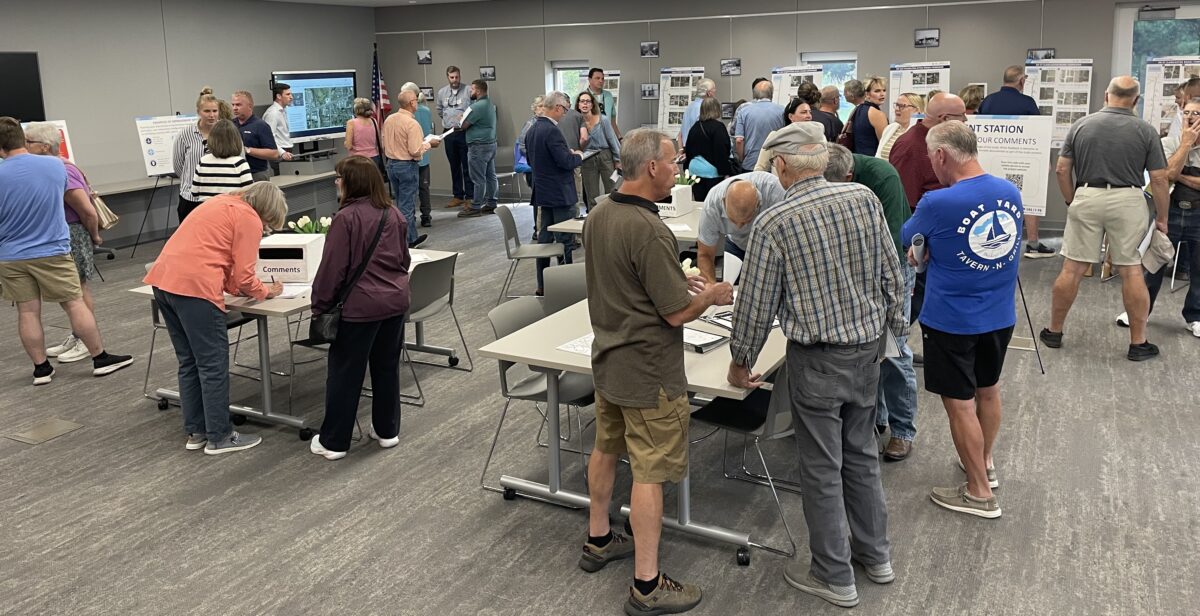
ODOT and its consultant, Burgess & Niple, of Columbus, are hosting an open house from 9:30-11:30 a.m. and 5:30-7:30 p.m. on Thursday, Jan. 29, at the Church of Resurrection, 6300 E. Dublin Granville Road in New Albany.
“We’re wrapping up the planning phase with this public meeting,” Sheidlower said, noting that specific proposals presented during the open house were generated with input from local government and business leaders in the New Albany-Johnstown area.
“We’re looking to get the public’s input. Nothing is set in stone at this point. Once we wrap up this meeting on the 29th with public comment, we will put everything from open house on the ODOT project website, and commenting will be open for 30 days after the open house.”
The study area is Rt. 62 from Smith’s Mill Road on the south to Clark Drive on the north.
“We do know that the entire corridor will need to be widened,” Sheidlower said. “Having a median in the middle can improve safety, and it looks nice. New Albany’s strategic plan calls for that, and Johnstown officials like it.”
In addition to widening the roadway, she said, “we’re looking at several possibilities, including bike and pedestrian paths, roundabouts and signalization.”
Sheidlower expects a lot of interest from area residents and those who regularly travel on Rt. 62.
“We want to minimize impact,” she said. “We’re really looking at what’s best for this corridor.”
She said the first phase of the project is the planning being done now, followed by the environmental and design phase, when ODOT will seek more public input, and that’s when ODOT would have specifics about impact on specific properties along the corridor.
“I’d guess that it will be within 18 months to two years before we would start construction,” Sheidlower said. “There are a lot of federal requirements to go through, and a lot of departments are involved.”
Comments about the study and possible options for roadway improvements can be submitted at the meeting, on the project website through the comment submittal form, or by direct contact with Sheidlower at (614) 387-4002, or by email at erin.sheidlower@dot.ohio.gov. Comments will be accepted at any time, but those received by March 1 will be included in the official study documentation.
Alan Miller writes for TheReportingProject.org, the nonprofit news organization of Denison University’s Journalism program, which is supported by generous donations from readers. Sign up for The Reporting Project newsletter here.