

Oil sizzles as movie-theatre-style popcorn begins to pile up like a snow drift inside of a glass display case and endless candy options are sorted into bins.
Volunteers grill up hundreds of hamburgers and hot dogs before being placed in a bun and long before a game begins. Outside, marching band members walk past with their instruments, adding another layer of sound to the bustling twilight.
Inside the Granville High School concession stand, the Friday night football rush begins long before kickoff.
Six computer tablets are ready to process sales. Supplies are squeezed into every available space. Volunteers prepare for a night that will likely stretch far beyond the final whistle.
For Shelli Shepherd, who helps lead the operation, the chaos is part of the appeal.
“Crazy is a really good word for it,” she said. “Exhilarating is another good word.”
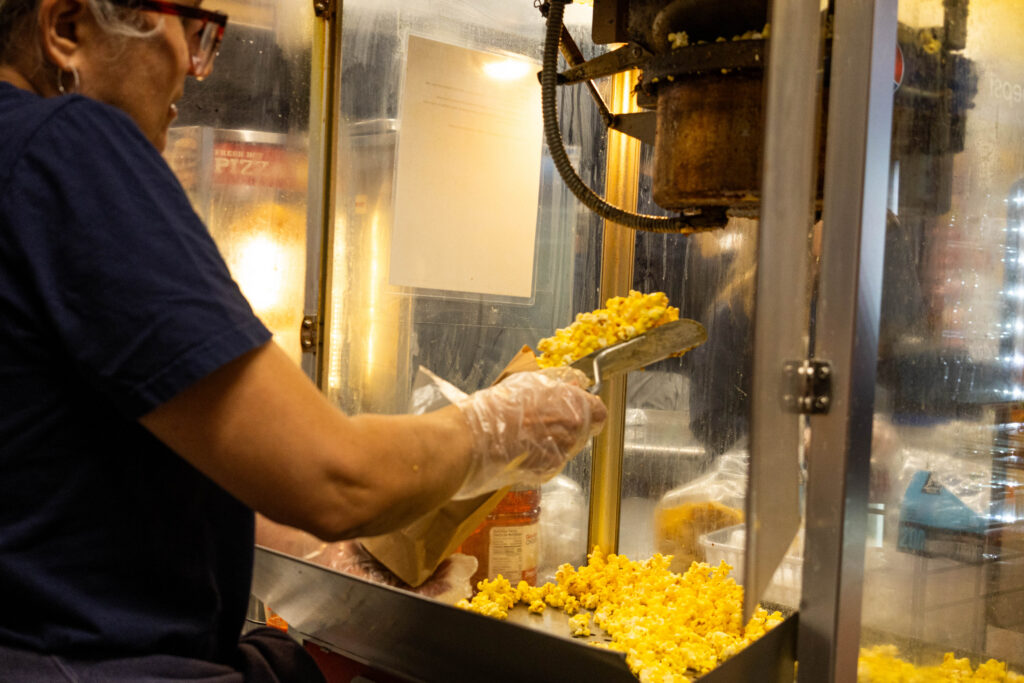
A volunteer scoops popcorn into a bag during the Oct. 23 Granville High School football game against Licking Heights. 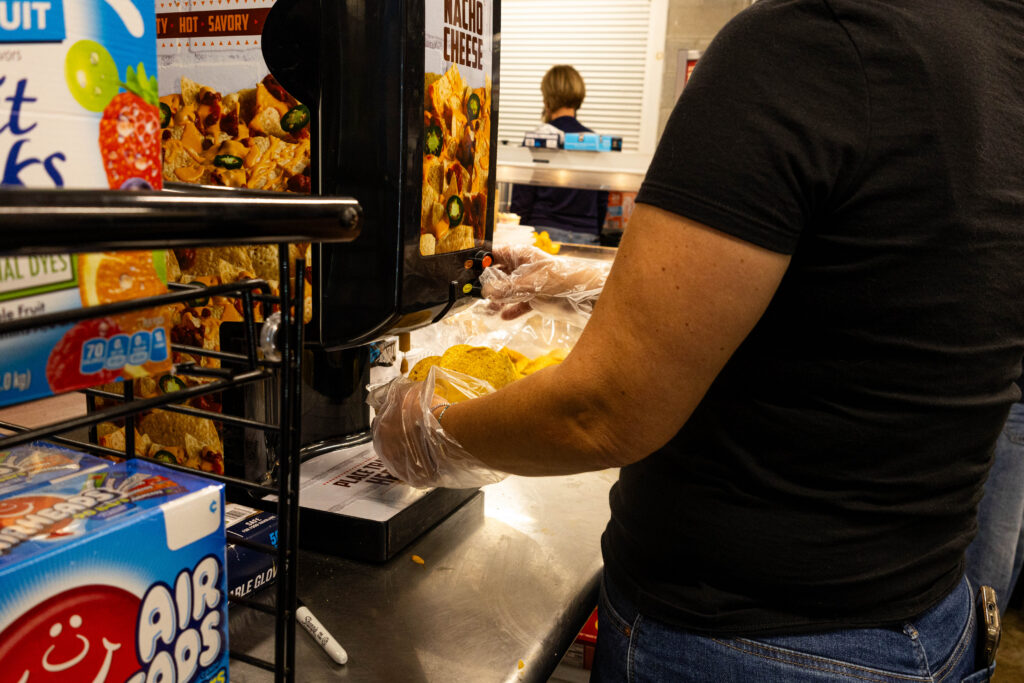
A volunteer adds nacho cheese to a dish before serving it to a customer during a Friday night football game at Granville High School. 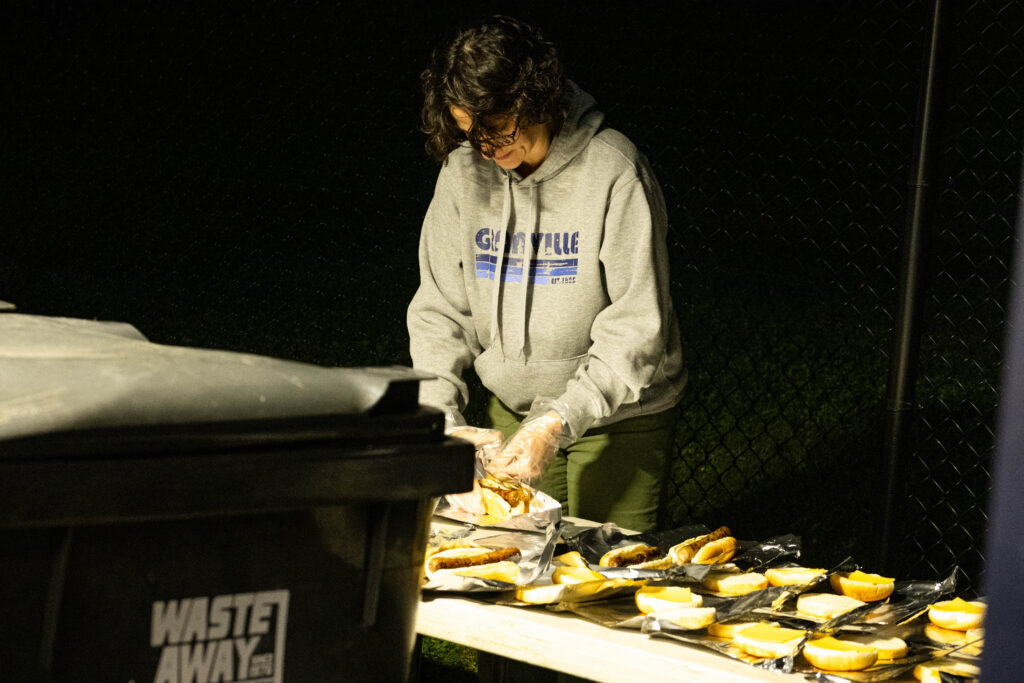
A volunteer prepares hotdogs and hamburgers before the Friday night football game at Granville High School on Oct. 23. 
The Granville High School marching band lined up ahead of the football game on Friday, Oct. 23. 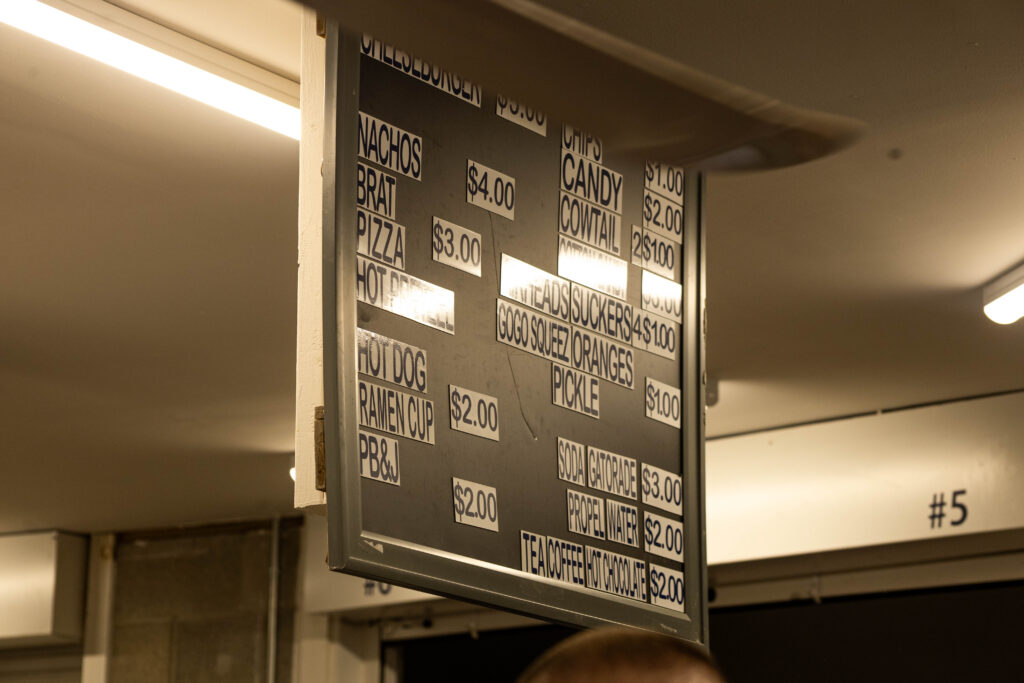
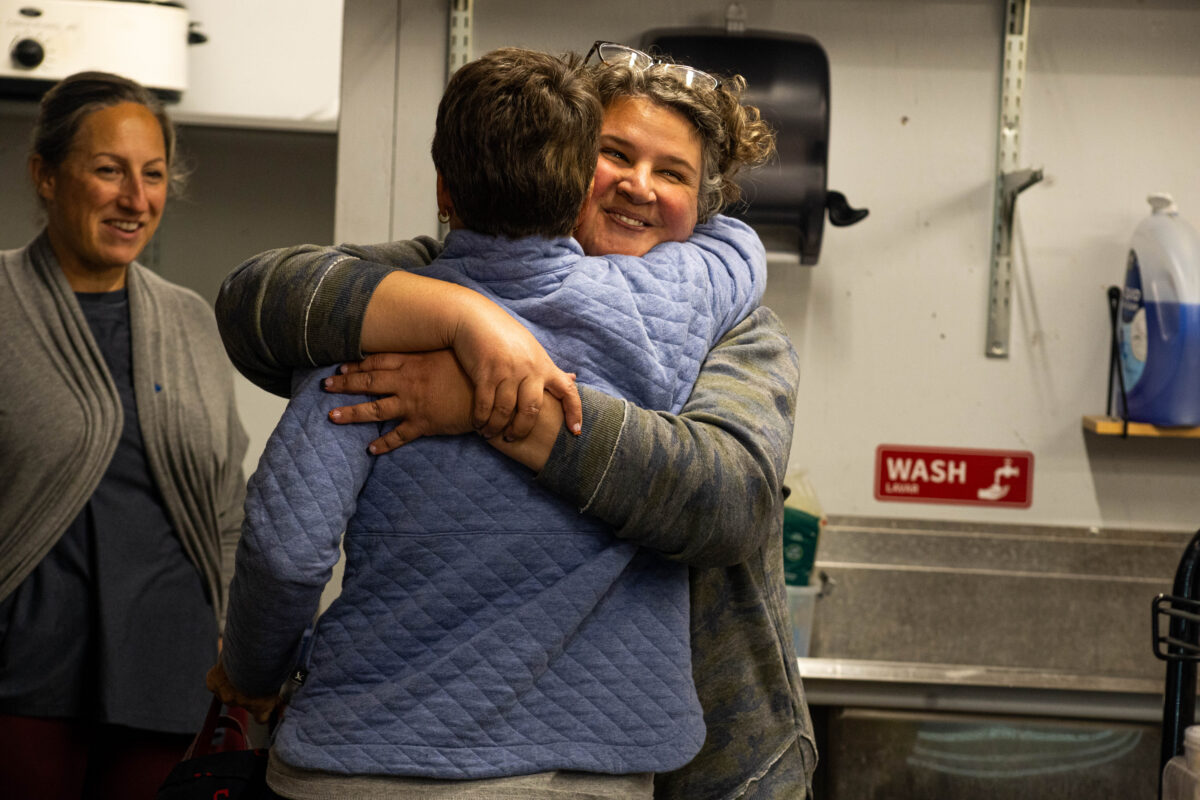
Shepherd has become something of a personality in the school district’s concession stands, where her energy is as much a part of the experience as the food. Kate Wollenberg, who coordinates volunteers, describes Shepherd as the “conductor of the circus.”
“We joke that I’m crazy and people like to see that in action, so that’s part of the reason why they work the games,” Shepherd said.
But behind the jokes and the hectic Friday nights is an operation that generated $107,000 last year for various student teams and organizations within the Granville school system.
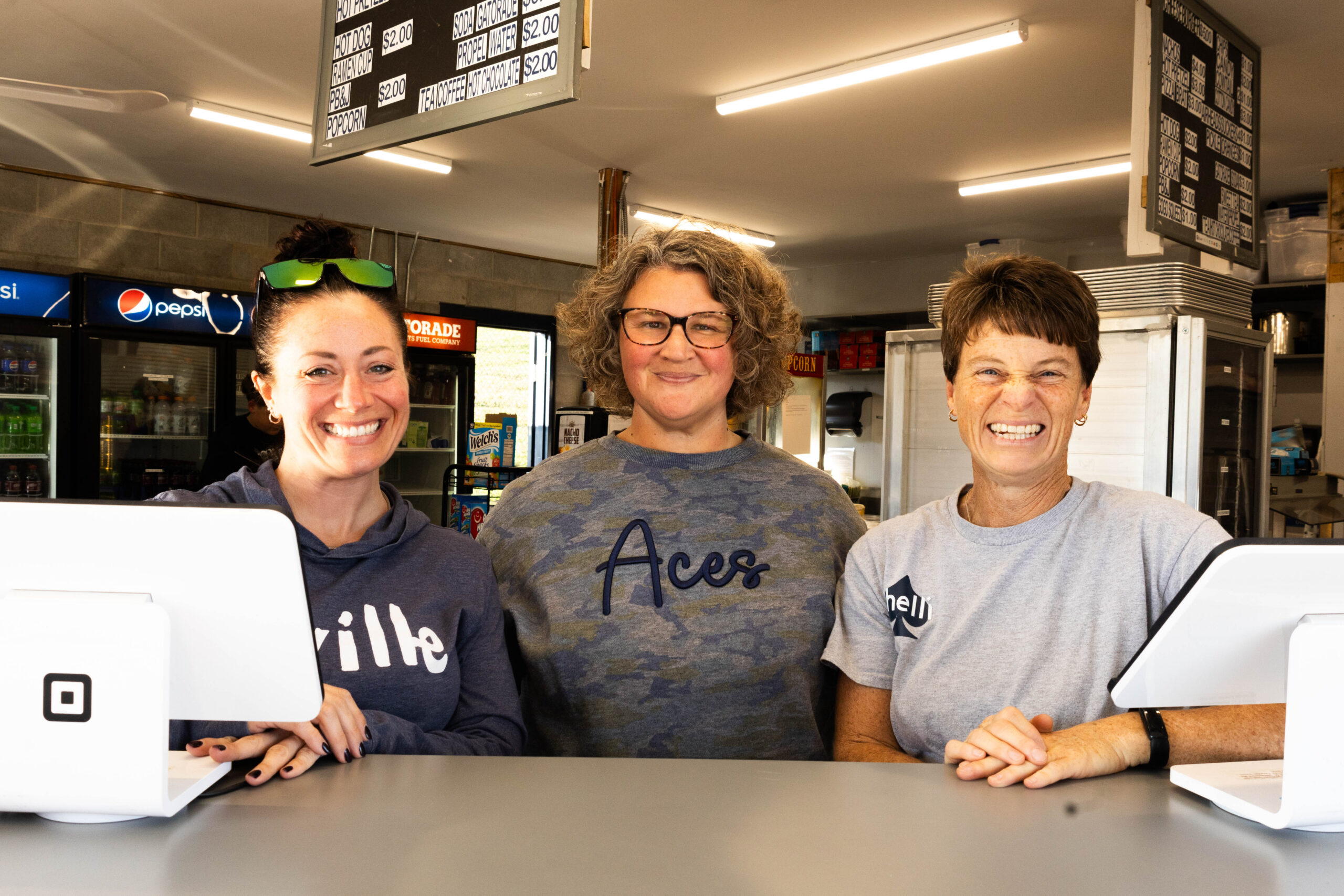
For Shepherd, Wollenberg and Danielle Koehler, the three people at the center of the operation, the goal is not simply to sell food. It is to create an experience that brings people together while giving back to the community they call home.
The concessions game
Running the concession stands requires coordination, preparation and dozens of people willing to give up their evenings. Approximately 34 volunteers are needed to cover a Friday night game shift, and the operation extends beyond football to indoor and outdoor athletic events throughout the district and select arts events. The crew is often made up of parent volunteers but students also work shifts to raise money for activities like prom.
Shepherd describes the operation as “a chaotic, well-oiled machine.”
“It’s like a game,” she said. “As long as you have the right players in the right spot, it works.”
And Shepherd is not exactly watching the clock while the actual game unfolds.
“We don’t have any clocks in here, so it’s almost like Vegas,” she said. “We don’t know what time it is.”
Some nights, she is not home until 11 or 11:30 p.m. Still, the work has not lost its appeal.
“It’s not dull at all, but it’s a lot of fun,” she said. “I wouldn’t be here every Friday night if I didn’t enjoy it.”
That joy is something the leadership team tries to pass on to volunteers. With the concession board down to three members from its intended 10, recruiting enough people has become increasingly difficult. Wollenberg recognizes that working a concession shift can feel like one more responsibility in an already busy life, so she wants to make sure the experience is worth it.
“We felt very strongly that concessions should be fun,” Wollenberg said. “If you’re going to have to volunteer your time, it shouldn’t be a drag.”
A community that gives back
For Wollenberg, the work is deeply personal. She and Shepherd are both Granville High School graduates, and their connections to the community extend across generations.
When asked whether growing up in Granville influenced her commitment to the concession stands, Wollenberg paused.
“I might cry,” she said. “It’s definitely something that has touched me deeply in my soul.”
Her parents graduated from Granville, as did her husband and in-laws. She grew up watching her own family participate in the community, learning that showing up for others was part of belonging to it.
Now, she wants her children to experience the same support.
“I know what that community support gave to me as a student at Granville,” Wollenberg said. “And I just want that for my kids at Granville and future kids at Granville.”
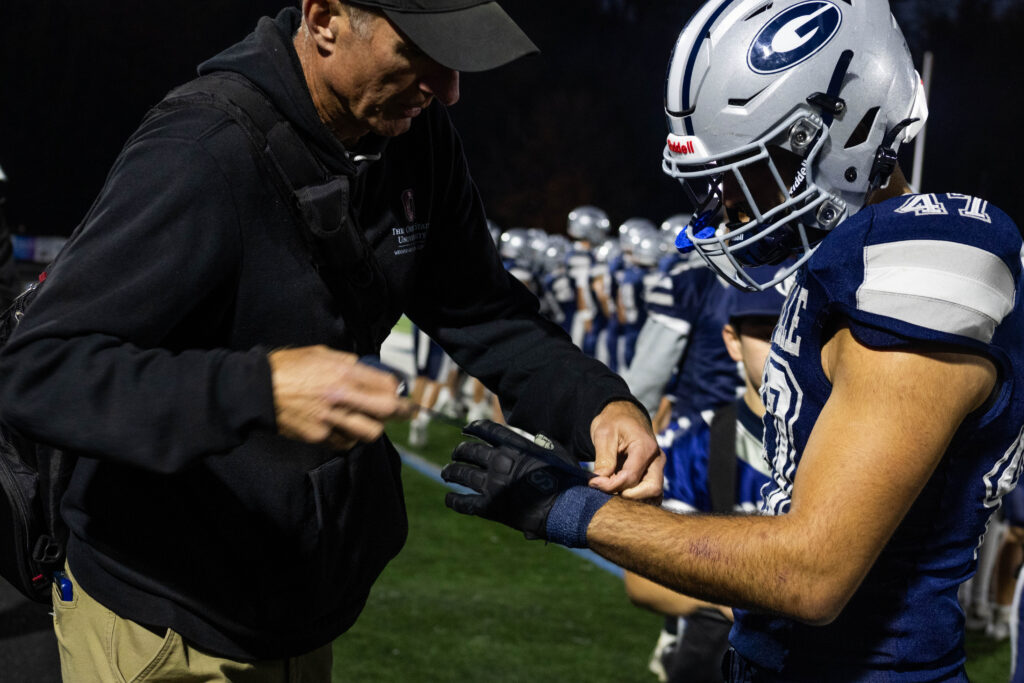
Player Aryan Amirtabar getting wrapped by one of the coaches during the Friday, Oct. 23 game against Licking Heights. 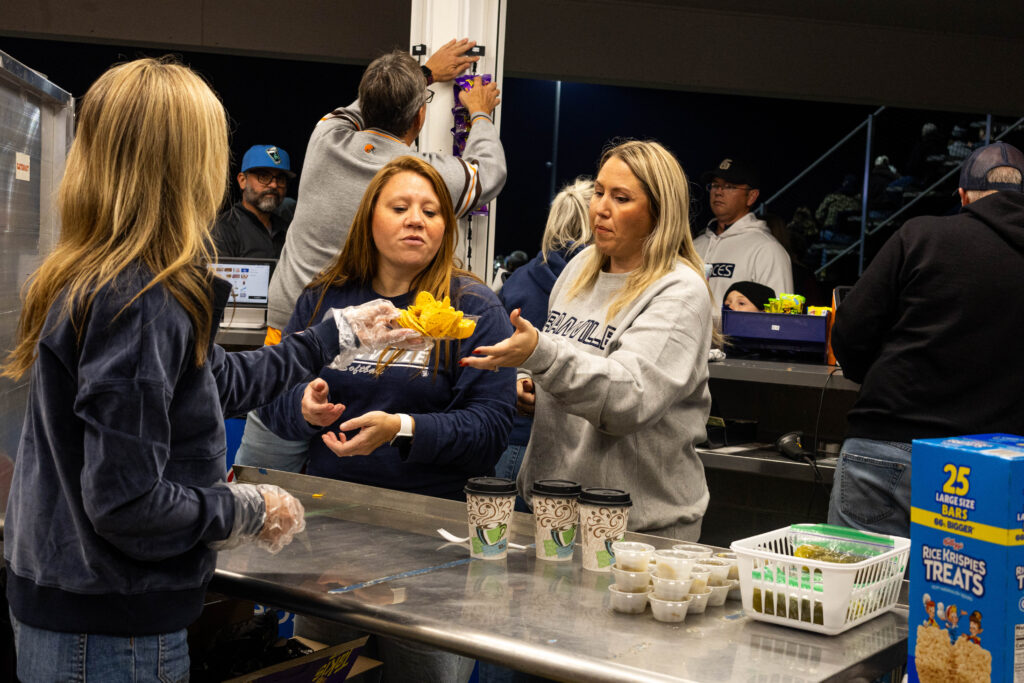
Volunteers — often parents of children enrolled at Granville schools — pass food through the prep area to hand to a customer. 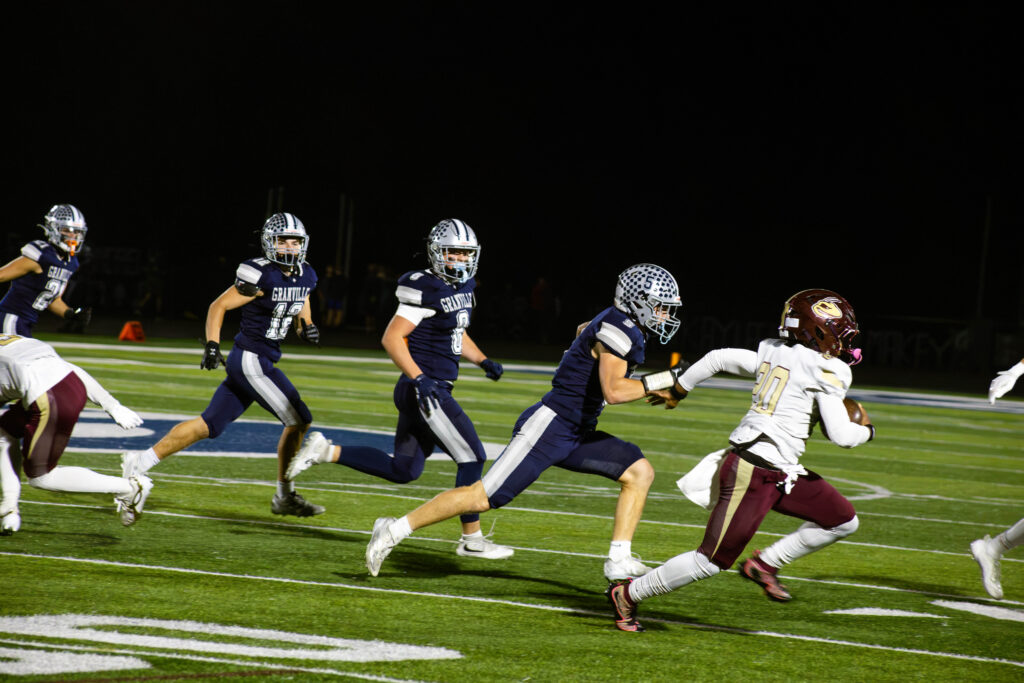
Licking Heights player Matthew Washington gained yardage during their game against Granville High School on Friday, Oct. 23. 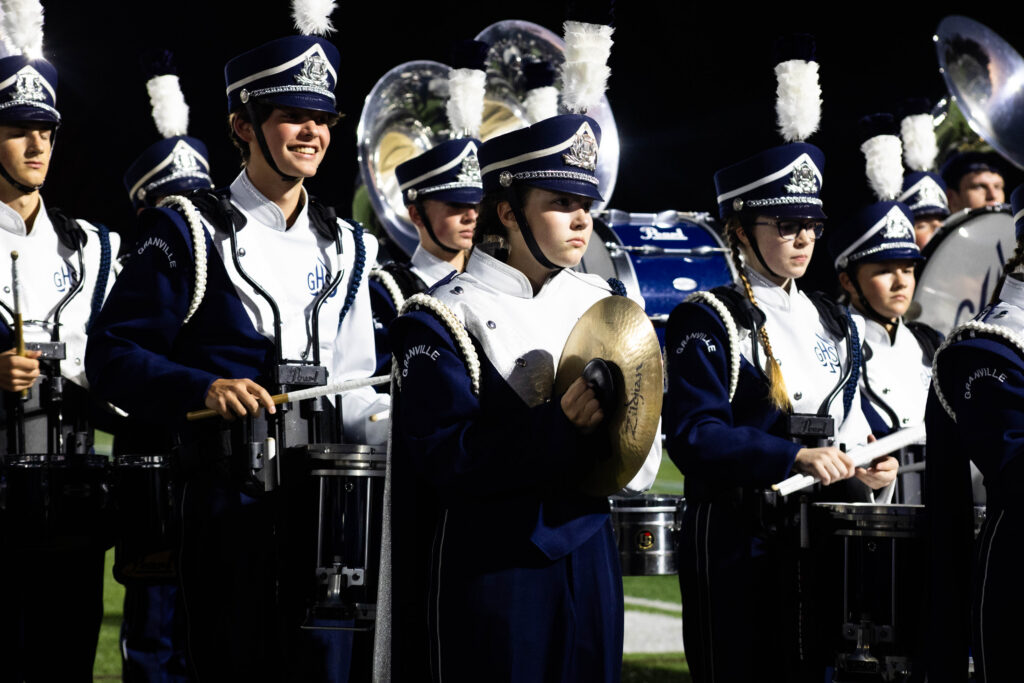
The Granville High School marching band played during halftime at the football game on Friday, Oct. 23. 
Customers wait to order at the concession stand. 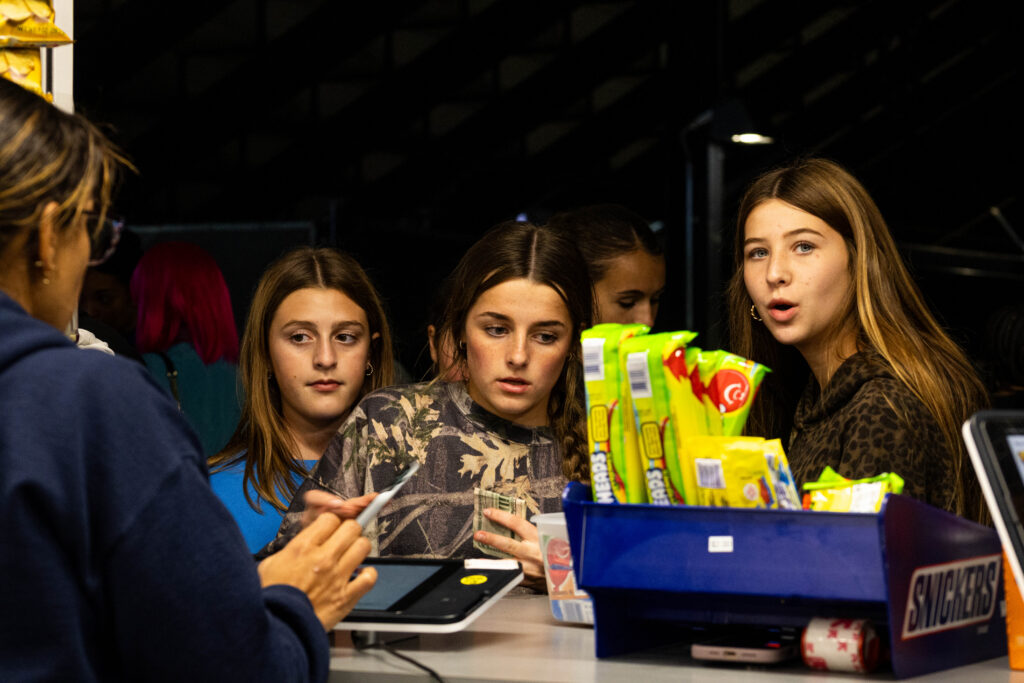
Customers wait to order at the concession stand. 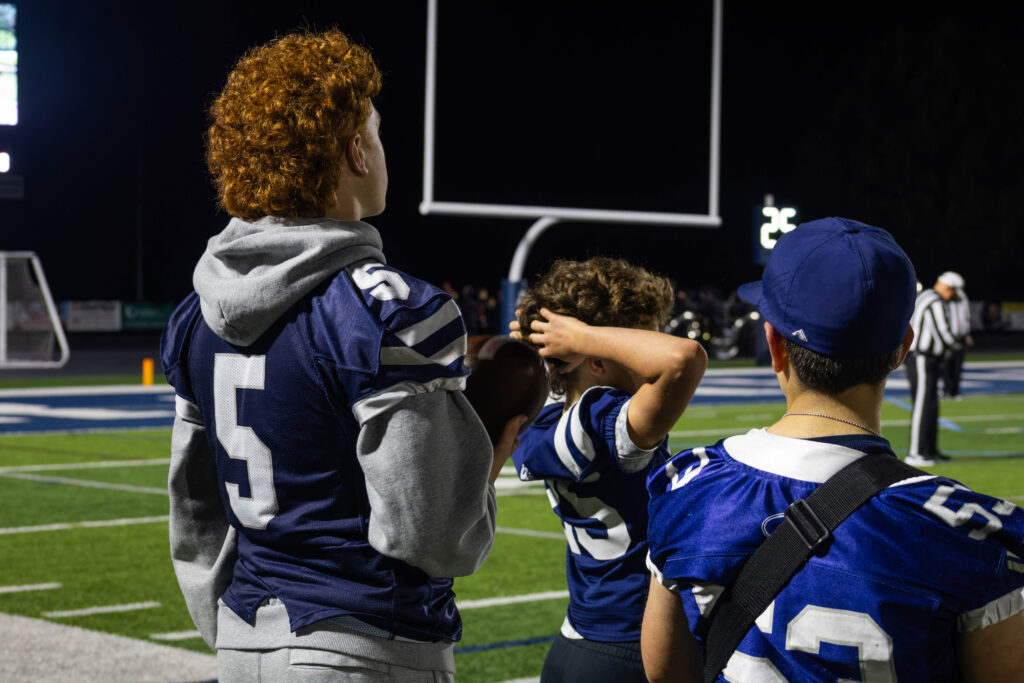
Ball boys watch the Granville vs. Licking Heights football game from the sidelines on Friday, Oct. 23.
Last year, the $107,000 generated by concessions was distributed among arts, athletics and other groups within the school system.
The revenue is significant, but Wollenberg sees the volunteer work itself as another way to support students. Every shift sends a message that the adults around them are invested in their success.
“I just believe that showing up for these kids will help them be successful and truly better community members as they go forth in their lives,” she said.
For Wollenberg, that belief is not abstract. It is something she has watched her own children learn.
Her younger children, who participate in student government, help work basketball concession stands alongside their friends. Wollenberg often volunteers alongside them, turning what could be another obligation into time spent together.
She remembers her youngest son, an eighth grader at the time, acknowledging that working concessions could sometimes feel like a downer when he was told he had to go. But after a shift, he told her that he always felt good knowing he had helped improve his community in some way.
Wollenberg was moved by the realization that her children were beginning to understand what she had spent years trying to teach them: Giving back is not just something adults ask of them. It is something they can take pride in.
“Working the stands with my kids and their friends and watching my kids interact with their peers are memories that I will carry with me through the rest of my life,” she said.
The operation depends on people continuing to show up.
“We could not do it without the people who volunteer,” Shepherd said. “We would be in a world of hurt.”
“A large part of our success has been from true collaboration with the building principals and our superintendent and many other wonderful people,” Wollenberg said. “It has been really helpful to have families from the lower schools come out and help this year too.”
Together, the two women have built more than a system for selling hot dogs. They have created a place where parents meet, students learn responsibility and community members work toward something larger than themselves.
Evy LaBare writes for TheReportingProject.org, the nonprofit news organization of Denison University’s Journalism program, which is supported by generous donations from readers. Sign up for The Reporting Project newsletter here.