

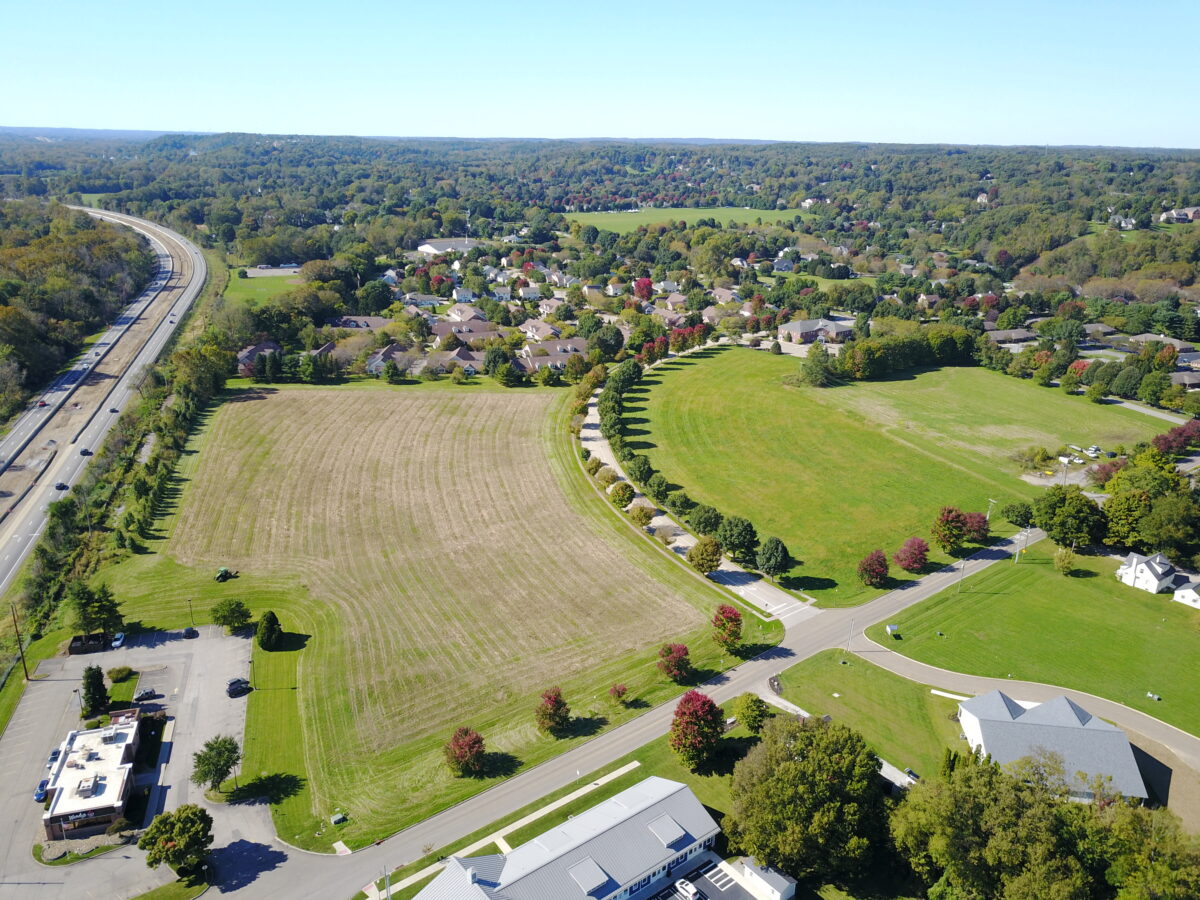
A local developer has approached the Granville community improvement corporation and the Village of Granville about a mixed-use commercial development on one of the last large pieces of developable land in the village.
The current proposal, which could change after the developer files a formal application for the project, is for retail shops such as a hardware store, restaurants, other commercial space and 174 one- and two-bedroom apartments along Galway Drive.
On the heels of a successful battle against a 500-home subdivision proposed for the City of Heath in the Granville school district, that number of units has raised concerns among some neighbors and others in the village about the density and potential cost of the development, and the impact on traffic and the schools. The school district estimates the new apartments could generate 18 to 20 students, according to Granville Exempted Village School District Superintendent Jeff Brown.
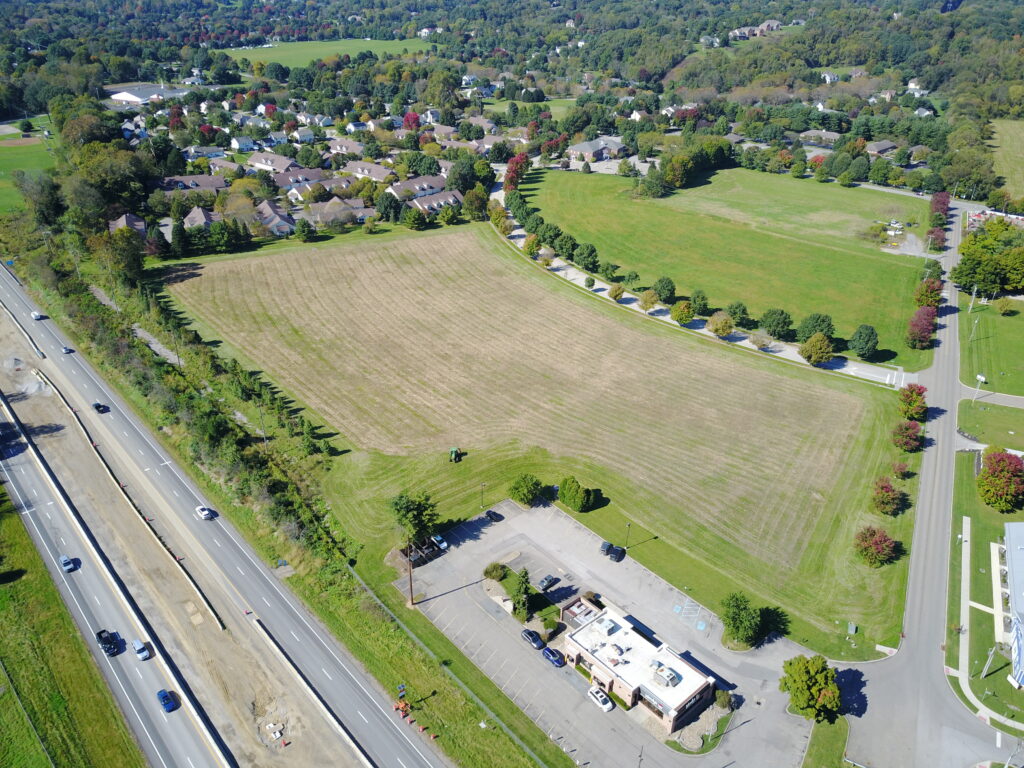
The land on both sides of Galway Drive, a little over 17 acres on the east side of the village, is currently owned by Licking Memorial Hospital. It is bordered by Cherry Valley Road between a five-acre field on the north owned by George Fackler and the Wendy’s restaurant to the south.
The developer is The Stream Group of Columbus, and specifically managing partner Seth Teagle, who lives in Granville Township. Informal conversations with the community improvement corporation, known as Welsh Hills Community Partners, and the village planning staff have happened on and off in the past year, said Village Manager Herb Koehler.
He said The Stream Group has a contract to buy the land but has not closed on it.
Review process will take months
Koehler stressed that no application for the project has been filed with the village, and while he said the developer has indicated it could come as soon as the week of Oct. 12, a project of this size would require multiple hearings and meetings by the village planning commission, zoning board and, ultimately, the village council.
“The earliest it could possibly get to village council would be January,” Koehler said, adding that the developer would like to break ground in the spring of 2027.
In addition to apartments, the proposal generally includes two retail buildings with multiple tenants and three out-parcels to sell to stand-alone enterprises, such as a hardware store and child-care provider, Koehler said.
Teagle said in a statement that “Munson Trace is a development plan we intend to formally propose in the near future. The mixed-use development is intended to thoughtfully add housing that generates commercial tax revenue, along with new commercial and retail options in an area where we believe demand exists for both.”
He said “the plans continue to evolve as we work through the village’s review and approval process. Our goal is to create a high-quality development that complements Granville and contributes positively to the community. We look forward to continuing to work with the village and engaging with the community as the project moves forward.”
“Our current proposal includes 174 one- and two-bedroom apartments, approximately 30,000 square feet of commercial and retail space, and three additional commercial parcels,” he said. “We envision those parcels accommodating complementary service-oriented businesses that could include uses such as a hardware store and garden center, childcare, or standalone restaurants.”
Koehler said the number of proposed dwelling units raised eyebrows, adding that The Stream Group did a market study indicating there is a demand in the Granville area for more than 400 apartment units. The Stream Group initially pitched the idea of 234 units, Koehler said, and “we advised them that that’s a hefty number and they should sharpen their pencils on that point.”
The developers came back with the reduced number of 174 units, which Koehler said still gave him pause, and that number could change. He said the informal conversations with the developer have been collaborative. That included a proactive conversation with Superintendent Brown.
“We told Seth (Teagle) that he should talk with Jeff Brown, and he said he had already done that,” Koehler said.
Low impact on schools
“The developer asked what would be harmful to the schools,” Brown said, “and I said three bedrooms. One or two bedrooms per unit is very low impact. As we continued to work down the list of questions, their orientation was to do as much positive for the schools as possible.”
One of those positives, Brown said, is that the property is zoned for commercial use, and it would stay that way under the proposal. That means that the property – including the proposed three-story apartment buildings – would be taxed at a higher rate.
The 2025 property tax rate for “class one” residential property was 26.14 mills, Brown said. And “class two” commercial property is taxed at 43.61 mills.
So while The Stream Group has asked the village to consider creating a Community Reinvestment Area (CRA) that would send tax dollars on the increased value of the property after construction for 15 years to the developer to help finance the project, after 15 years, the district would receive the full amount.
The school district would still receive taxes on the value of the land, as it does now, and the developers said that if the CRA is approved, they would make payments to the district in lieu of taxes to support the education of any students from the apartments.
‘We have to make sure it’s done right’
Drew Menzer, president of the Welsh Hills Community Partners organization, which was established to help retention of local businesses and facilitate managed growth, said the work the group has done so far was largely focused on helping facilitate the Buxton Inn purchase and the retention of the local grocery store, which is now Lucky’s.
“There hasn’t been anything close to the magnitude of this project” since the community improvement corporation (CIC) was established in 2024, Menzer said. “Something like this doesn’t happen often in a village the size of Granville, and given that this is one of the last remaining properties that could be developed, you don’t want it to be developed in piecemeal fashion. Because it’s one of the last remaining sites, we have to make sure it’s done right.”
He said the CIC is interested in commercial development, not to become another New Albany, but for the fiscal health of the community.
“We are severely reliant on residential taxes in Granville,” he said. “Even if you don’t care about a local hardware store, or other retail stores, a development like this would reduce our reliance on residential taxes.”
Menzer said he has heard and read some of the concerns about the informal process of the developer talking with the CIC and village planners, but this is common practice and in no way meant to circumvent the public process – which won’t begin until the village receives an application.
“Imagine a world where, if a developer wants to explore a project, they have to broadcast it to the world,” he said, adding that many proposals would not come forward in that environment.
“We’re now at a point where we’re looking for community feedback,” Menzer said. “It’s good that we have people who care a lot. It’s good that we have a community that is worth preserving and people are willing to put in the work to preserve it. I know emotions can run hot, but we’re not trying to trick you or pull a fast one.”
The Stream Group recently began talking with neighbors to share their plans for the project, and Mayor Melissa Hartfield, who is also a member of the village council, said that has touched off a wave of concern.
“I’m getting a lot of questions from community members about the village supporting this,” she said, adding that no decision has been made and she has concerns herself.
“This is just a proposal that has been put forth to the village, and the village has to go through the process,” Hartfield said. “There will be a lot of opportunity for the community to weigh in. I have to say this proposal raises my eyebrows.”
“At the end of the day, when we put all of the math together, we’ll see what we’d have to spend on improvements and whether this would be a win for the community – and whether the community wants this.”
Hartfield said the project “begs a lot of overarching questions, in my opinion, and I don’t have any of those answers for this proposal at this point.”
Alan Miller writes for TheReportingProject.org, the nonprofit news organization of Denison University’s Journalism program, which is supported by generous donations from readers. Sign up for The Reporting Project newsletter here.