

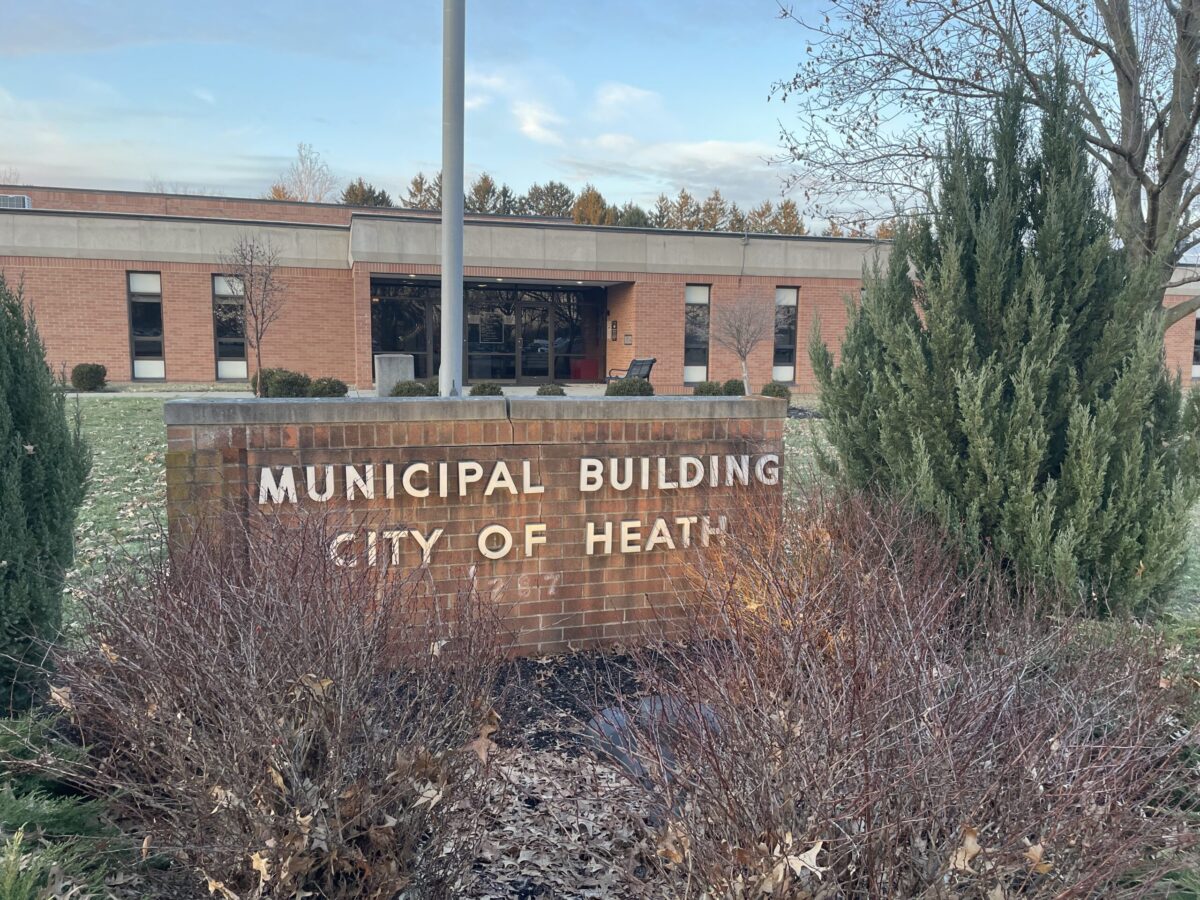
Heath officials have rejected a petition that would allow voters in the city to decide whether to ban large data centers.
The city attorney said the petitions didn’t have enough valid signatures, and the city also rejected the petitioner’s effort to withdraw the petition and submit a new one with additional signatures before Friday, Sept. 4 – the deadline for charter amendments to appear on the Nov. 3 ballot.
Margo Mayberry has led the effort to get a ban of data centers larger than 25 megawatts on the Heath ballot – in much the same way that others have led petition drives in Pataskala, Granville and Johnstown. And like in Granville, where petitioners initially fell short of valid signatures and then gathered more valid signatures, Mayberry, 83, went out and got more signatures – enough to qualify to be on the ballot, according to the Licking County Board of Elections.
But Heath officials wouldn’t accept them, said Nick Owens, an attorney for Conserve Ohio, the grassroots group that is petitioning to get a large data-center ban on a statewide ballot next year. In fact, Owens said, Heath officials won’t give back to Mayberry the initial petitions she filed, telling her they are now city property.
“Heath is playing games,” Owens said. “Just give her the petitions back and let her combine them and resubmit.”
Heath Law Director David Morrison said Mayberry was not legally allowed to resubmit the petition after gathering more signatures. He cited Section 3501.38 of the Ohio Revised Code, which sets rules for petitions and their circulators, which he says prohibits alterations, corrections, or additions to a petition after it is filed in a public office.
“The council will not be adopting a resolution or an ordinance to put it on the ballot,” Morrison told The Reporting Project.
But Owens said an Ohio Supreme Court ruling from 2000 (State ex rel. Rose v. Lorain County Board of Elections) says Mayberry can withdraw her initial two submissions, combine them, and submit them as a third, new petition.
And if Heath officials don’t accept the third petition, it could become costly for the city. Mayberry and Owens said that if the city doesn’t allow the issue to move forward for the Nov. 3 election, state law requires that the city hold a special election on the issue.
“We’re trying to keep that from happening,” Mayberry said. “We’re trying to save them the expense of a special election. They’re arguing with the supreme court, not with me.”
Mayberry took on the petition drive in Heath in mid-June.
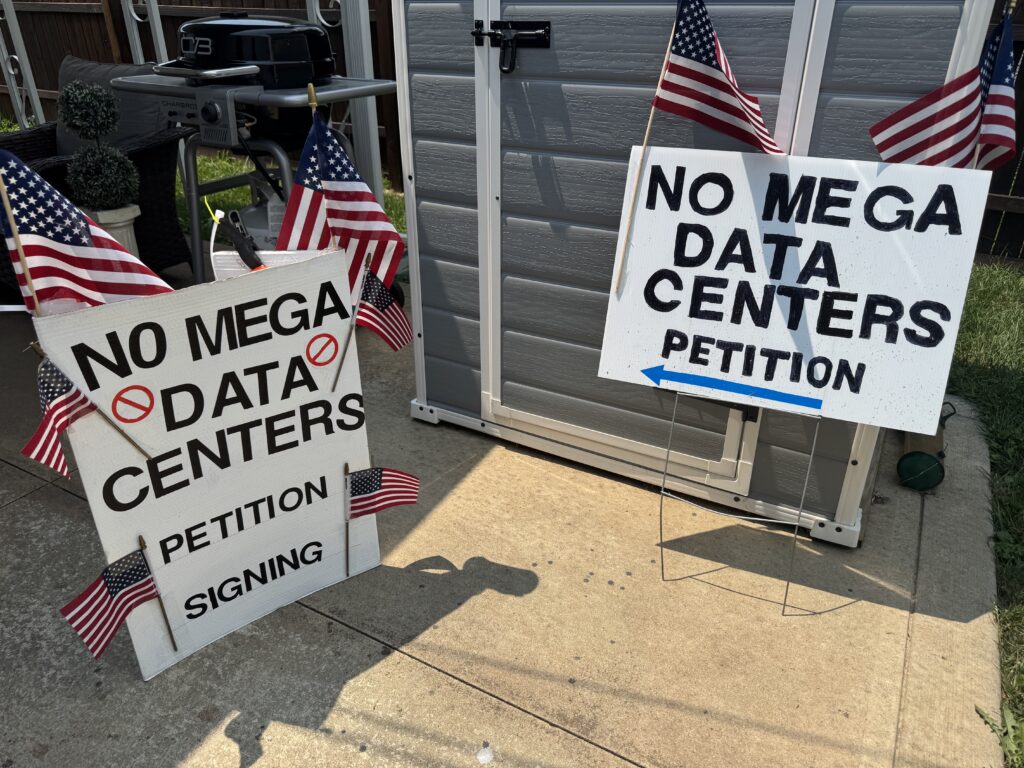
The petition would add “Section 17.13 – Prohibition of a Data Center” to Article XVII of the Heath charter. If and when the issue makes the ballot, and if voters approve, construction of any large data centers in the city would be prohibited.
Licking County is currently home to 49 data centers – approved, under construction or in operation. One data center for Microsoft is under construction on Thornwood Drive at Hallie Lane in the city, and it would be the only large data center in Heath if the issue makes the ballot and is approved.
In Heath, 2,199 people voted last November, meaning that 220 valid signatures are needed to put the proposed charter amendment on the ballot (10% of the total number of votes cast at the most recent general municipal election). With the total 276 verified signatures Mayberry now has between the two petitions, she has surpassed the required number.
Heath City Council also would have to vote to acknowledge the petition and send it to the board of elections by Friday, which isn’t likely. In fact, Morrison said the council could vote to reject the first two petition filings by Mayberry to have an official record of the city’s action.
Mayberry said lawyers would fight the decision. And Morrison said they would not win.
“I think if they do their homework, they’ll see that they don’t have any … basis for it,” said Morrison.
Owens said Heath officials can agree now to put it on the ballot or face paying for a special election.
“It’s not like this is a one-and-done thing,” he said, adding that petitioners can submit petitions anytime, and if the city doesn’t accept them now, “they are just wasting taxpayer dollars. If it doesn’t go on this ballot, they can go back and submit a new petition, and they are going to have a special election at their expense.”
On Monday, Aug. 17, Mayberry stood in front of the Heath City Council reading a speech about her concerns about data centers as she turned in a stack of petitions for the ballot issue.
“I have noted that the charter for the City of Heath, Ohio, was adopted by voters in November 1964,” Mayberry told the council. “That is 62 years ago. Times change. People change. Ideas change.”
She said she saw support for the petition from people across Heath, and she said that many people in the audience applauded after she read her speech.
“People want a voice,” Mayberry said. “They want their voices to be heard. They don’t want a data center in their backyard, or on the next street over. They don’t want their water rates to go up. They don’t want their electric rates to go up.”
Mayberry said that construction of data centers in Licking County is causing numerous issues to residents.
“They are causing electric rates to go up, they are causing water rates to go up, they are using an excessive amount of water, and they are tapping into underground water aquifers and affecting people’s wells,” Mayberry said. “They’re causing a noise nuisance by a constant humming around the outside edges of the data center that residents nearby can hear 24 hours a day.”
Mayberry grew up in Niagara Falls, New York, where the Love Canal tragedy affected a neighborhood in which houses and a school were built on top of a toxic chemical dump. Residents experienced health issues ranging from miscarriages and birth defects to rare cancers.
“I saw what Love Canal did to my home city,” Mayberry said. “When I saw what was happening here and started hearing the stories about people suffering that have the data centers in their neighborhoods, I said, ‘This isn’t right.’”
Mayberry, who has a degree as a paralegal from Capital Law School and previously worked in various fields including customer service, information resource management, and data analytics, describes herself as “a fighting spirit.” She raised two children as a single mother.
“All those years, to get education and support them and give them the same quality of life as a two-parent home could give them, it was hard,” she said. “It was a struggle.”
She used that fighting spirit in the petition drive.
Mayberry said the recent Heath City Council vote to reject the proposed 550-home Heath Hills subdivision showed the power of citizen engagement. The council voted against the proposal after months of protest from Heath and Granville residents over the cost to residents of the two communities and other Licking County residents and organizations.
“I hope the council takes this seriously, because we stopped that Heath Hills development because the city didn’t want it,” Mayberry said. “And part of my speech indicates that the City of Heath doesn’t want data centers either.”
Ella Kitchens writes for TheReportingProject.org, the nonprofit news organization of Denison University’s Journalism program, which is supported by generous donations from readers. Sign up for The Reporting Project newsletter here.