

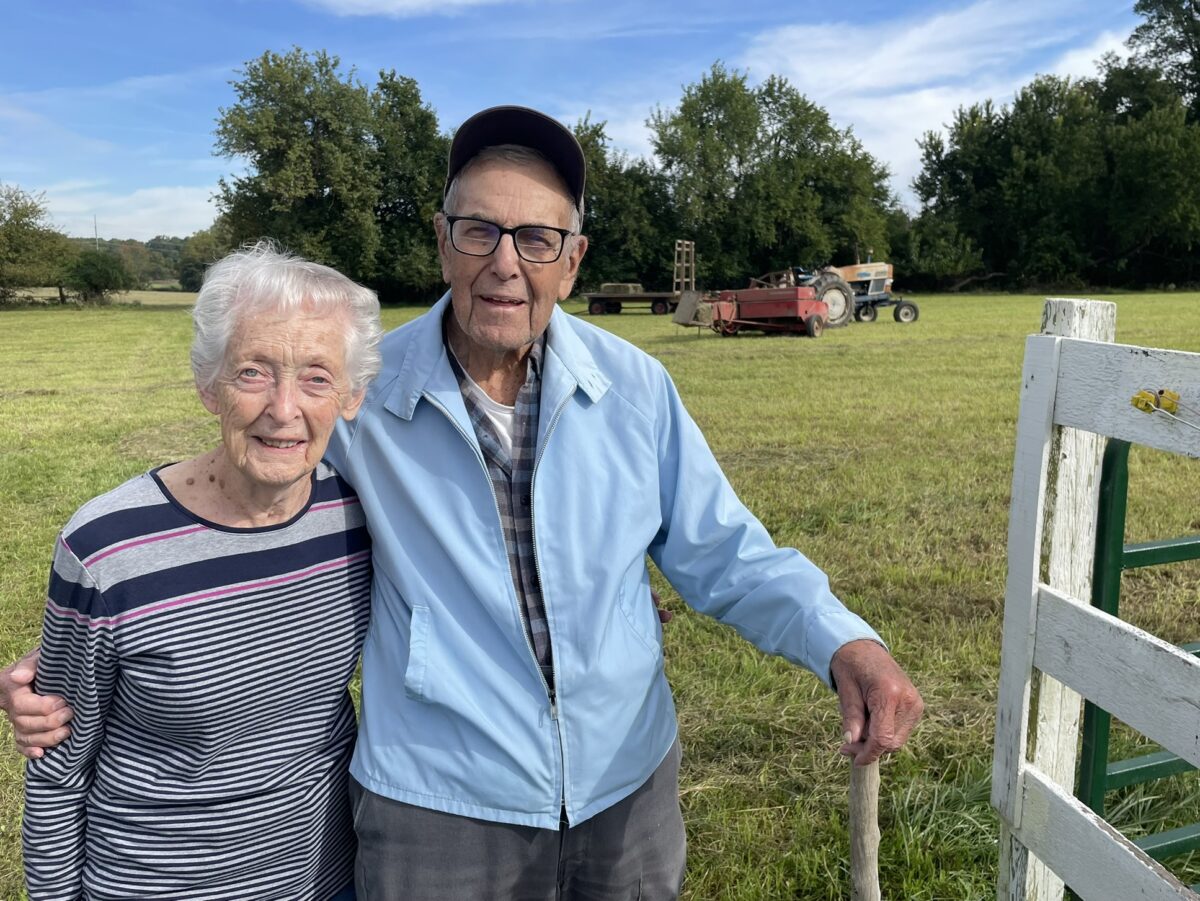
When Bill and Jane Brady settled in Granville Township 65 years ago, they bought a small home on 36 acres atop one of the rolling hills on James Road.
A job at the nearby Owens-Corning Tech Center brought them to Granville, and Bill told his new co-workers that he and Jane were “going to raise beef and babies,” which translated into three children and uncounted numbers of Hereford beef cattle.
“We showed them at county and state fairs, and we did it in part because we wanted to teach our children responsibility by taking care of the animals,” Bill said.
With all of those memories and a deep appreciation for the rural character of Granville Township, the Bradys became one of the latest of 46 land owners to enroll their property in the Granville Township Open Space Program.
The program was put to voters for the first time in 1997 by township and village leaders and residents who sought a tool to help preserve the rural character of Granville and Granville Township. That tool is a taxpayer-funded program that allows the township to buy land outright or, more often, pay the landowner in exchange for an easement that the land won’t be developed.
The 1-mill, 5-year levy is up for renewal on this fall’s ballot. It would not result in a tax increase, and if approved, it would continue the tax at $21 per $100,000 of market value set by the county auditor.
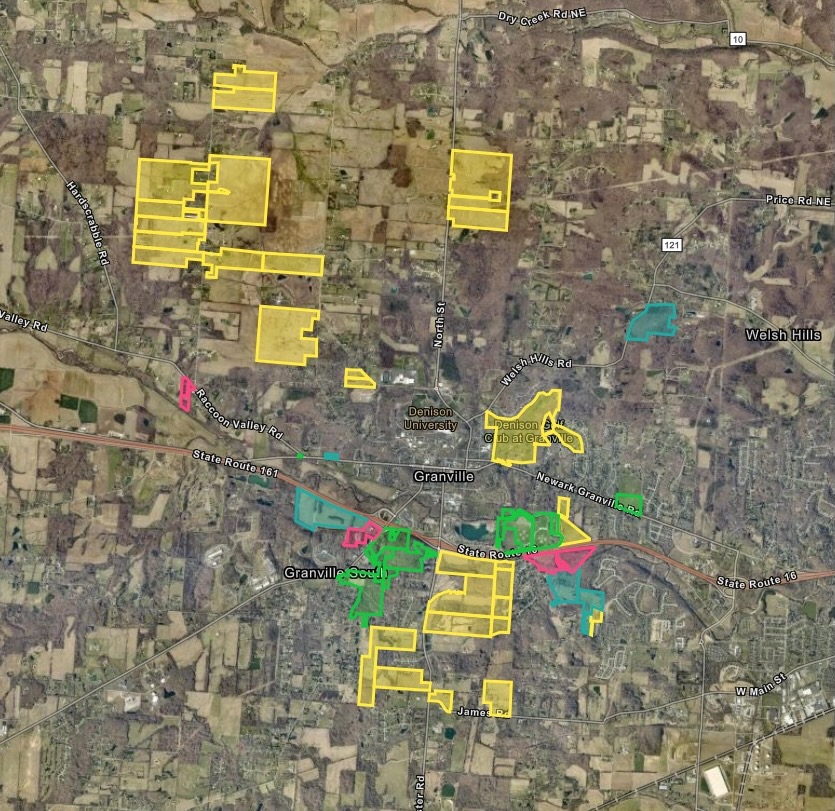
A committee of township and village residents reviews proposals for participation in the program, and it makes recommendations to the Granville Township trustees, who make the final decision on purchases and easements. The committee also conducts an annual review of Open Space properties to ensure compliance with agreements – all of which are available for public inspection in a database on the Open Space website.
Vince Paumier, a member of the Open Space committee, said voters have approved the levy by an overwhelming margin five times since then – with 70% or more voting in favor during four of those elections.
Its stated purpose is “to protect and preserve the natural, scenic, open or wooded condition of the lands, waters, or woodlands in Granville Township against modification or encroachment resulting from occupation and development.”
So far, it has preserved more than 1,800 acres in the township and village, including 140 acres added since the last levy renewal in 2021, Paumier said.
Spring Valley Park and the Bryn Du Mansion front lawn are two of the most prominent examples of land purchases under the program. And the Granville Golf Course, now the Denison Golf Club, is a prominent participant by virtue of a conservation easement.
Denison’s plans to renovate the century-old golf course, and remove 362 trees and remove a hill between holes 16 and 17 in the process, prompted a community conversation about whether the work conformed to the easement on the property. Ultimately, the township trustees approved the renovation plans, saying that they fell within the letter of the agreement to maintain the property as open space.
| Read more: Township trustees OK proposal for $8 million renovation of the Denison golf course
Paumier said such agreements have helped maintain a steady pace of housing development in the township – which was a key consideration when it appeared possible that the golf course could become a housing development.
“But it’s not just about housing density, but also about iconic properties,” he said. “Spring Valley, the golf course and Bryn Du – you don’t get those back if you lose them. This program is truly unique. We’re the only township in Ohio that has one of these programs.”
Paumier said it’s a credit to the township and village leaders who first proposed the program and to voters who have approved each levy renewal since then.
The goal with seeking renewal in this election is to continue enrolling both iconic properties and those that serve as a firewall against potential large-scale development in the township, which would not only change the character of the township but also potentially flood the Granville Exempted Village School District with additional students.
| Read more: Granville Open Space program preserves green spaces, helps build firewall against rapid growth
Jennifer Williams, a Granville resident who serves on the Open Space levy committee, said it’s important to continue the program in the face of increasing development pressures – “to protect the schools and preserve the character of what attracts people here.”
She said as properties turn over in the village and township, newcomers don’t always know how the rural character has been maintained. “There are so many new families that are not aware of the Open Space program; we welcome the opportunity to talk with anyone about it.”
A video produced in 2023 explains how a state law approved in 1997 allowed for the creation of such a program, and Granville leaders worked to make it happen.
Williams said the program has been a good fit for families with a long-term, multigenerational commitment to the community, “and from a legacy standpoint, it is really appealing.”
That’s where Bill and Jane Brady landed in making a decision to commit to future generations that their land would remain as it is – a small cattle farm with rolling hay fields and a smattering of woods.
“We felt strongly that being here so long, we’d like to keep it that way,” said Bill, 97, as he smiled at Jane, 89. The couple married in 1957 and moved to Granville Township about five years later.
“Columbus is closer now than it has ever been,” Jane said about the rapid growth from the west, adding that the conservation easement “means comfort” for them and the community. “It means that we have a nice place to use for work and for relaxation.”
She said that “being a country girl from Kentucky, we’ve always had this and I think I took it for granted,” but with so much development happening in the county, she and Bill felt it was time to make sure their small piece of country remains that way in perpetuity.
Alan Miller writes for TheReportingProject.org, the nonprofit news organization of Denison University’s Journalism program, which is supported by generous donations from readers. Sign up for The Reporting Project newsletter here.