

On Nov. 3, Ohio’s 12th District seat in the U.S. House of Representatives will be up for grabs. Republican Troy Balderson has held onto the seat for eight years, as he was first elected in 2018 in a special election to fill Rep. Pat Tiberi’s vacancy after Tiberi resigned.
Democrat Jerrad Christian first ran against Balderson for his seat in 2024 after winning the democratic primary. Now, Christian has secured a second primary nomination and will face off against Balderson for a second time. Here is how the candidates stand on the issues most important to voters this election.
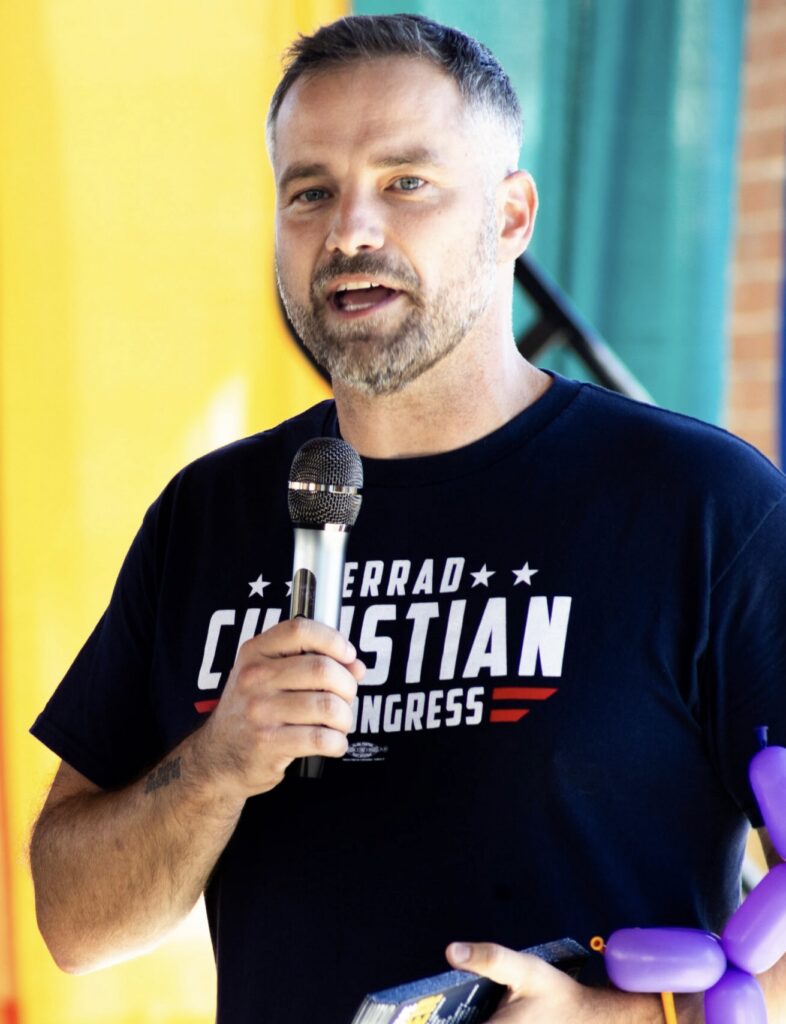
Jerrad Christian
Jerrad Christian is a Navy veteran who grew up in Glouster, Ohio, in Athens County. Christian said he experienced poverty growing up, which led him to join the Navy. He served as a flight deck fueler during Operation Iraqi Freedom and Operation Enduring Freedom, and then became a meteorologist and oceanographer before transitioning back into civilian life and becoming a software engineer.
Now, he seeks to bring what he calls necessary change to Ohio’s 12th congressional district.
“One day, October 3, 2023, I woke up, and I read the news,” Christian said. “And instead of just holding it all in, I decided I was going to run for U.S. Congress. I don’t even remember what I read. I just got tired of being mad.”
Christian said there is a proven record of dysfunction in both the state and federal legislature. His pitch to voters: He will make better choices than previous representatives. One concrete goal he wants to achieve for voters is banning corporate PAC contributions to political campaigns, a process protected by the Supreme Court decision Citizens United vs. FEC.
“I’m tired of rich people being able to buy our politicians,” Christian said. “I’m tired of elections being run off who can raise the most money and not who has the best ideas.”
Election spending has reached record-highs in Ohio this year as outside groups and PACs have poured historic levels of funding into races for governor and U.S. senate.
Christian said that his odds of winning this election have increased with President Donald Trump in office. Christian said that voters realize how poorly the government is run.
“I swore an oath to the Constitution and amendments,” Christian said. “I believe that America should be a free nation. We have a responsibility to maintain individual liberties and hold people accountable for their actions”
When it comes to data centers, a hot topic for Licking County voters, Christian said it is crucial to create protections for water, land and air quality. Climate change is a deep concern of his, and Christian said that data centers should be financially responsible for any harm they cause.
On immigration, Christian said people who immigrate lawfully should be safe and secure. Christian hopes to restore humanity in legislation surrounding immigration, as those who do so legally should not have to worry about being targeted because of their immigration status.
With healthcare, another big issue for voters this election, Christian supports a single-payer, Medicare-for-all system. Health insurance is often tied to employment, according to Christian, and when that is the case, the loss of a job could mean the loss of healthcare too.
The federal minimum wage, Christian says, is a joke. That’s why raising the federal minimum wage is one of his main priorities.
“It’s been the same for God knows how long now,” Christian said. “Any company that can’t pay a living wage is not actually experiencing capitalism. They’re experiencing corporate socialism, which a lot of the folks in office now are a big fan of.”
School funding is another top-of-mind issue for Christian, as schools grapple with decreased funding and property taxes remain a salient concern for residents. Christian suggests rebuilding the Department of Education and helping states find ways to fund their schools.
“States who don’t appropriately use the funds that they’re given shouldn’t get them,” Christian said. “And if you have enough money to give private schools a billion dollars, why would you come to the federal government and ask for more?”
With the current conflict in Iran, gasoline prices continue to rise even as oil barrels leaving the Strait of Hormuz have started to return to pre-war levels for one of the first times since February. The Washington Post reports that there have been at least 22 U.S. military deaths since the start of the conflict.
“The war should end, and it never should have started,” Christian said during WCLT’s Licking County Candidate Forum. “It is on Congress to declare war, to make sure that our war powers stay where they belong. But that would require Congresspeople with spines, and I’m not sure we have a lot of those left.”
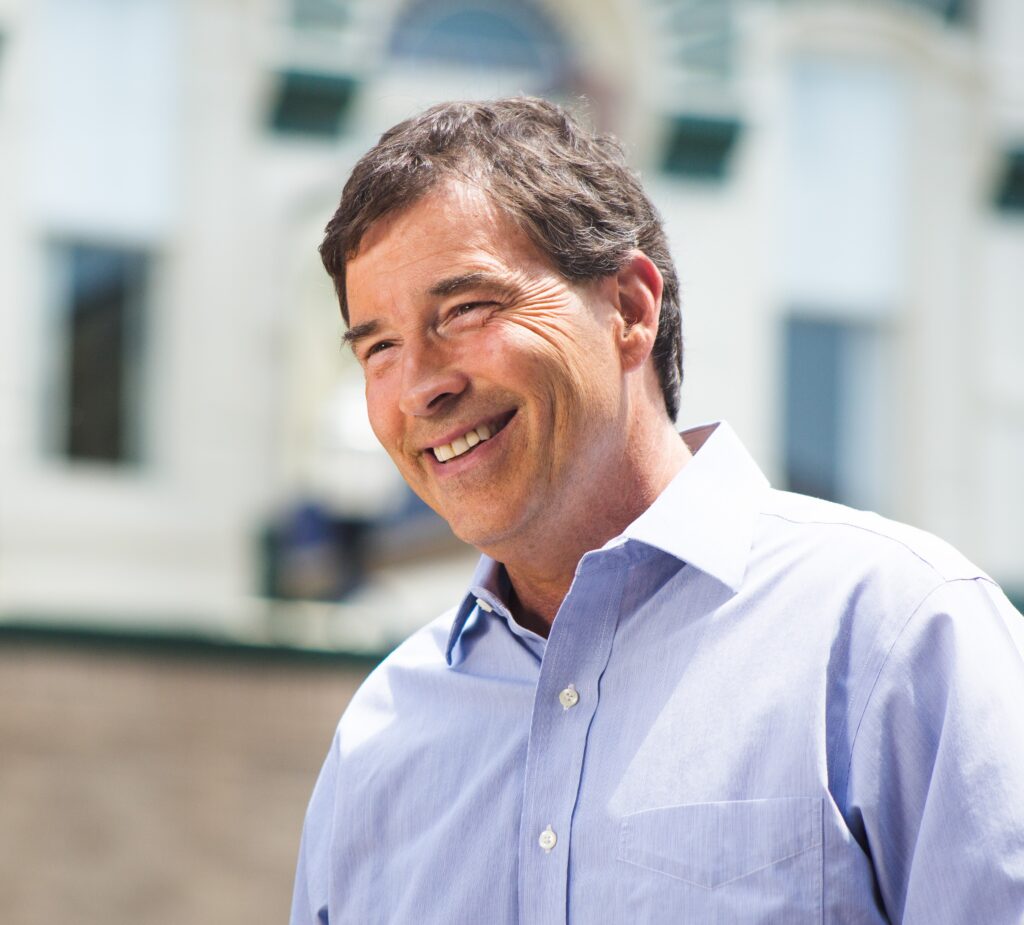
Troy Balderson
Republican Troy Balderson, the current Representative for Ohio’s 12th District in U.S. Congress, grew up in Zanesville, Ohio. Balderson worked on his family farm and his father’s car dealership in Zanesville. He was first elected to the Ohio House of Representatives in 2008 and transitioned to the Ohio Senate in 2011, where he served until he was elected as a U.S. representative in 2018.
One goal Balderson has if re-elected in November is to lower energy costs for residents in his district.
“My number one priority is getting our energy costs under control, and that’s why we’ve passed the legislation that we have passed,” Balderson said.
Two recent pieces of legislation passed by the U.S. House seek to improve economic conditions for District 12 voters, according to Balderson. The first is the Ratepayer Protection Act, a bill that seeks to require data centers and other “large-load” customers that consume large amounts of energy to cover their own energy costs instead of passing those costs on to consumers.
“It was an overwhelmingly bipartisan bill,” Balderson said.
Balderson also sponsored the Load Forecasting Enhancement Act, which was passed by the House. The act will require the Federal Energy Regulatory Commission (FERC) to create regional boards that study and predict how much energy large consumers such as data centers will need and how that will affect the nation’s electricity supply.
On data centers, Balderson said the decision to welcome data centers should be left up to local communities.
“There’s a place for data centers,” Balderson said. “Now, is it in someone’s backyard? Absolutely not. But we have places in the state of Ohio that already have the infrastructure: They’re called brownfield sites.”
Brownfield sites refer to properties that have previously been developed and zoned for industrial use that are vacant or can be redeveloped for a large project like a data center. Redevelopment at a brownfield site can be complicated due to existing or potential environmental degradation.
When it comes to immigration, Balderson said that immigration is important, but that immigrants must follow the legal steps to become a citizen.
“There are people in the 12th congressional district that have come here because of the economic opportunities and the freedoms that they have here that they didn’t have beforehand.”
Balderson said that illegal border crossings are at an all-time low thanks to the Trump administration.
Increasing access to healthcare for residents in the district begins with supporting private employers, Balderson said. Balderson referred to hearings conducted by the Energy and Commerce Committee that brought the CEOs of healthcare companies like UnitedHealth Group and CVS Health Group to ask how to make healthcare more affordable.
“We’re working through trying to figure out how to lower our healthcare costs for our constituents,” Balderson said.
Balderson did not say where he stands on corporate PAC money in politics. He said that he is focused instead on affordability for residents in his district. He referred to the expansion of the Ohio-based manufacturing company Westermen Inc. into Licking County as one example of job creation in the district.
“We’re going to continue to pass legislation that focuses on affordability for the constituents that we represent,” Balderson said.
Maddie Luebkert writes for TheReportingProject.org, the nonprofit news organization of Denison University’s Journalism program, which is supported by generous donations from readers. Sign up for The Reporting Project newsletter here.
Luebkert is one of two Kirtley Mather Fellows at The Reporting Project. The fellowship is created in memory of Kirtley Mather, Denison Class of 1909, with the mission of providing unique opportunities for students to engage in service for the common good.