


Just past the arch of a blooming elderberry tree, a wooden stand holds various potted plants, vegetables, seeds and sprouts. Its sign reads, “FREE PLANTS” and it’s recently become a landmark in the community.
Kelly Bachelor runs this stand – known locally as the “little free plant stand” – from the sidewalk outside her home on West Main St. in Newark, offering every plant for free. Some of the plants are grown in her own yard, and others are donated. From just the elderberry tree alone, she’s propagated and given away over 30 saplings.
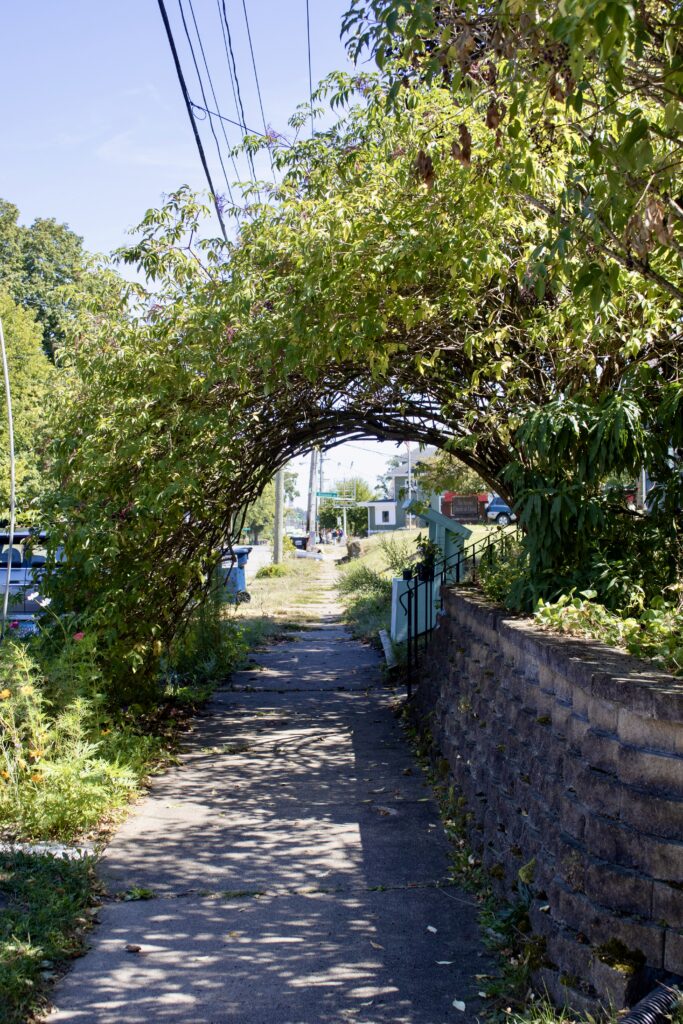

Bachelor’s partner, Adam Green, built the stand in May as a Mother’s Day Gift. Her son Darren helped to paint it. It was an immediate success.
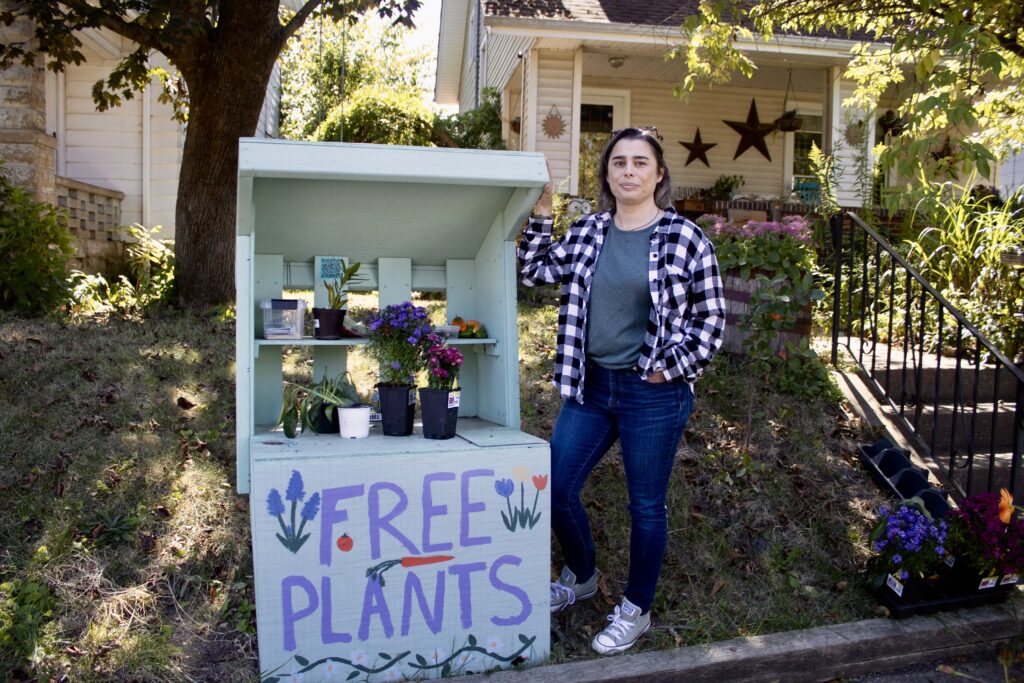
“I was really worried when I first put it out that nobody was going to come. But that first day, we gave away like 50 plants— tomatoes and peppers and elderberries and purple coneflowers— and then it just kind of started growing,” Bachelor said.

The system runs primarily off of community donations. Anonymous donors often leave surplus garden veggies, seed varieties and propagated plants, sharing the wealth of gardening with passersby.
“What is here?”
Jayden Woody, a frequent visitor to the stand, stops by the stand when notified by his fiancee that new plants have dropped on the Facebook page. “This is my fiancee’s dream,” Woody said, pointing to the diverse growth in Bachelor’s yard. He’s not familiar with gardening, but the free plants give him a chance to learn.
He picks up a peace lily and a passion flower, two popular choices.
“Do you know what they look like?” Bachelor asked him. “The flowers are super crazy looking. And you’ll get fruit from it, and they’re native.”
Passion flowers are one of many native perennials that Bachelor offers at the stand. After 15 years of planting wildflowers in her yard, it’s grown dense with native plants. In full bloom, hundreds of purple coneflower plants— a pollinator favorite— dot the garden.
“It’s kind of a luxury to have plants, you know. Especially native plants, they’re hard to find,” Bachelor said.
Native plants are a foundation for a healthy ecosystem, according to the Nature Conservancy, a global environmental nonprofit. Native plants support wildlife by providing food and a habitat, and promote healthy soil and water. They are also more ecologically fit for the area as they have adapted and evolved with the climate, making them more resilient to climate change.
In offering free, typically lower-maintenance plants, Bachelor hopes that more people will be able to enjoy seeing something grow full-circle.

It’s already caught on in the community with almost 800 members in the Facebook group and visible differences in lawns nearby. Wildflowers have spilled across the street; sunflowers climb up in one neighbor’s yard and morning glories and tomato plants line another.
A few hours later, the stand will be bare once again and Bachelor will bring out new perennials. If she’s lucky, another donation or two will already be waiting on the stand. The cycle of growing and giving will continue, as long as the community sustains it.
Mia Fischel writes for TheReportingProject.org, the nonprofit news organization of Denison University’s Journalism program, which is supported by generous donations from readers. Sign up for The Reporting Project newsletter here.