

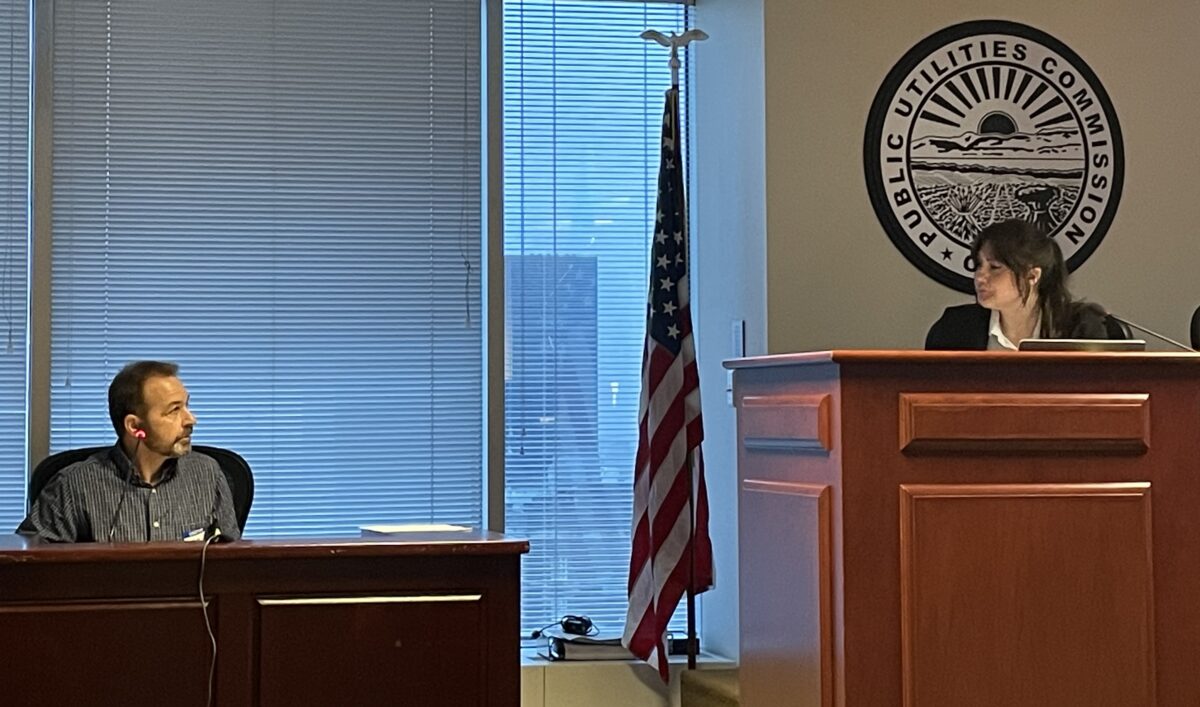
A seventh proposed gas-fired power plant for the New Albany International Business park in western Licking County has Dr. Don DeShetler concerned for the health of his neighbors and the 8,000 patients of the family practice he and a group of doctors staff in Granville.
So the New Albany resident drove to Columbus on Wednesday morning to spend a few minutes telling an administrative law judge for the Ohio Power Siting Board (OPSB) why the board should reject the application for the 450-megawatt, gas-fired PowerConneX New Albany 3 Energy Center.
He said PowerConneX proposes using “gas power plants that are highly inefficient and extremely polluting,” and that among his many concerns are the health effects of the 178.1 tons of fine particulate matter that would be pumped into the air each year by that one powerplant.
“At 1/30th the width of a human hair, PM2.5 (fine particulate matter) is breathed into the lungs, enters the bloodstream, and causes inflammation throughout the body,” DeShetler said during the Wednesday morning hearing at the OPSB offices. “Extensive scientific evidence finds long-term exposure to PM2.5 is associated with heart disease, stroke, asthma, cancer, and premature death. Most vulnerable are children, elderly, and immuno-compromised people. Fine particulate matter is widely regarded to be responsible for 7.9 million deaths worldwide each year.”
The Wednesday morning hearing was the final step before the OPSB gets the case and makes a decision, which Administrative Law Judge Manette Asta said would likely happen in January.
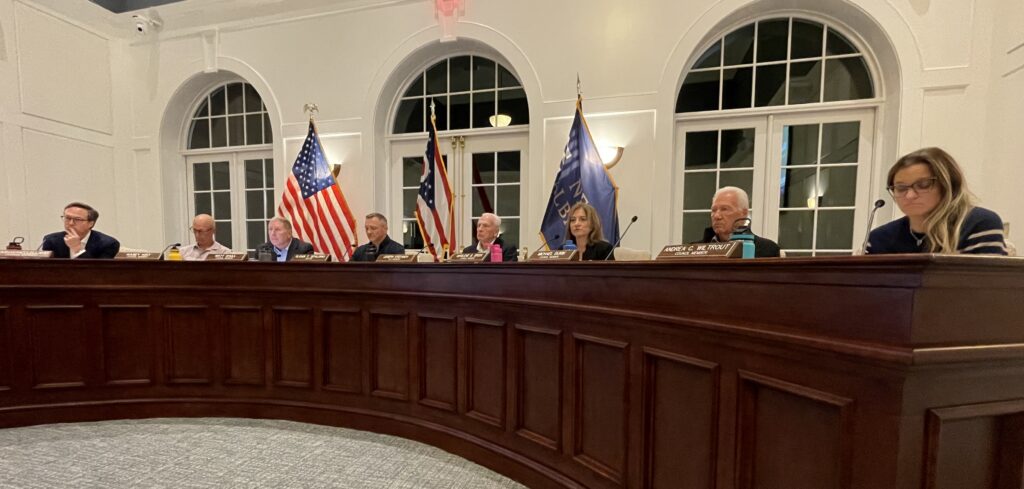
DeShetler and his wife, Lori, a physical therapist, both spoke during the New Albany City Council meeting on Tuesday evening, when about a dozen frustrated, angry and disappointed constituents repeatedly told Mayor Sloan Spalding and the council members to “do better” when it comes to protecting them and their children from harmful pollutants.
Lori DeShetler was emotional when she told the council – several of whom she said are friends of her family – that she had just come from The James Cancer Hospital at Ohio State University, where her mother is being treated for a recently diagnosed cancer.
“This is what I’m asking you all to do: Be proactive, not reactive,” she told the council members about taking action to curtail pollution from the power plants, reminding them that New Albany residents have been strong supporters of Pelotonia, the bicycle ride that draws thousands of people each year to raise money for cancer research.
The PowerConnex 3 application says the company expects the potential emissions from the plant would be the following in a year:
- 161.3 tons of nitric oxide and nitrogen dioxide
- 218.8 tons of carbon monoxide
- 10.2 tons of sulfur dioxide
- 178.1 tons of fine particulate matter
- 178.1 tons of course particulate matter
- 243.9 tons of volatile organic chemicals
- 63.8 tons of hazardous air pollutants
- 23.7 tons of formaldehyde
- 214.2 tons of ammonia
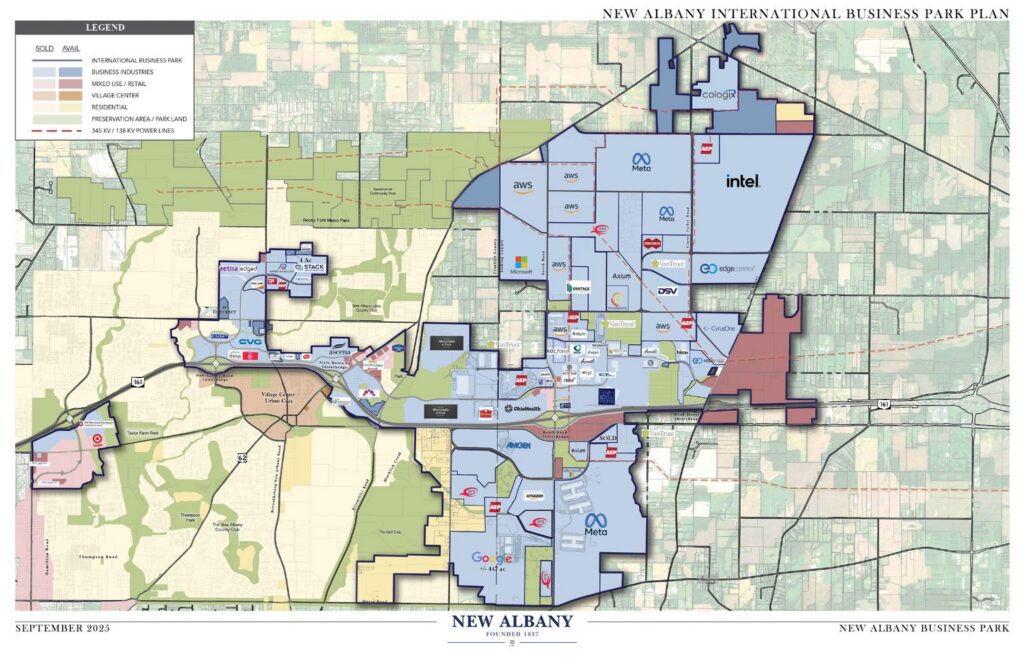
And the emissions from seven plants at four sites in the New Albany International Business Park, which is in western Licking County, would add up to thousands of tons of emissions.
And while seven would be the highest concentration in one place in Ohio, more are proposed for other data centers in Ohio – including the 1,300 megawatt Fairfield Energy Center near Millersport and Buckeye Lake. An Ohio Environmental Protection Agency hearing on an air-pollution permit for that plant is set for 6 p.m. on Tuesday, Nov. 10, at Millersport Elementary School, 11850 Lancaster St.
Add up all of the existing or proposed plants in Ohio, and the emissions would be “as much as some countries,” said Cathy Cowan Becker, president of Save Ohio Parks, which is fighting gas-fired power plants because the increased demand for natural gas will result in more drilling and hydraulic fracturing, or “fracking,” in state parks.
“Estimates indicate that 85 million tons of greenhouse gases – as much as is produced by the countries of New Zealand and Israel – would be emitted in Ohio by gas-fired power plants alone.”
Of the seven power plants proposed for New Albany, the 200 megawatt “Socrates South,” began operation in August near the intersection of Beech and Morse roads. Four others have been approved and two are awaiting a decision by the Ohio Power Siting Board:
- Socrates North, a 200 megawatt facility under construction east of Beech Road and south of Green Chapel Road.
- PowerConneX 1, a 125 megawatt facility under construction east of the intersection of Harrison and Clover Valley roads.
- STY (Socrates The Younger) Power Generation Facility, a 250 megawatt facility under construction southwest of the intersection of Harrison and Clover Valley roads.
- PowerConneX 2, a 216 megawatt facility under construction on Clover Valley Road west of Mink Street.
- Will-Power’s Neo Power Generation Facility, a 500 megawatt facility proposed for east of Mink Street between Beaver Road and Jug Street – across Mink Street from the PowerConneX 3 site, is under consideration and an OPSB decision could come in December.
- The 450-megawatt PowerConneX New Albany 3 Energy Center, north of Rt. 161 on Harrison Road between Mink Street and Clover Valley Road, also is under consideration and a decision is likely in January.
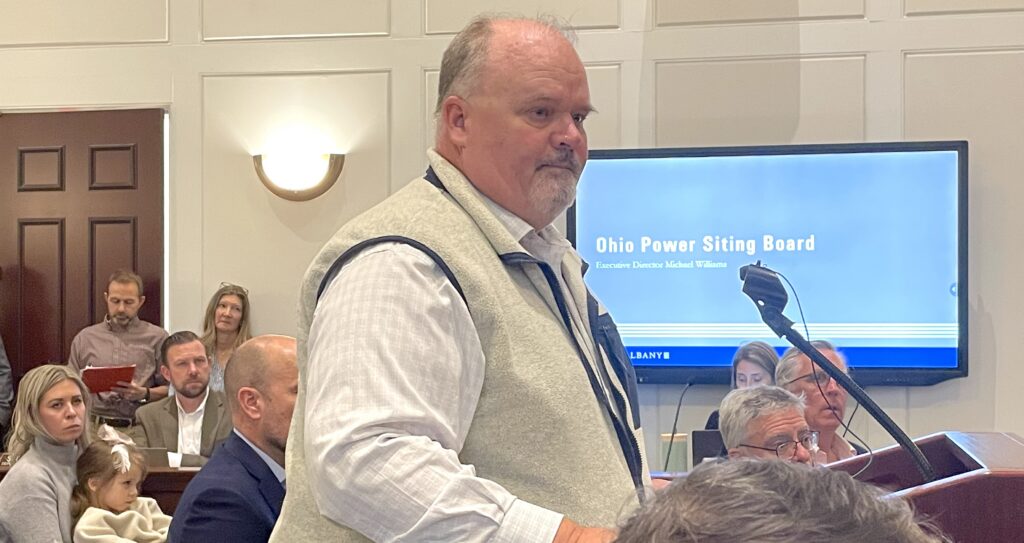
Michael Williams, executive director of the OPSB, gave a detailed presentation to the New Albany City Council on Nov. 3 in which he said repeatedly that state law gives the seven voting members of the state board “primacy” in deciding whether and where energy generating facilities can be built and operated.
He also said that the OPSB hasn’t rejected an application for a gas-fired power plant in recent history, but it routinely approves them with conditions that suggest or require the applicant to take steps beyond what was presented in the original application.
New Albany Community Development Director Jennifer Chrysler said during the council meeting that an air-quality monitor has been placed in Licking County near the sites of the power plants, and the city developed a webpage to provide information to the community.
The site includes a sentence saying “New Albany is no longer approving additional annexation or zoning requests for data center development as the City focuses on expanding other Business Park clusters. Since April 2025, all approved rezoning applications have excluded data centers as a primary use. Data centers are permitted only as ancillary or auxiliary uses to a primary use group, with restrictions on their square footage and function to ensure they remain secondary to the primary use.”
Chrysler also said the city has filed with the OPSB to intervene in cases, and that has resulted in some conditions requested by the city to be included in the final proposal. They include landscaping, an investment in capital improvements and a request to install the latest technology as soon as possible.
Speakers at an OPSB public hearing in New Albany on Oct. 22 said that the power plant, which would be one of the largest among the seven in New Albany if approved, does not meet some of the basic requirements of the OPSB, including being for the good of the public and using the latest and least-polluting technology.
PowerConneX’s proposal indicates it would use natural-gas-fired equipment that is at least a generation behind the latest technology – equipment that burns more gas, produces more pollution and produces less electricity than the newest equipment. But the new technology is in such high demand in the race to build data centers that the generators are on back order.
New Albany resident Neil Kirby, who is the head of the city’s planning commission, asked the board not to approve the proposal, but if it chooses to approve it, the OPSB should do so with the conditions that EdgeConneX, the data-center builder and parent company of PowerConneX, must immediately order power-plant equipment using the latest technology and install it by a date certain.
The seven power plants proposed for New Albany pose serious health risks that could lead to a health crisis, Lori DeShetler said, and she noted that others who testified that night said that situation flies in the face of the image and culture New Albany has sought to cultivate through its “Healthy New Albany” program.
The concerns raised with the OPSB and the New Albany City Council are not hyperbole, DeShetler said. “The facts are there. We know what’s going to happen. Five have already been approved. We have an opportunity to maybe stop two of them.”
“A lot of people live here because we’re supposed to be the healthiest community in the nation,” she said. “Someone mentioned that it’s hypocritical. That’s heartbreaking.”
Alan Miller writes for TheReportingProject.org, the nonprofit news organization of Denison University’s Journalism program, which is supported by generous donations from readers. Sign up for The Reporting Project newsletter here.