


Looking toward the future water needs for Newark, the city is exploring the possibility of finding it just north of Utica in Knox County.
“We continually evaluate long-term sources of water for the city, and a southern Knox County property has the potential to add to our source water,” Water Administrator Brandon Fox told The Reporting Project.
He quickly added that there is no immediate need for new water sources.
“We have plenty of water,” Fox said.
If the Knox County property is deemed a viable water source – as a well field, reservoir or both – the city would see it as a regional asset that could benefit other communities, including nearby Utica and townships between Knox County and Newark.
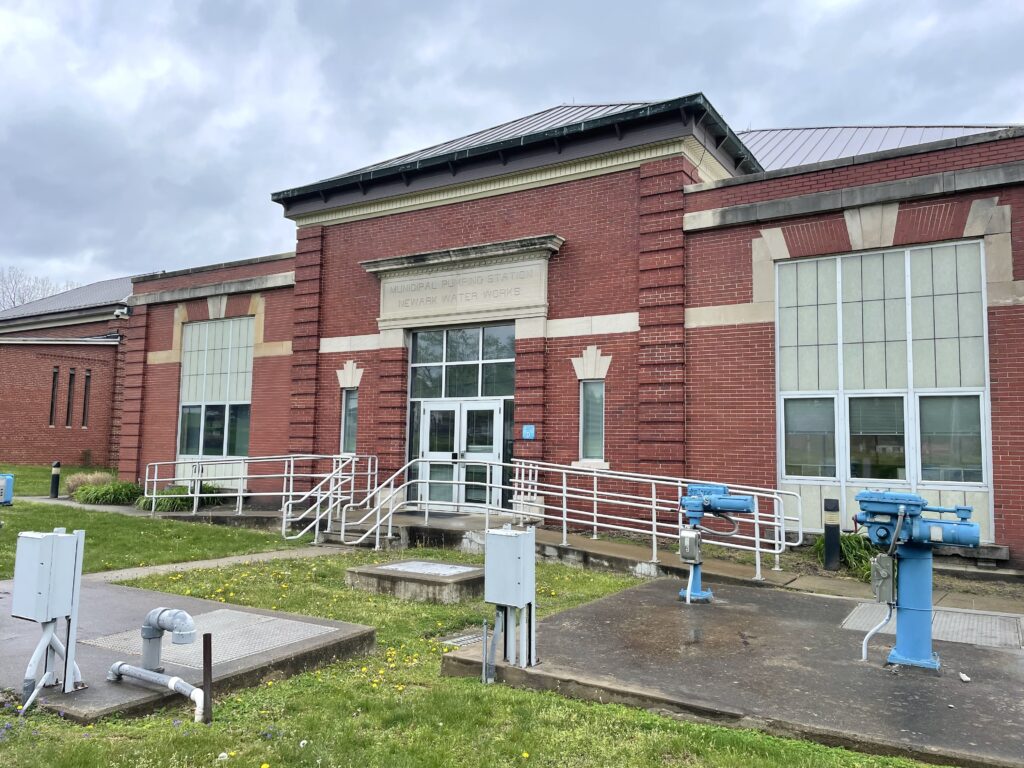
A reservoir on the land in Morgan Township, for example, could release water into the North Fork of the Licking River, from which Newark draws water farther downstream. And a well field could provide water that could be released into the river or piped directly to the Newark Water Plant on Waterworks Road on the north side of Newark.
Given that the land is next to Utica, “there is a great potential to develop community recreational use such as a park, walking path or other community uses,” the city says in an information sheet about the proposal.
“There will be many years of study and funding decisions,” Fox said, “and we want to make sure we don’t negatively affect anyone in that area. It could be a benefit to not just Newark but also other communities – a valuable resource for the region. We will work with Utica officials and township trustees in the area in that regard.”
In addition to posting the information sheet about the proposal on its website, Fox said the city would hold meetings to discuss the search for future water sources.
Fox met with the Newark City Council Service Committee on Aug. 17 and explained his request for city council approval of a resolution that would authorize Newark Public Service Director David Rhodes to sign an 18-month contract with the landowner to evaluate the 300-acre property just north of Utica.
That resolution will be presented to the full council during its meeting at 7 p.m. on Tuesday, Sept. 8.
Fox said the contract with the landowner would give the city first right to buy the property if it proves to be a viable water source – or to walk away if it does not.
The geological and hydrological study will cost between $180,000 and $200,000, Fox said, and it will be covered by water department funds set aside for that purpose.
He said the city, which draws its water primarily from the North Fork of the Licking River, has the capacity to treat up to 15 million gallons of water a day and treats 7-8 million gallons a day to meet current needs. And the city has a 100-acre wellfield near St. Louisville that it can call upon as needed if the river water level is too low to meet the demand.
Years from now, when a decision is made to drill wells and/or build a reservoir, the city would need to issue “water bonds” to cover that cost. Such bonds amount to a loan that would be repaid with future funds from the water department.
Fox worked for the City of Columbus Utilities Department when then-director John Doutt persuaded the mayor and city council to invest $122 million in building a 9 billion gallon reservoir on 843 acres in northwestern Delaware County and part of Union County. Initial planning began in the early 1990s, and construction began in 2011.
That project was financed with customer billing revenue, bonds and an investment by the non-profit, member-owned Del-Co Water Company in Delaware County in exchange for access to water from the reservoir.
He said Newark’s search for future water sources is much the same but on a smaller scale. It’s doing due diligence to make sure Newark can meet customer demands for water years down the road.
Alan Miller writes for TheReportingProject.org, the nonprofit news organization of Denison University’s Journalism program, which is supported by generous donations from readers. Sign up for The Reporting Project newsletter here.