

At exactly 9 p.m. on Sept. 24, nine people moved along Broadway in downtown Granville carrying bins of yarn, large needles and headlamps. Some carry pieces of knitted artwork. Others follow a map showing exactly where each piece belongs. They work quickly, wrapping trees and stitching colorful yarn around benches, poles and other fixtures.
For 15 years, a group of Granville residents has quietly transformed the village through an annual tradition known as yarn bombing. Knitted installations appear overnight, remain for only a few days and then disappear. Organizers say that the tradition has become a lasting part of the community.
“It’s this whimsical thing that happens every year. It’s spontaneous and short-lived. And that’s what I love,” one longtime organizer told The Reporting Project.
Editor’s note: Anonymity is rare in our reporting, but editors at The Reporting Project determined it was warranted in this instance, given the high stakes and the criminality of this “vandalism.”
But this work begins long before installation night.
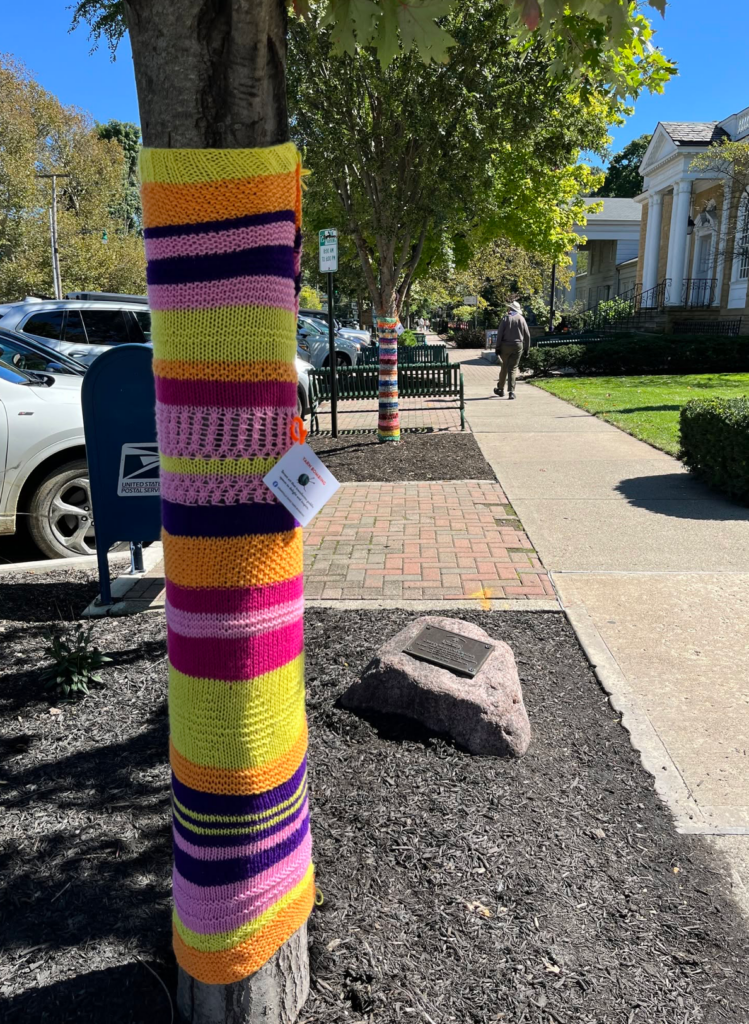
A couple of months before installation night, organizers measure the trees throughout downtown. Since the trees continue to grow, knitters make extensions to ensure the pieces will still fit.
The pieces the anonymous knitters make can take much longer to create than they do to install. Members knit large shapes, with varying colors and patterns, that they can wrap around each designated structure the night of the installation with just a couple whip stitches,
Each installation is labeled and assigned to a specific spot. On installation night, volunteers receive kits containing a large darning needle, yarn, pins and a headlamp.
They also receive instructions about one of the most important parts of the tradition: anonymity.
“The first thing I said to the volunteers is that we’re going to talk about lying,” the organizer said, “because we need to remain anonymous.”
The organizers have even given the organization a nickname. They call themselves the “Ninja Knitters.” The secrecy adds to the experience.
The installation itself takes about two hours. Some pieces require several people to hold them in place while others stitch the pre-knit pieces onto the trees. Velcro has also been incorporated into some installations to make the process faster. Later, the artwork can be removed in about an hour.
“It was invigorating to have everybody out and just doing this thing,” one volunteer said. “You’re not typically out with headlamps downtown.”
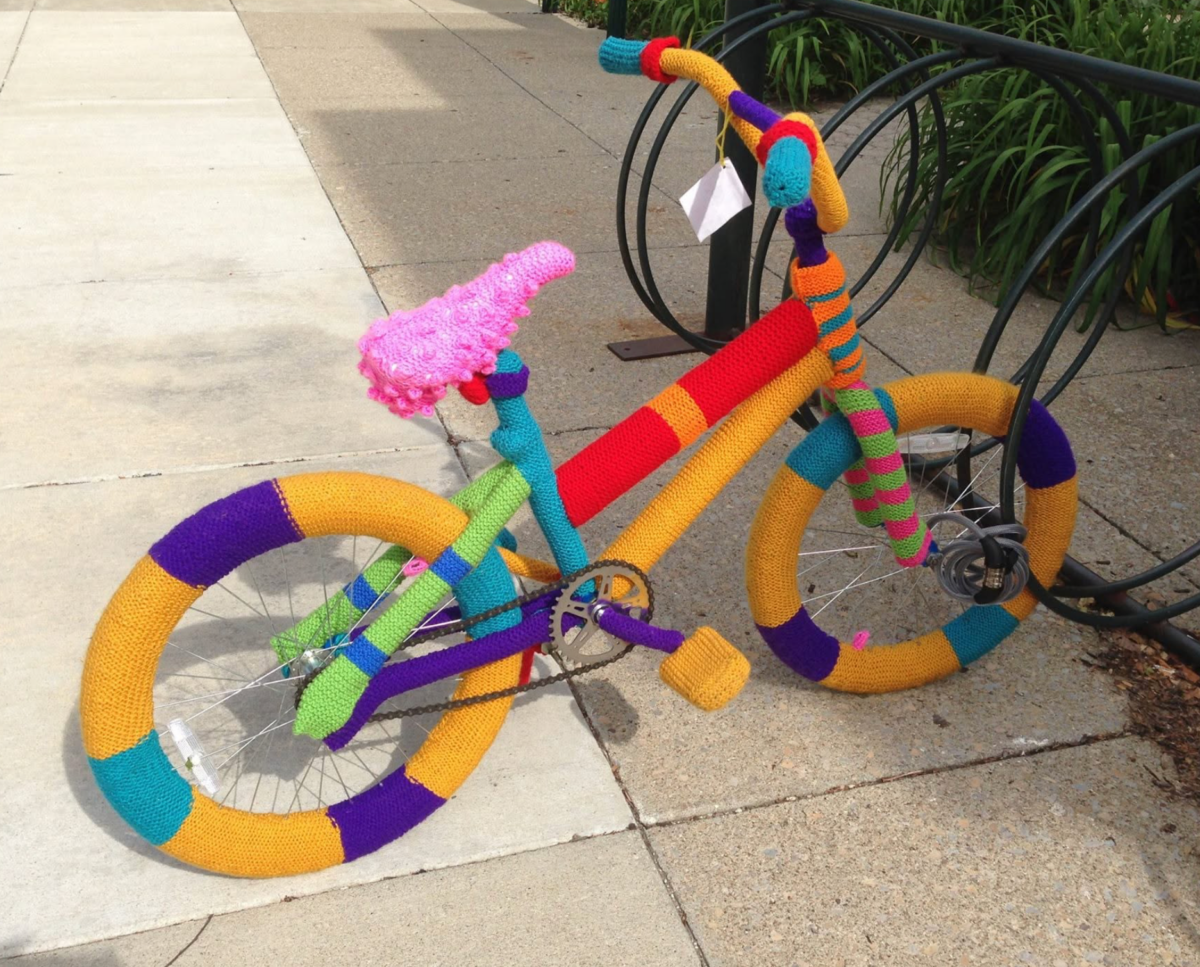
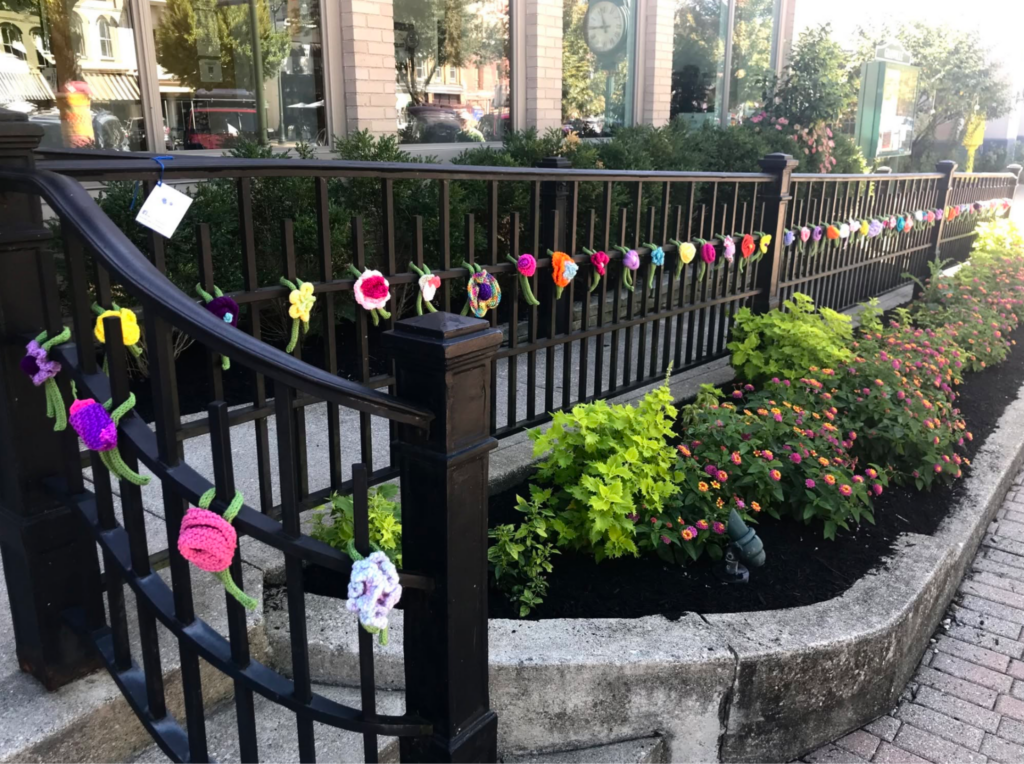
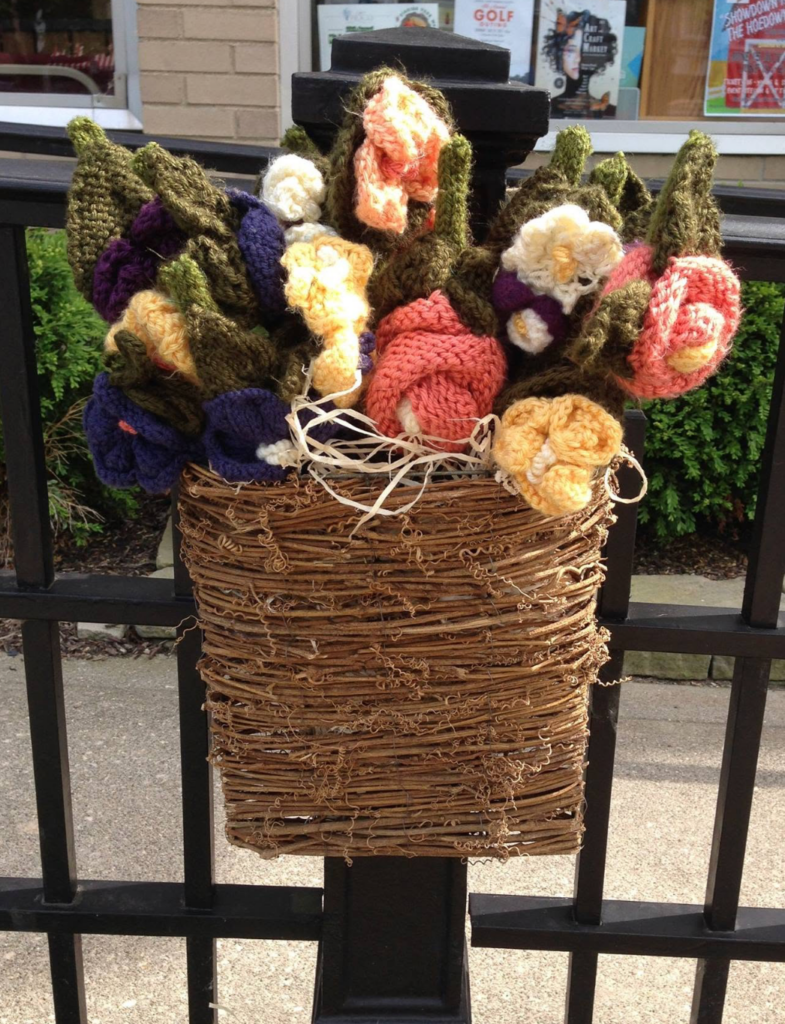
The tradition began as a much smaller mission. The first year included butterflies, armrest covers and rectangular pieces hanging from trees. The following year, the group created a large installation around a tree outside the village offices. Later came blankets for trees, flowers, ornaments and a bicycle made from a Goodwill bike.
The bike has become a favorite among children. Someone once tried to steal it. It now has a bike lock.
Over the years, the group itself has changed. They still have people who can create the pieces, but there are fewer people available to install them.
“We had the capacity to knit, but we just didn’t have the capacity to install,” one organizer said.
So they found another way.
“We called them the ‘men’s auxiliary,’” the organizer said. “So people’s partners would show up on the night of the installation to help.”
The organizers say the reactions from residents are one of the most rewarding parts. The morning after the installation, they return downtown to see people discovering the artwork.
“For me, it’s the smiles,” one organizer said. “Just seeing people smile and say, ‘Oh, look at this.’”
Another volunteer remembers watching the smiles on children’s faces after the installations appeared.
“Just seeing the kids run from tree to tree with just extreme joy and excitement as if they were at an amusement park,” he said.
“That, to me, is the reason why public art is so important,” he said. “It just brings so much life and energy to an area that you’ve walked down a million times, but now you’re running with joy and screaming and laughing with your friends and hugging the trees.”
For the organizers, the reactions from residents reflect something larger about Granville.
In a small community, they said, residents have the ability to create something themselves and invite others into it. “It’s a community where you can make a difference,” one organizer said. “It’s small enough that you can make a difference.” That sense of possibility, the organizer said, is part of what makes yarn bombing fit Granville.
“I think the size of the community and the spirit of the community are reflected in the yarn bombing,” the organizer said. “People can make a difference because of the scale of Granville. We just choose to do this. And we do it.”
One member notes that yarn bombing is only one way residents can make that difference.
The yarn installations may disappear after four or five days. But the tradition, and the community built around it, remains.
Community members interested in helping the knitting ninjas make the magic can reach out to Granville Ohio Yarn Bombing on Facebook.
Evy LaBare writes for TheReportingProject.org, the nonprofit news organization of Denison University’s Journalism program, which is supported by generous donations from readers. Sign up for The Reporting Project newsletter here.