

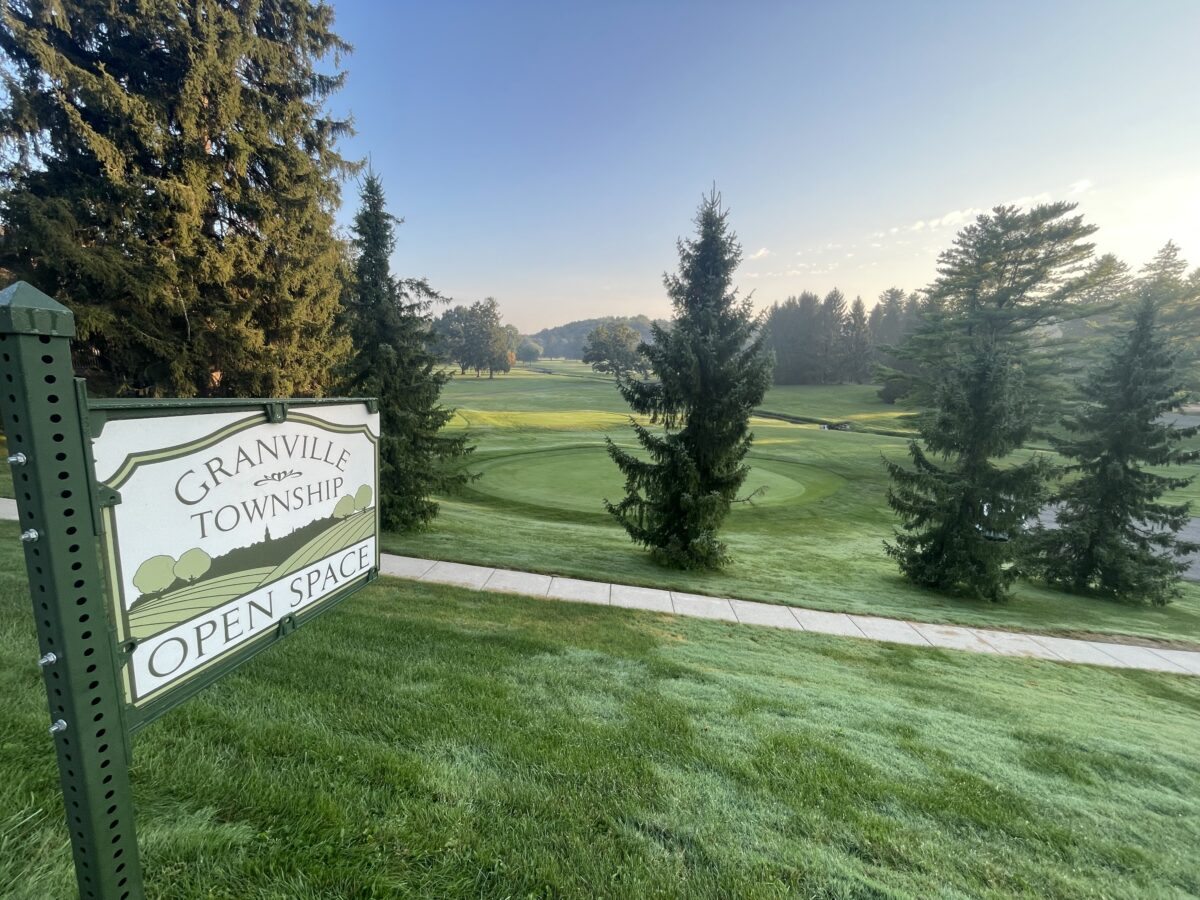
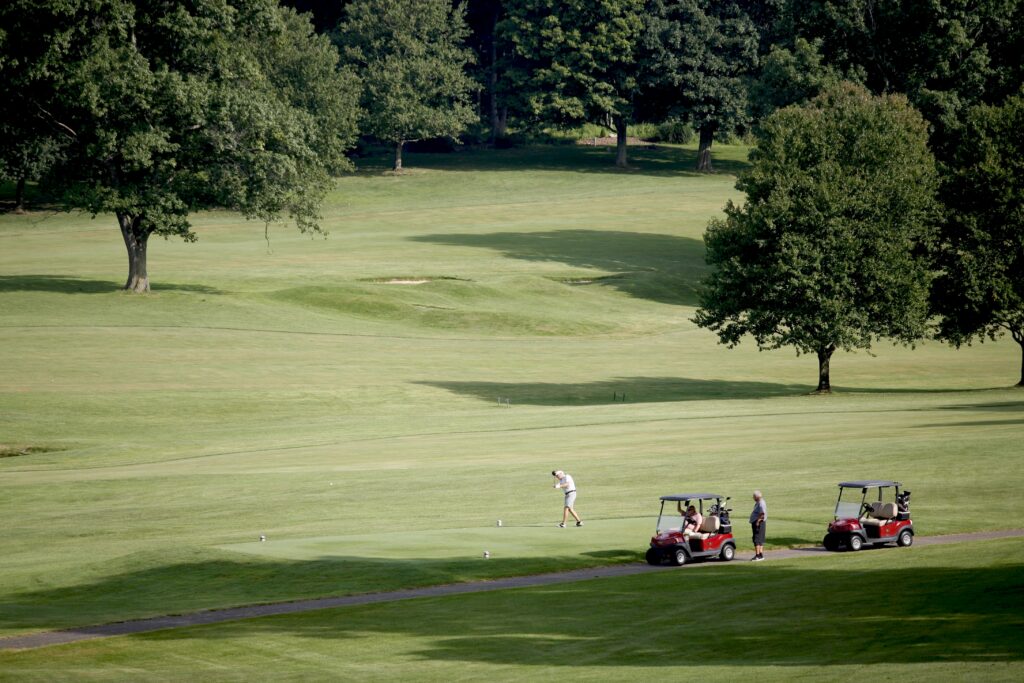
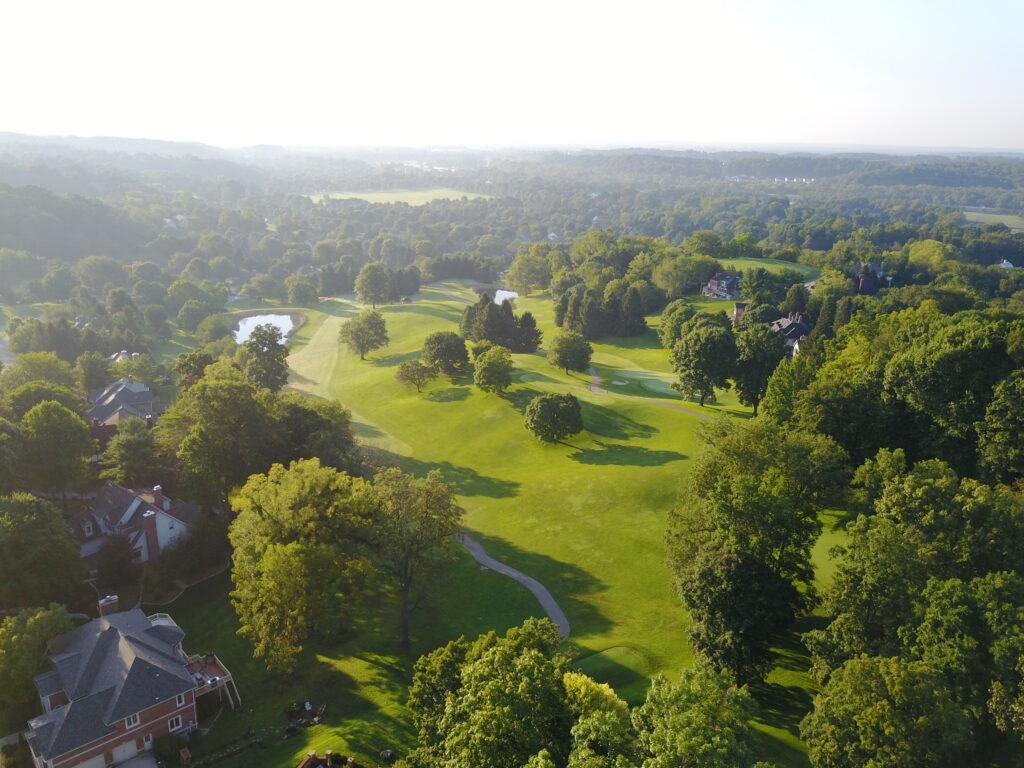
The Denison Golf Club course will look more like the one Donald Ross designed in 1924 after a year-long restoration project Denison University plans to undertake in 2027.
The course on 149.4 acres in the heart of the village was donated to the university by the late Granville resident and Denison alumnus Bob Kent in 2015. The course will be closed during construction from June 2027 through the spring of 2028.

Denison hired the Hanse Golf Course Design firm of Malvern, Pennsylvania, to lead the $8 million project, which is the first phase of what could be a two- or three-phase project.
“This is entirely donor-funded,” Denison President Adam Weinberg said in an interview. “We’re not going to use university operating dollars, and we made clear that this couldn’t detract from the college and fundraising for it.”
He said this project has attracted new donors – mostly alumni and parents of Denison students – who were drawn to this project because they appreciate golf and see the value in investing in a course designed by Donald Ross. Weinberg said his hope is that those donors will be inspired to make future donations to the university.
Weinberg said university officials felt a duty to renovate the course because of its history, its value to the community and its importance to the Denison golf program.
“When someone gives you a Donald Ross course, you have an obligation to maintain it or give it to someone else,” Weinberg said. “This should allow us to make it more sustainable financially – at least break even.”
Weinberg expects that the renovation will make it one of the best public courses in the state, and that means an increased interest from golfers, which will allow the university to raise greens fees for golfers from outside the community. Local residents will receive a discount based on their ZIP Code, said David English, Denison chief financial officer.
Weinberg also said the university will seek to grow its youth golf program to make the sport accessible to Licking County students who might not otherwise consider the sport.
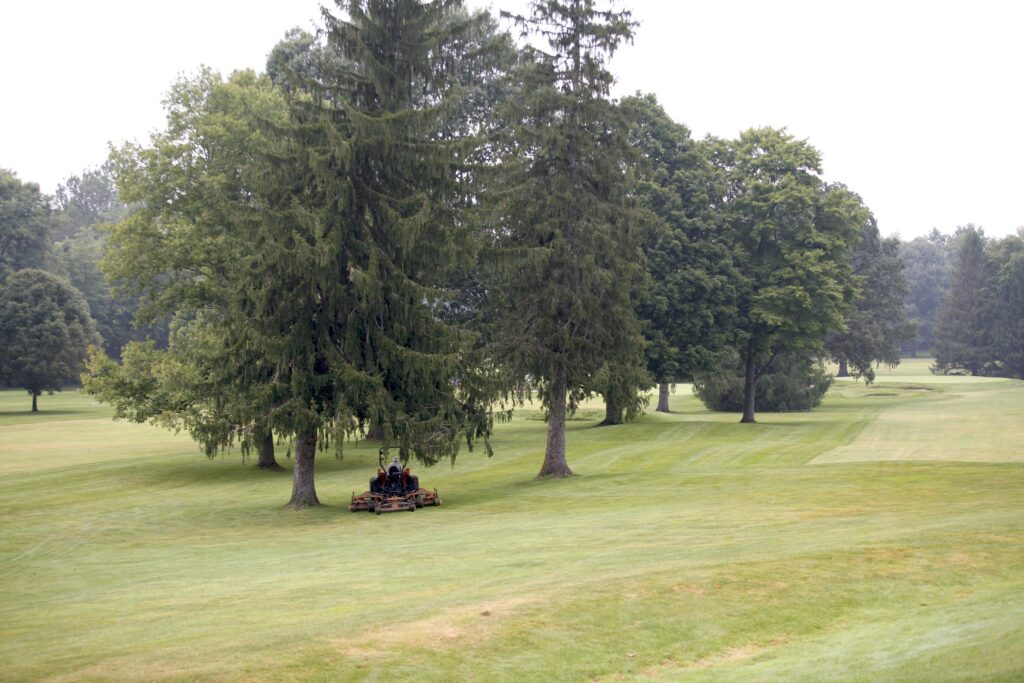
Gil Hanse drew the designs for the renovation, and one reason the course will look more like when it opened in 1925 is that it will have at least 362 fewer trees.
Weinberg said beyond capturing the spirit of the Donald Ross design, the removal of several hundred trees among thousands on and around the course will decrease the need for pesticides and result in healthier turf.
The tree removal has prompted some Granville residents to question whether it falls within the letter and spirit of two conservation easements that require owners of the golf course to maintain it as green space.
One easement is with Granville Township and the other is with the village. The township’s Open Space program paid $2 million to the previous owners to acquire a conservation easement on the bulk of the property, which assures that the land will never be developed. A smaller easement with the village to preserve the green space covers about 13 acres of the property.
An overarching community goal at the time the easements were signed in 2014 was to ensure that the land would not become a housing development. The same concern inspired the Open Space agreement in 2003 that kept the Bryn Du Mansion front yard from becoming a housing development. The mansion, the golf course and the Granville Inn were all once owned by the same person, and Denison now owns both the golf course and inn.
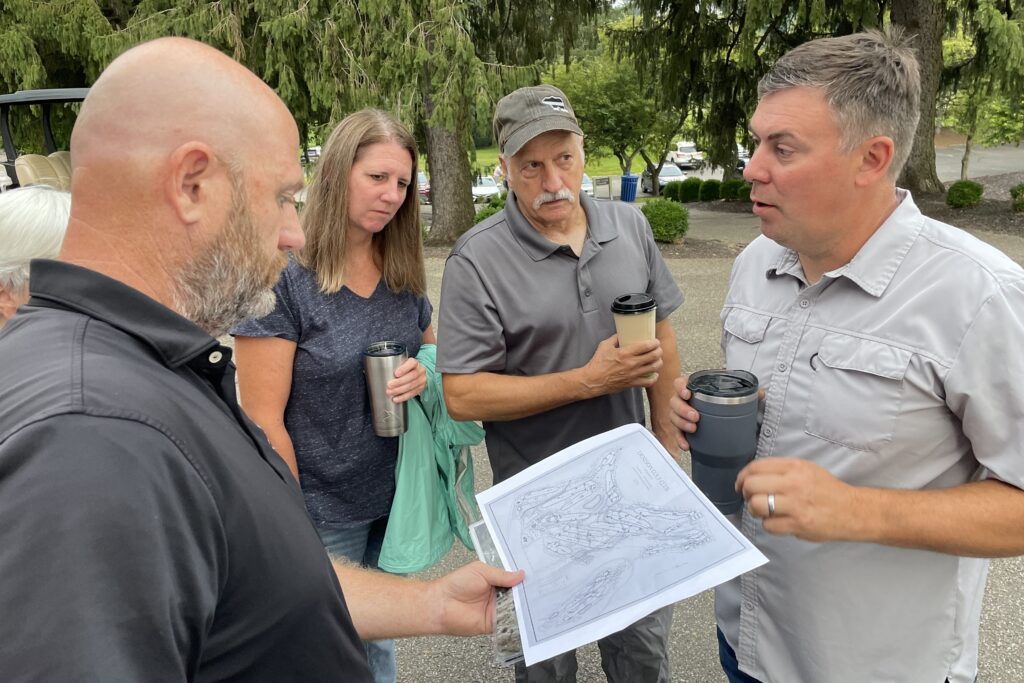
Jake Preston, Denison’s director of physical plant and capital projects, asked the Granville Township trustees during their Aug. 26 meeting to sign off on the course restoration plans because they hold the Open Space program conservation easement. The trustees are scheduled to vote on that request during their next meeting at 7 p.m. on Wednesday, Sept. 9, at the township office, 1554 Columbus Road.


“Denison has an opportunity to make a significant investment in this historic property and historically restore the course with Gil Hanse, one of the world’s leading golf course architects,” Preston told the trustees, all three of whom had individually toured the golf course to see and hear details about the project. “This isn’t about creating a different golf course. It’s about preserving and restoring what makes this one special.”
The township easement says the land must remain a golf course and includes a section that says, “No trees shall be cut or harvested from the property, except for trees that are diseased and/or damaged and except to the extent as would be reasonable for maintenance of the golf course and for agricultural purposes.”
Granville resident Susan King, who also spoke to the Granville Township trustees on Aug. 26, questioned whether this project goes beyond maintenance.
“Does removing hundreds of healthy, mature trees qualify as ‘maintenance,’ or does it cross into ‘modification’ – which Section 1 explicitly says the easement exists to prevent?” King asked, quoting from the township easement.
Section 1 says “the purpose of this easement is to assure that the property will be retained and held forever in its natural, scenic, and open condition and to prevent any modification or encroachment resulting from occupation, development or other use of the property that will impair or interfere with the preservation of the property in that condition.”
King asked whether the trustees had requested a legal opinion from the Licking County Prosecutor’s Office, which the trustees said they would get.
And King asked about the university’s communication with neighbors about the extensive work that will be done on the property. In addition to strategic tree removal, the plans call for installation of new irrigation and drainage systems, the restoration of some bunkers, and changing the shape and location of golf-course elements such as tees, fairways and greens.
The most significant changes will happen on holes 15-17, which are not part of the original Donald Ross design. The original holes were removed in the 1990s when homes were built in the adjacent Bryn Du Woods development. And the new holes are surrounded by homes in that development.
Plans call for the removal of trees in that section of the course and a recontouring of the landscape there to shave down a prominent hill between holes 15 and 16.
Preston said Denison officials have talked with the Bryn Du Woods Homeowners Association and other neighbors about the project, including the work on holes 15-17, where he said “Gil Hanse will recreate the architectural intent and character of Ross in a new layout. This work will involve changes in topography (significant excavation), drainage and irrigation improvements, and construction of new greens, tee boxes, bunkers, fairways and playing corridors.”
King asked the township trustees whether such extensive excavation is allowed under the easement, quoting a section that says, “Except as otherwise provided herein, no filling, excavating, or removal of topsoil, sand, gravel, rock, minerals, oil and gas, or other materials shall be permitted on the property, nor shall there be any building of roads or changes in topography of the land in any manner, except with the permission of the grantee, which permission shall not be unreasonably withheld provided that, in the grantee’s opinion, the proposed modification shall continue to be consistent with the uses authorized by § 5301.67 (A) and § 5705.19 (H) of the Ohio Revised Code.”
The trustees expect to have a legal opinion on that point when they meet next week.
As for tree removal, Preston told the trustees that “every proposed removal has been individually evaluated and has a specific purpose related to the maintenance of the historic course, including turf health, playability, and restoration of the historic Ross design. At the same time, we’re retaining a significant number of trees and being thoughtful about the overall landscape.”
Weinberg said the university will commit to being “tree neutral” by planting new trees in the village and on university property in numbers at least equal to the number of trees removed from the golf course. English said the university planted 250 trees in the past 18 months.
During a tour of the golf course on Aug. 31 with members of the township’s land management committee, which annually visits properties in the Open Space program to ensure compliance with easements, Preston said that the trees slated for removal are “362 among thousands” on the golf course.

Many of the trees slated for removal are spruce trees planted in the 1940s that Golf Course Superintendent Scott Wiemers said likely were Christmas-tree size then and now are at least 30 feet tall with boughs stretching 15 to 20 feet wide at the base.
“The spruces hide some of the most stately, beautiful trees, which will stay,” said Todd Fyffe, Manager of Grounds and Horticulture.
In addition to spruce trees, the plan calls for removal of some diseased and dying deciduous trees, others planted during the past 30 years, and some that are in the path of changes Hanse plans for the course.
During the Aug. 31 tour, Wiemers, who has worked at the golf course for 41 years, said he personally planted dozens of trees on the course at the direction of previous owner Bob Kent, who loved trees, and some of them are now slated for removal.
Having spent the past four decades on the course, Wiemers said he sees the value in removing trees for both improving sight lines for golfers and improving the health of the grass, soil and remaining trees that are shaded and crowded by some trees slated for removal.
King told the township trustees that she asked questions about the project to raise awareness about the Open Space program, for which the trustees have placed an issue on the Nov. 3 ballot seeking renewal of a levy that supports preserving green spaces in the township and village.
“I love my community,” King said. “I love Denison. I’m a proud alumna of the college. I love the golf course. I love our Open Space Program. But I don’t love losing all these mature trees. With this being on the ballot this fall, it’s important to show people that we’re being responsible about how we’re managing the easements, the properties and the taxpayer resources.”
Alan Miller writes for TheReportingProject.org, the nonprofit news organization of Denison University’s Journalism program, which is supported by generous donations from readers. Sign up for The Reporting Project newsletter here.