

Students aren’t the only ones bringing home report cards. Each year, the Ohio Department of Education & Workforce issues report cards for all Ohio schools and districts, granting them an overall grade of up to five stars..
The score is based on six components: achievement, progress, gap closing, graduation, early literacy, and readiness for college, career, workforce and military service. A searchable database of report cards is online at https://reportcard.education.ohio.gov/.
Here’s how Licking County School Districts did for the 2025-26 academic year:
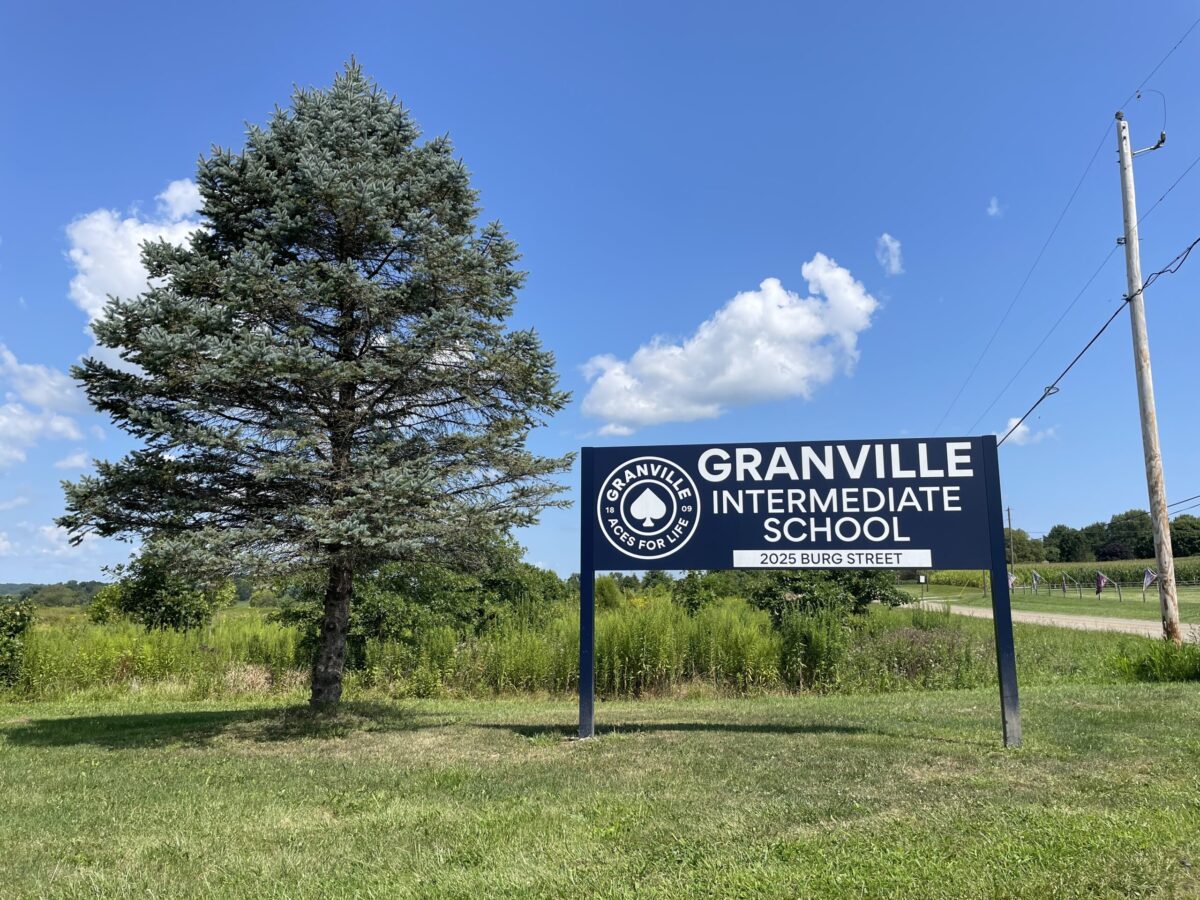
Granville Exempted Village, with an enrollment of 2,442, earned an overall rating of 5 stars – the same as the previous year. The district was assigned 5 stars in the achievement, progress, gap closing and graduation components and 4 stars in early literacy and college, career, workforce and military readiness.
Granville was the only school district in Licking County to earn 5 stars.
“We view the state report card as interesting validation of work that we already know our students completed,” said Granville Exempted Village schools Superintendent Jeff Brown. “We have a lot of internal metrics that we used to try and calibrate how our students are progressing.”
“Being a five star is not necessarily a surprise, but it’s a lot of effort by our students and staff to achieve that type of result,” Brown said. “We are very proud of students and staff and the work that they put in.”
He said the Granville school district has a continuous improvement mentality in that administrators, teachers and staff always look for areas to improve, and not just in academics.
“Our mission is learning for life, so it’s not just about academic achievement; we prioritize our portrait of a graduate competencies – the knowledge, skills and disposition that we want all students to know and be able to do when they graduate from Granville High School,” he said. “That has equal weight to our educational outcomes as the achievement scores do.”
He said the district prioritizes “more of the human skills and know that the academic content mastery will come along as we create the environment for our students to thrive and create their interests.”
Licking Heights Local was assigned a score of 4.5 stars – an improvement from 4 stars in the 2024-25 school year.
Heath, Johnstown-Monroe, Southwest Licking, Lakewood and Northridge districts all earned 4 stars. Heath, Northridge and Southwest Licking received 4 stars the year before. Johnstown-Monroe and Lakewood improved from 3.5 the year before.
Heath City Schools Superintendent Trevor Thomas said the district was close to a 4.5 star rating.
He is specifically pleased with the strengths in the components focused on student achievement, graduation and progress.
In student achievement, he noted that the district’s performance index went up 1.3 points from this year to last. He also said it has gone up five years in a row, with over a point increase each year.
“Our students continue to achieve at a higher level every year and I’m very pleased with that,” Thomas said. “The other section I’m really pleased with is graduation. Our high school has done a great job getting kids to the finish line and making sure all kids graduate.”
He noted the district’s focus on progress. Its progress scores have been solid for many years now, he said.
“I’m very happy with the strength of our progress scores, because it’s a reflection of how effective teachers are with students,” he said. “Progress measures student growth.”
Licking Valley Local earned a score of 3 stars, the same as the year before.
And earning scores of 2.5 stars were North Fork Local Schools, with an enrollment of 1,364, and Newark City Schools, with an enrollment of 5,439. North Fork had 3 stars the year before, and Newark held steady at 2.5 stars from the year before.
The state standard is 3.
At Newark City Schools, student test results from at least one school are under review, as noted on the district report card.
Prior to the release of the report cards, Seth Roy, spokesperson for the district, said in a statement that the district noticed test score anomalies at Hillview Elementary, which prompted an internal investigation.
“Following our initial inquiry, the district proactively hired an independent third party investigator to examine the matter. That investigation concluded this summer, and the findings were submitted to the Office of Assessment at the Ohio Department of Education and Workforce,” Roy said in a statement.
He said the district will fully cooperate throughout ODEW’s investigation.
In response to the Newark City Schools score, Roy said they are constantly working to improve state test performance and are proud of the progress students have made over the last year, pointing to success in the gap-closing measurement and graduation efforts.
“We recognize where we have room to grow and remain dedicated to raising outcomes across all grade levels,” Roy said in a statement.
The district made changes to elementary curriculums in reading and math and hope to see improvements in those in future state report cards.
“Our Workforce Development Program continues to connect our students with local industry, helping them to receive credentials and earn job opportunities,” Roy said in a statement. “We also offer many pathways for students to graduate, and want to work with families on the way that is best for their child.”
And to improve the graduation rate, the district started the Alternative Academy for Newark High School. Roy said that last year, 42 students graduated through the alternative academy, the graduation data from class of 2026 will not count until the state report card next year.
“State measures tell only part of our story,” Roy said. “We remain deeply committed to whole-child development through positive-behavior support programs, quality after-school care, robust fine arts, competitive athletic programs, and more.”
The education department notes on its website that the report cards are a small part of the school’s education story, and school visits, conversations with educators and students may be necessary to get a bigger picture of a school or district.
Ella Diehl writes for TheReportingProject.org, the nonprofit news organization of Denison University’s Journalism program, which is supported by generous donations from readers. Sign up for The Reporting Project newsletter here.