
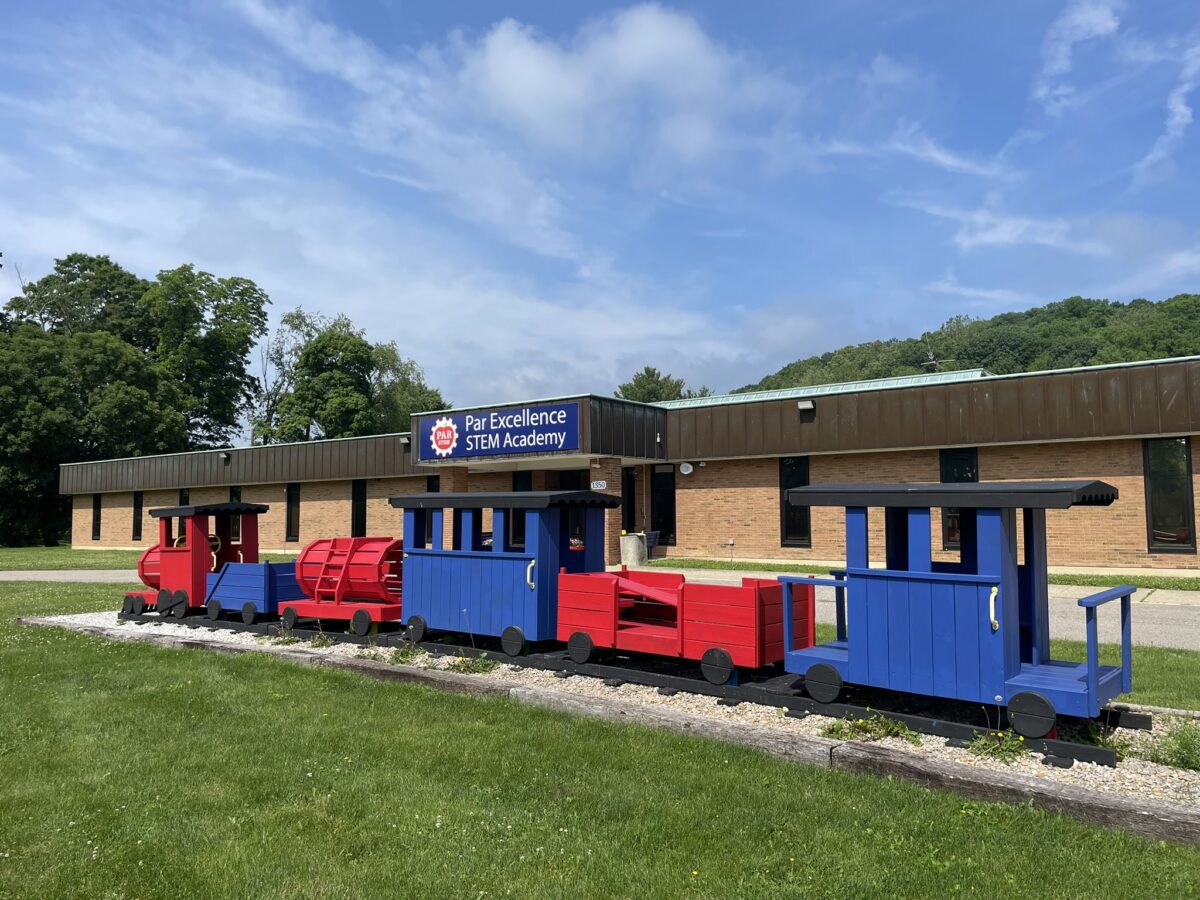

The ending of summer usually brings cooler weather, last-minute vacation wrap-ups, and frantic back-to-school shopping. For Par Excellence STEM Academy, the beginning of a typical school year comes with its fair share of troubles, but this year it is the school’s superintendent that swoops in to save the day.
The administrative team for Par Excellence found themselves in a logistical pickle when a teacher left shortly just a week before the new school term began this year.
“That teacher actually got a really nice deal to work in a school that aligned closer to her beliefs,” said Tiffany Iddrisu, an administrative assistant at Par Excellence. “She had worked there before and wanted to return to her roots. We supported her choice, of course.”
Iddrisu said the school was one sixth-grade teacher short heading into the school year, but luckily for Par Excellence, superintendent Gisele James, decided to make a slight career change.
“I really love and missed being in the classroom,” James said after volunteering to teach the class this year. “That’s where all the learning and the fun take place! The opportunity grabbed me and I stepped up to do it.”
Iddrisu said the students welcomed James with open arms.
“When the kids came in for the open house asking, ‘Who’s our teacher? Who’s our teacher?’ she just kind of popped out. And they were all just so excited,” Iddrisu said.
Par Excellence STEM Academy was founded in 1988 by Dr. Charles Noble and started in the basement of the Shiloh Baptist Church in Newark. In 2005, the learning center became Par Excellence Academy Charter School, the first charter school to be established in Licking County. The school is tuition-free.
“We eventually expanded to be a K-6 school, and this year, our sixth-grade class is all students that have been here since kindergarten,” Iddrisu said.
Each classroom has its own theme, and this year, James decided to make the sixth-grade class the “Upper Class Café.” Together, the class made multiple batches of homemade salsa using the vegetables from the school’s garden.
“Our students are very much into healthy food and eating; we have a garden and focus on STEM, which incorporates science, technology, engineering and math,” James said. “Cooking covers it all, plus they really enjoy the eating too.”
Iddrisu said the class garden has been in operation since last year but it’s been given a “new life through this project.”
James has been a superintendent for seven years and was the principal for 10 years before that. Returning to the classroom after so long has been a very eye-opening experience for her so far.
“Kids are different than they were when I started teaching over 20 years ago,” she said. “Their attention span is much shorter and there is an expectation of technology being available all the time now. I understand the demands of instruction from a different view. I am currently learning technology and how to use it to better engage the students.”
James has had a lot of support from the administrative team for taking on the teacher role, and other teachers have helped her get into the swing of things. Iddrisu said that the administrative team has people on standby who can cover James’ class if she needs to step out to take care of the superintendent’s needs during the school day.
Still, James says she often ends up working late nights due to spending her days in a classroom and taking care of her superintendent tasks after hours.
“It’s challenging, and it requires a lot of planning and working with staff to cover me, so I can keep bouncing back and forth. I do not mind the extra work, though; for me it’s enjoyable,” James said.
“You hear a lot about teacher burnout these days,” Iddrisu said. “But you don’t hear a lot about just your superintendent willing to jump into the classroom again.”
Shaye Phillips writes for TheReportingProject.org, the nonprofit news organization of Denison University’s Journalism program, which is supported by generous donations from readers. Sign up for The Reporting Project newsletter here.