

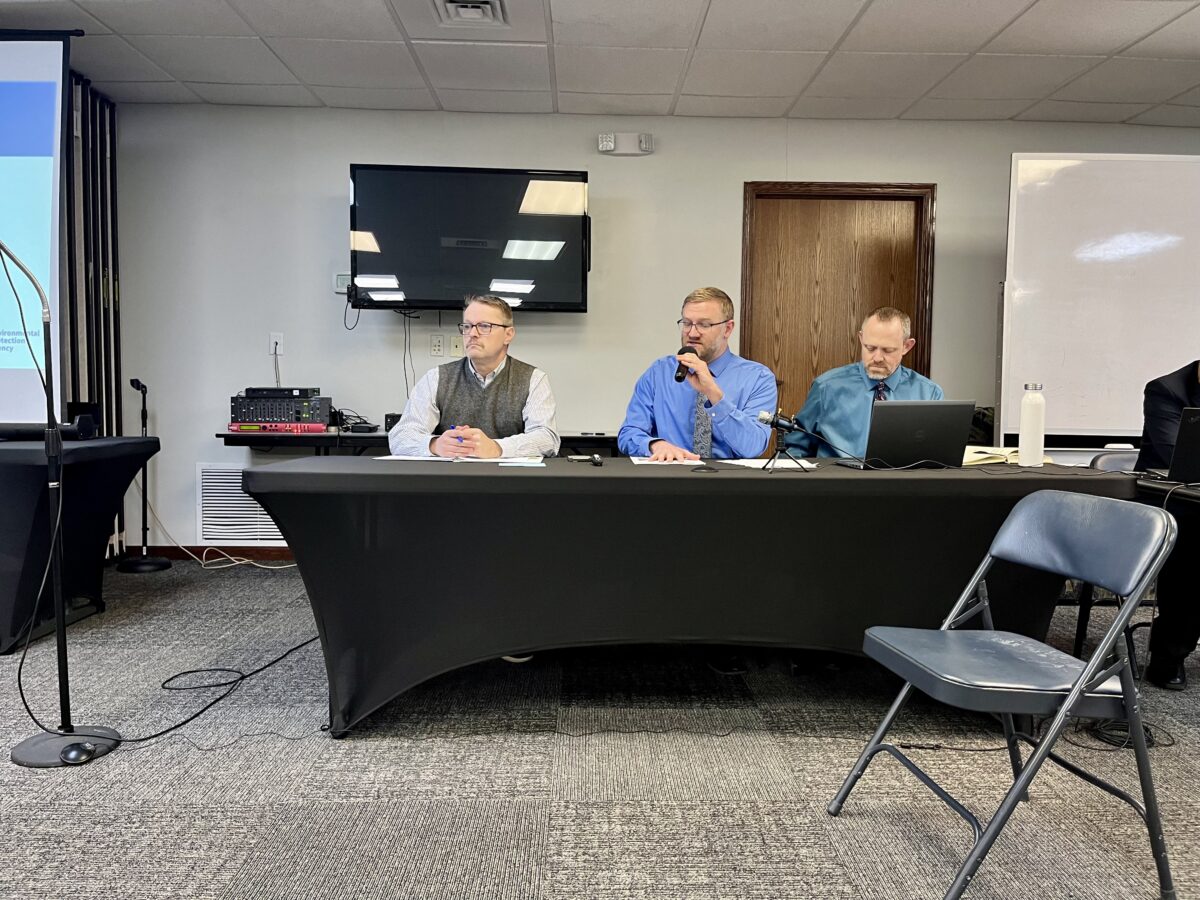
At the third public hearing on the Licking Regional Water District’s proposal to build a wastewater treatment plant between Alexandria and Granville, officials with the Ohio Environmental Protection Agency were hammered with questions.
How would the project affect water quality? Would it be safe for the environment, for human recreation?
The proposed facility would discharge up to 3 million gallons of treated wastewater per day into Moots Run, a small stream that flows into Raccoon Creek. Since the permit application was filed in March 2024, the proposal has gone through multiple revisions and public hearings.
Many of those who spoke at the Feb. 12 public hearing the EPA held at the Church of Christ at Alexandria have tracked the proposal since the first hearing on July 17, 2024. Following the latest hearing, EPA officials will consider the public comments and decide whether to approve the discharge permit that would allow for construction of the treatment plant, send the application back to LRWD for more revisions or deny it altogether. Public comments will be accepted until 5 p.m. on Feb. 19 via mail or electronically.
Along with concerns about flooding, the potential effects on private wells and recreational safety, residents from Alexandria and neighboring communities expressed alarm at the potential volume of water that would run in what is sometimes a virtually dry stream bed during summer months – especially during droughts like those in the past two summers.
“Usually, when you build a massive wastewater treatment plant, you look for a body of water that actually exists,” said Herb Koehler, Granville Village manager.
Koehler reiterated the village’s opposition, noting that both Granville and Alexandria rely on groundwater recharged by Raccoon Creek to replenish aquifers that supply local drinking water and they are concerned about contamination of the drinking water.
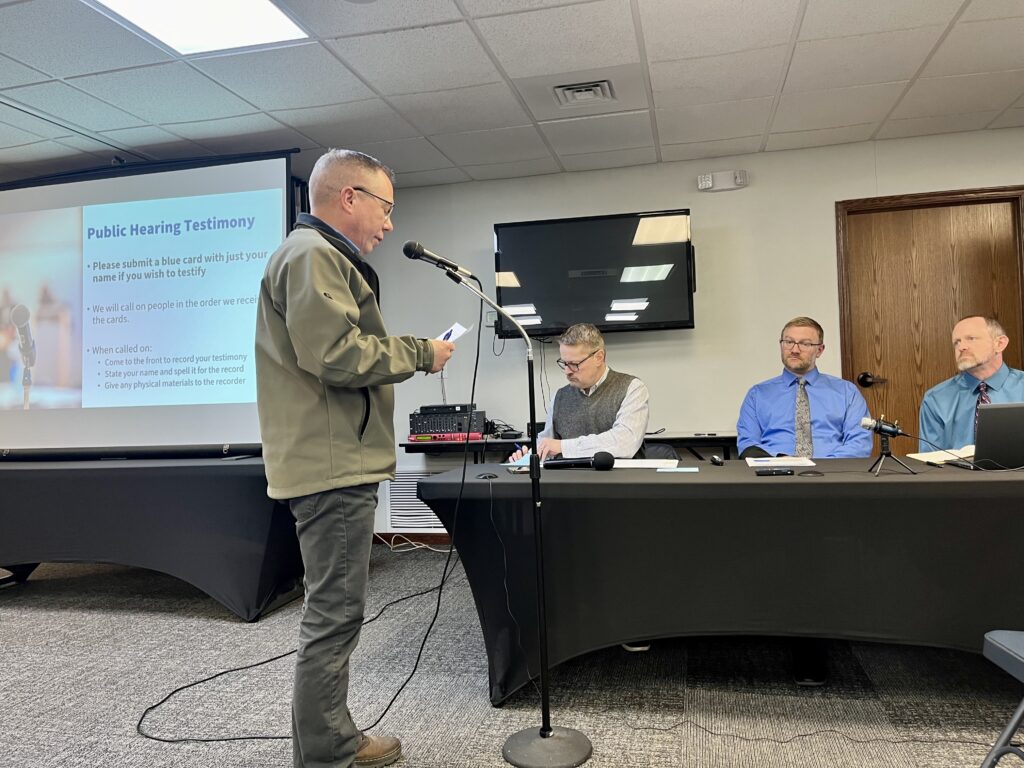
“The geology here consists of deep, highly permeable glacial outwash deposits,” said Alexandria Mayor Sean Barnes. “Water moves through the soil quickly during seasonal flooding. You can observe firsthand how rapidly surface water infiltrates. In fact, you can hear it moving down through the soil.”
David Brumbaugh, a leader for the Ohio EPA’s National Pollutant Discharge Elimination System program (NPDES), said that “there will not be any interaction between [the wastewater] facility and the aquifer below it.”
If future evidence shows that the stream is affecting the aquifer, he said, the agency could impose more protective criteria.
Under the draft permit, LRWD would be required to test for levels of nitrates, oxygen, ammonia, E. Coli, phosphorus, common metal pollutants and overall toxicity, among other indicators. These results would be sent to the federal EPA for review and released to the public on the Enforcement and Compliance History Online website.
“So we [would be] authorizing a reduction or a lowering of the water quality,” Brumbaugh said, adding that discharge limits are designed to prevent a loss of designated uses.
The Ohio EPA’s wetland antidegradation rules require that the stream’s designated uses be maintained and protected without a net loss. These functional categories include aquatic life, recreation and water supply.
“What are my kids playing in?” one resident asked repeatedly.
Walter Ariss, an NPDES manager in the Ohio EPA Division of Surface Water, said bacteria levels in the discharge would be safe for human interaction.
“I would take my kids out there to play in the stream,” Ariss said. “And after we’re done playing in the stream, I would tell them to wash their hands, just like I would at any body of water across the state of Ohio.”
Because the project would add pollutants to the stream, LRWD has proposed a watershed habitat restoration project to offset environmental impacts. Brumbaugh said the mitigation plan remains in early stages and is not yet tied to a specific project site.
“They have not particularly identified a specific project or location or what they will actually do, but have committed to facilitating that and financially supporting it,” he said.
Some residents questioned who the plant would ultimately serve. The proposed service area map includes portions of Jersey and St. Albans townships.
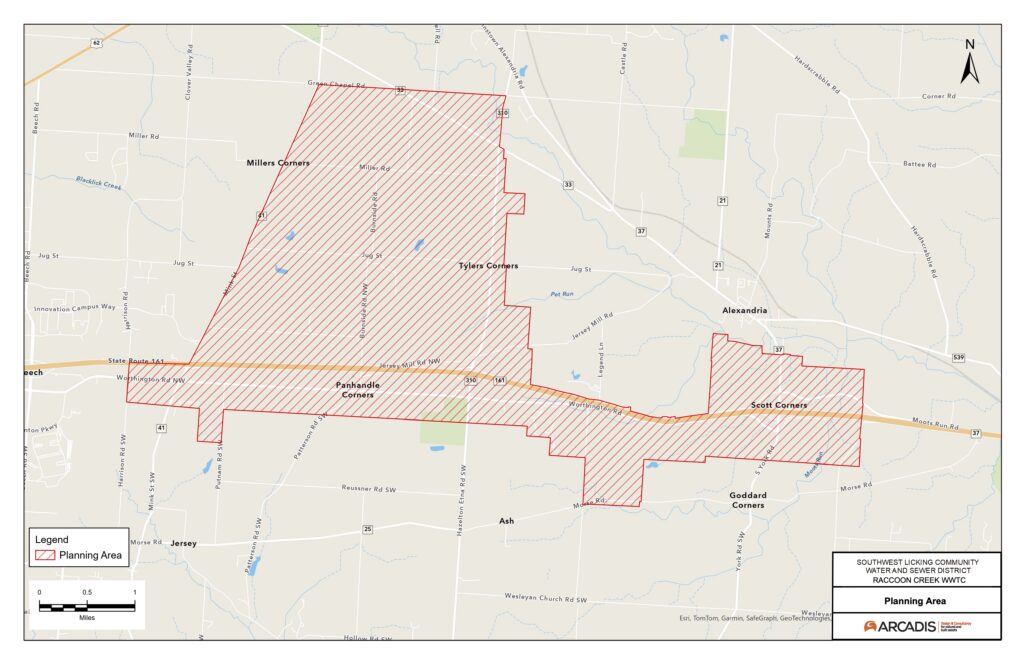
Barnes expressed concern that approval of the permit could limit existing providers from serving residents in the area. He noted that Alexandria’s current wastewater treatment plant has capacity for approximately 300 additional customers and urged the Ohio EPA to reconsider the proposed service boundaries.
“This is addressing a need in an area that’s growing a lot,” Brumbaugh said.
No representatives from the LRWD spoke during the hearing, leaving some attendees unsure how their comments might influence the outcome.
“I think that’s why it goes so long,” said Elaine Robertson, a founder of the Raccoon Creek Environmental Alliance. “They’re not sure even what to ask. They just know they’re upset.”
Sandra Doty, who teaches physics at Denison University, compared the process to a student being graded without clear instructions, criteria or rubric.
“What meaningful, compelling, contraindicating comment can any member of the public make that has a chance of reversing this decision?” she asked. “Or was this just a waste of time for all of them?”
Mia Fischel writes for TheReportingProject.org, the nonprofit news organization of Denison University’s Journalism program, which is supported by generous donations from readers. Sign up for The Reporting Project newsletter here.