

By Jackson Loomis and Cailyn Skiles
Carol Butler travelled from Asher, Oklahoma to Newark, Ohio to experience a once-in-a-generation moonrise in the land of her ancestors. As the historic preservation director for the Absentee Shawnee Tribe – which originated in what is now the Ohio area – she brought 11 elders from her community to join her in connecting with their shared past.
“I feel those ancestors with me,” Butler said. “They were out there with us last night and I stand here now and it’s emotional.”
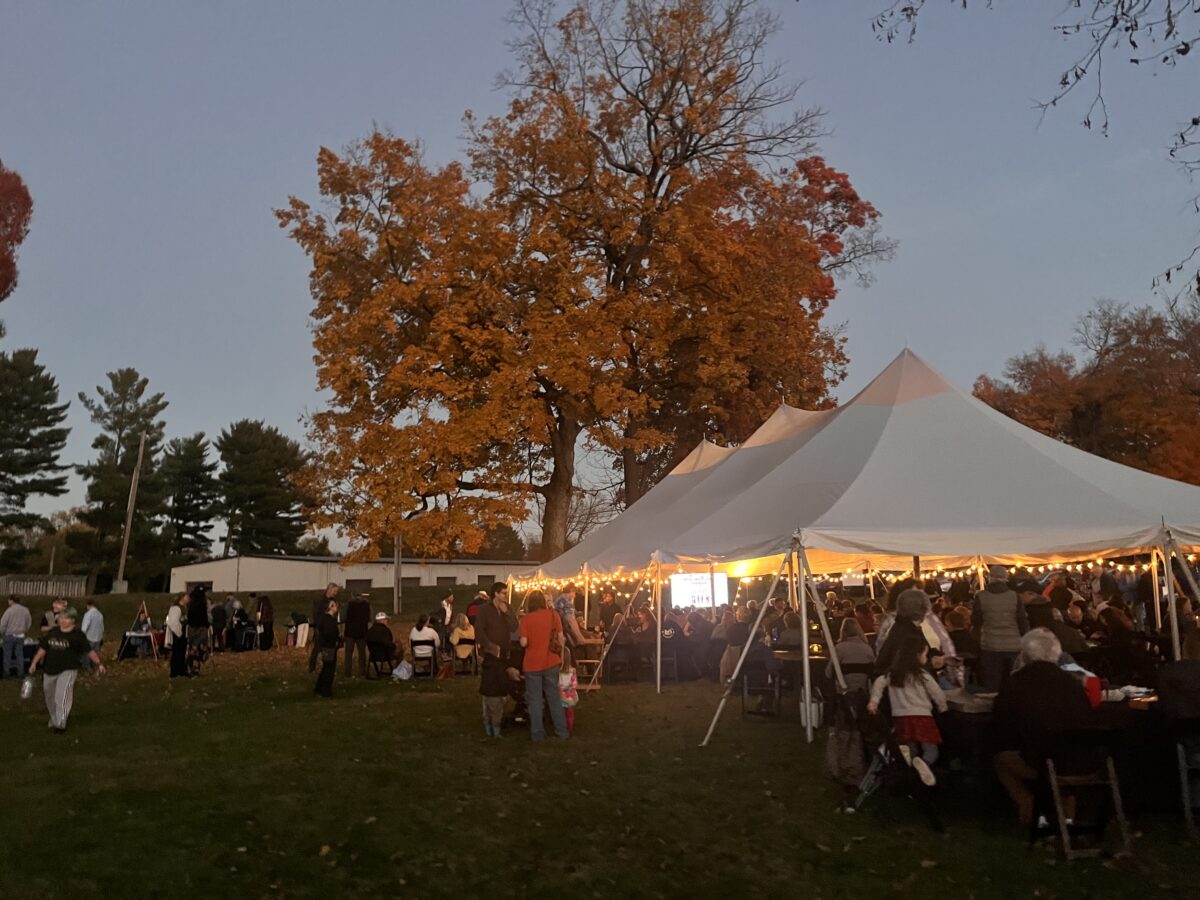
On Wednesday, Oct. 28, the Newark Earthworks hosted a gathering open to the public to witness the moonrise at its northernmost position in the sky, a cycle that repeats every 18.6 years. The Newark Earthworks are a part of the much greater system of Hopewell Ceremonial Earthworks, constructed by Native Americans in the Ohio region over 2,000 years ago.
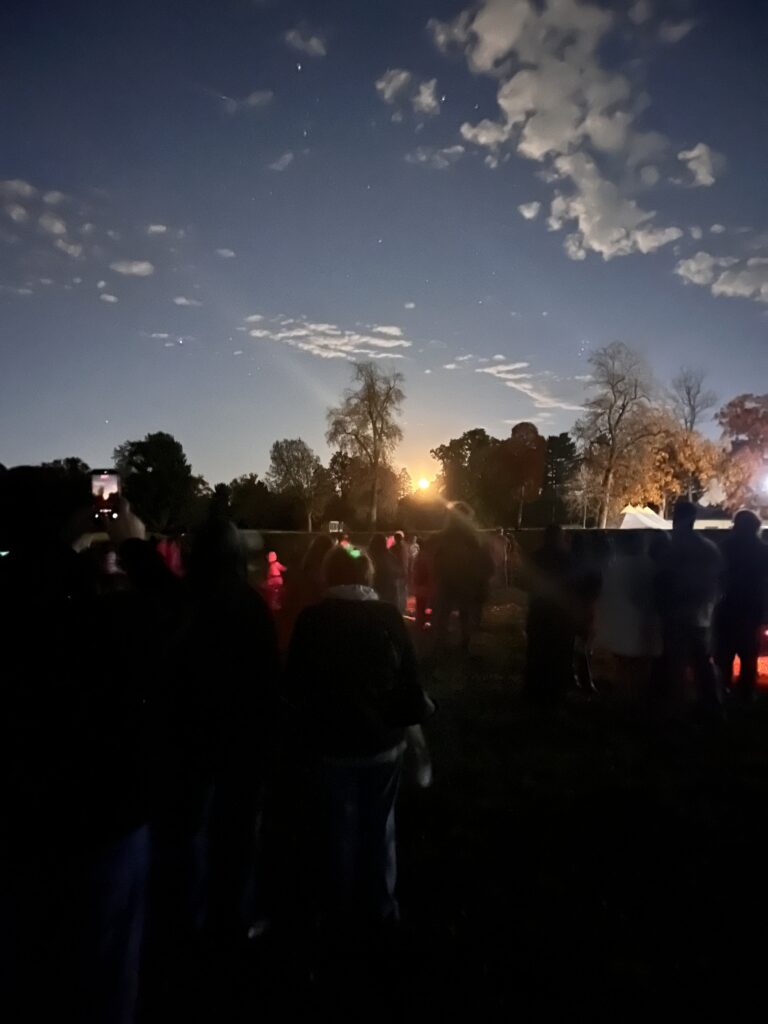
The event not only drew an audience from the Licking County community, but from all across the United States, including Indigenous people who share a deep spiritual and ancestral connection to this site.
When asked to describe the feeling of walking within the grounds of the earthworks, Butler said, “You feel like your home. Like we were supposed to be there.”
Despite Butler’s strong connection to the land, her presence at the Newark Earthworks has not always been welcomed.
From 1910 onwards, the Octagon, the most prominent part of the earthworks, was off limits to the public, as it was under the private lease of Moundbuilders Country Club. For over a century, this site of profound significance was used as a golf course.
Read more: After a long battle, the Octagon Mound in Newark opens to the public
“Those golfers were looking at us asking ‘what are you doing on my golf course?’” Butler said, recalling the first time she visited the earthworks. To which she replied, “What are you doing on my ceremonial grounds?”
Butler was not the only Indigenous person at the moonrise to have shared a similar experience.
“Way back, I came here with my kids,” said Guy Jones, affiliated with the Standing Rock Sioux Nation and from Dayton, Ohio. “We pulled into the parking lot and walked over to the observatory. We didn’t walk on the golf course but these men came out and told us we weren’t allowed there.” “The Earthworks have changed, but the people haven’t,” Jones said.
As of 2023, the Newark Earthworks is now recognized as a UNESCO World Heritage site, and on Jan. 1, 2025, the Ohio History Connection took control of the Octagon Earthworks. It is there that the Wednesday gathering took place.
With the sights and sounds of the 21st-century landscape – artificial lights, blaring trains, and suburban life – it is impossible to experience the ceremony as it was intended to be, where the only light was that of the stars and moon.
Between 100 BCE and 400 CE, the Newark Earthworks were built by the hands of Indigenous people, who created geometric shapes through walls that consisted of an estimated 7 million cubic feet of earth. Formed by eight mounds, the center axis of the Octagon Earthwork strategically aligns with the lunar cycle, a testament to the expansive astronomical knowledge of the Indigenous people that has gone unrecognized for far too long. It is the largest collection of geometric earthworks ever built.
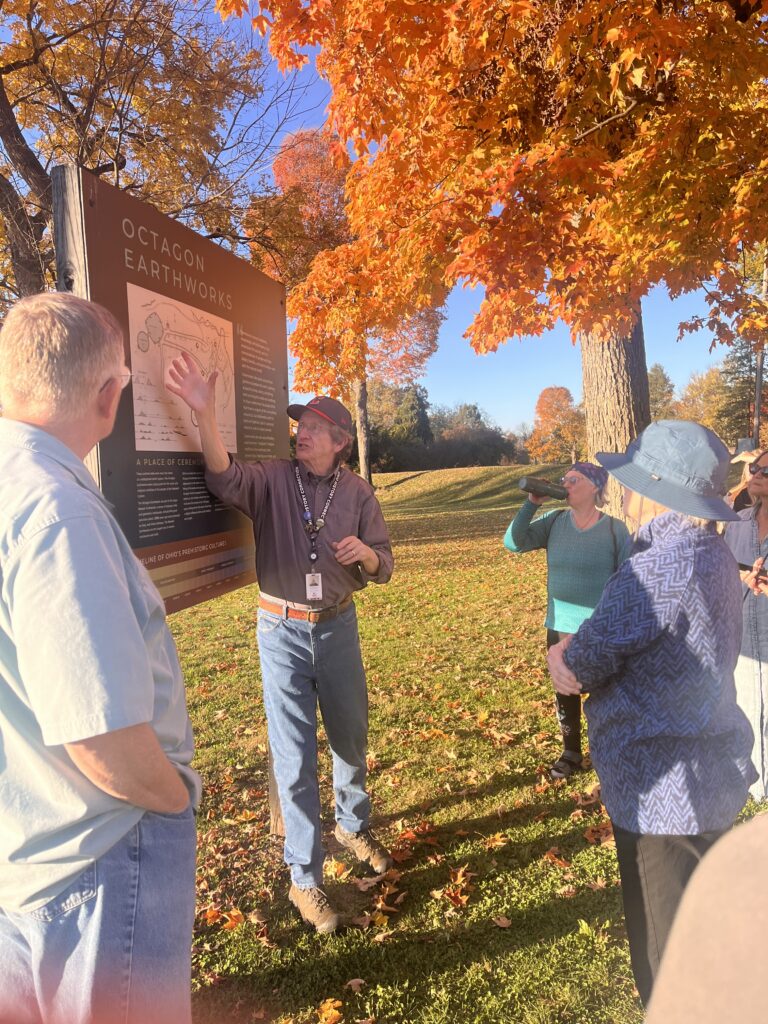
Brad Lepper is the senior archaeologist for the Ohio History Connection, and offered guided tours of the earthworks preceding the moonrise. He articulated his vast knowledge of the site he has studied for almost forty years. During one of his tours, he spoke of Chief Glenna Wallace, from the Eastern Shawnee Tribe.
“I’ve heard her say this many times,” Lepper said. “All her life she has only ever heard her ancestors referred to as savages. But now she’s hearing her ancestors referred to as geniuses.”
The moonrise celebration over the Octagon brought communities together to honor the history, brilliance and enduring significance of this 2,000 site.
Jackson Loomis and Cailyn Skiles write for TheReportingProject.org, the nonprofit news organization of Denison University’s Journalism program, which is supported by generous donations from readers. Sign up for The Reporting Project newsletter here.