

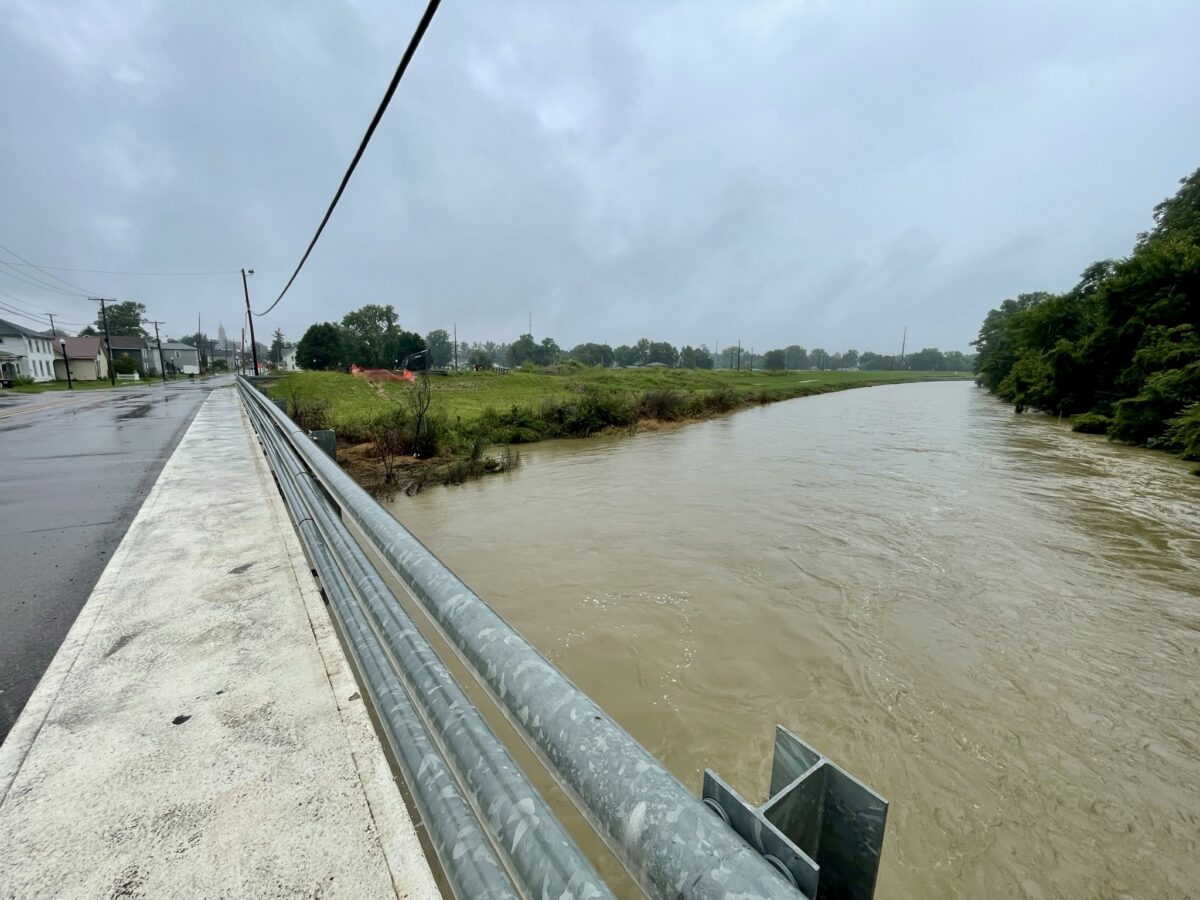
Since the end of May there have been at least seven reported drownings in Ohio rivers – and that was before heavy rains, derechos, tornadoes and flooding occurred in the past week.
Two of the water fatalities happened in Licking County, two weeks and less than a mile apart.
According to the most recent data, this is the highest number of drownings in Ohio rivers in the past six years. Although data for 2025 is not yet available, the highest number of river drowning fatalities before this year was four in 2023.
The average number of boating incidents annually in central Ohio since 2020 is 2.8, with the highest number being five reported incidents in 2022.
Both of this year’s fatalities in Licking County were kayaking-related and occurred in the Licking River east of Newark. The first occurred in Madison Township. Brenda Montgomery, 15, a native of Butler, Pennsylvania, passed away on May 31 after being trapped in a log jam.
The second incident occurred in Hanover Township, near Blackhand Gorge. Licking County native John Luckeydoo was 53 and passed away after falling into the river on June 23.
The most recent water rescue occurred in Racoon Valley Park in Granville on Sunday, Aug. 16. A father and son were near the bridge that crossed over Racoon Valley Creek when the son became stranded in the water.
His father acted quickly, calling emergency services before entering the water himself to help his son.
Fire Chief Casey Curtis said the rescue was quick and uneventful.
“We made entry in protective dry suits and personal flotation devices, made access to both of them, and then very quickly and efficiently got them out of the water.”
Curtis emphasized that the conditions of the water were “undoubtedly” due to the heavy rains in the region this week.
“Water is very deceiving,” Curtis said. “A little water moving at a very quick speed in very shallow depths, even that could be very dangerous.”
He explained that even if the water looked shallow enough to cross the creek, the volume and speed made it unsafe.
Curtis urges people to avoid water activities after heavy rainfall and storms.
“It is very dangerous to be in or around the water,” Curtis said. “We try to encourage people not to do this. This is not kayak weather, it’s not canoe weather, it’s not swimming or tubing weather, this is not a good time.”
Lt. Heather Byers, of the Ohio Department of Natural Resources, expressed a similar sentiment. She explained that rivers are especially dangerous because of their unpredictability — especially if you don’t know what type of weather is occurring upstream.
“You can do everything perfectly and still have accidents,” Byer said. “Rivers often have strong currents and depths that change drastically and quickly.”
Byers also explained that it is impossible to fully understand what is happening beneath the surface of the water.
“Sometimes, you may see a stick on the surface of the water and not realize it is connected to an entire tree under the water,” Byers said.
Despite the unpredictability of rivers, there are steps that can be taken to ensure you are enjoying the water while being as safe as possible.
Byers emphasizes the importance of a “well-fitting lifejacket.” That means the jacket does not slide off or come above your head. She also notes that it is Ohio law that everyone boating must have an easily accessible life jacket with them.
And Ohio law requires life jackets for children under age 10 on boats under 18 feet long. They’re also required for anyone on a personal watercraft, such as a Jet-ski, and anyone being towed on skis, tubes, or a similar device.
ODNR also recommends life jackets for children between birth and age 5 on beaches, docks, at waters edge and on boats; as well as for children between the ages of 6 and 11 and anyone who can’t swim while they are on docks, at water’s edge and on boats.
Byers said that being informed about how to “read” rivers and what to do in situations such as a capsized kayak is one of the best proactive ways to prevent boating accidents.
She explained the risk of natural bodies of water by comparing them to the controlled environment of a pool.
“When you are swimming or boating or doing some sort of activity in a river or a lake or a pond, it’s a little bit different than just in a pool,” Byers said. “When you’re in a place like a nature preserve or a state park or another body of water, you definitely have to be more water aware and safety aware.”
Another form of prevention is swim and water safety classes. The Buckeye Valley Family YMCA in Newark, for example, hosts a “Safety Around Water” class.
The class is “geared toward unintended entries into the water and safety.” This includes helping children learn skills to help themselves in these events or keep themselves safe until help arrives. The class is free and open to the public and registration is available on its website.
The YMCA also partners with local schools and its YMCA day camp to provide this class to as many kids as possible.
The class teaches children what to do if someone else falls in as well as when it is ok to get into the water. The kids also learn how to turn over onto their backs and how to bob up and down to stay afloat and breathe.
“Teaching kids how to float can make a huge difference. … If a kid can learn how to float for just 10-20 more seconds, that can be the difference between life and death,” said Zachary Dobbelar, the YMCA aquatics director.
Participating in classes like this and keeping yourself informed are keys to enjoying Ohio’s waterways as safely as possible.
Nora Meeks writes for TheReportingProject.org, the nonprofit news organization of Denison University’s Journalism program, which is supported by generous donations from readers. Sign up for The Reporting Project newsletter here.