

A key finding in an Ohio Chamber of Commerce study of water and electricity resources available for data center growth in central and southwestern Ohio is that those corridors are “broadly well positioned to support additional data center growth from a water-resource perspective through 2030.”
That’s a little more than three years from now. What about water resources 13 years from now? Or 23 years from now?
Some folks involved in agriculture and food production, which add an estimated $124 billion to the economy annually and are the state’s largest industry when combined, are concerned that not enough is being done to include them in discussions about water or to protect Ohio’s water resources far into the future.
The study by the Ohio Chamber of Commerce Research Foundation, released in June, briefly mentions an Ohio Environmental Protection Agency study released a year earlier that indicated Ohio industries – primarily data centers – and agriculture could be on a collision course in their demand for water by 2040.
Experts involved in the 15-county Central Ohio Regional Water Study, released by the Ohio EPA and Ohio Department of Natural Resources in 2025, wrote that Ohio farmers likely will need to regularly irrigate their fields during the critical growing period of July through September. Most currently do not irrigate their fields.
The 2025 water study estimated that industrial demand alone across the 15-county region could increase by approximately 120% between 2021 to 2050 – to 250 million gallons a day by 2050. Agricultural demands could reach an estimated 110 million gallons a day across the region by 2040 during the growing season.
For context, the City of Columbus, which provides water to many of the data centers in Franklin and Licking counties, currently delivers about 141 million gallons of water a day to its customers. That includes data centers, which consumed about 3% of the water produced by the City of Columbus in the past year, according to a recent story by The Columbus Dispatch.
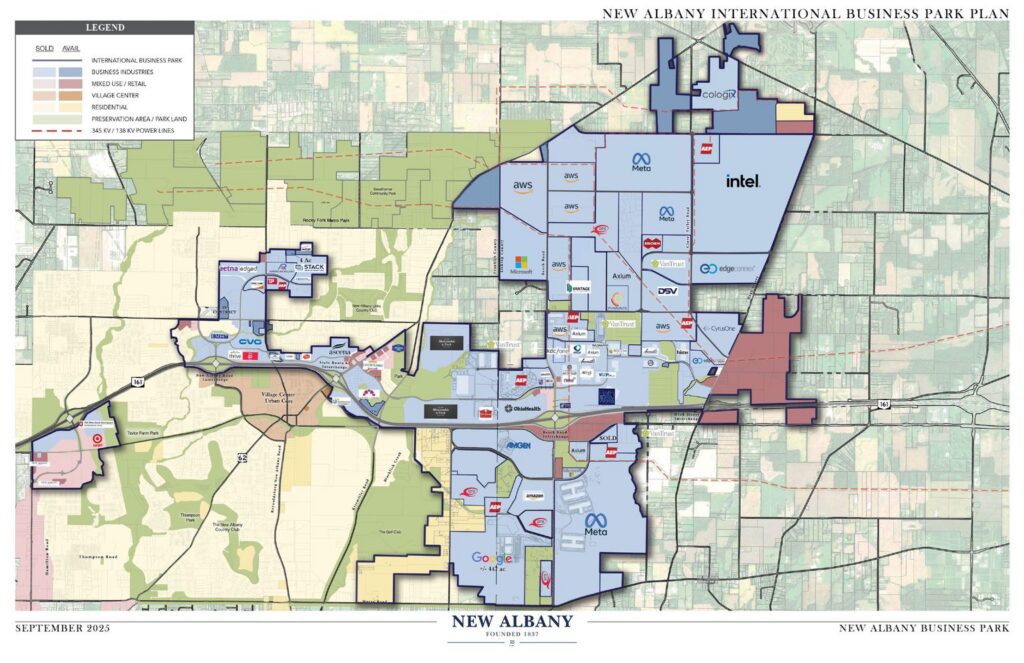
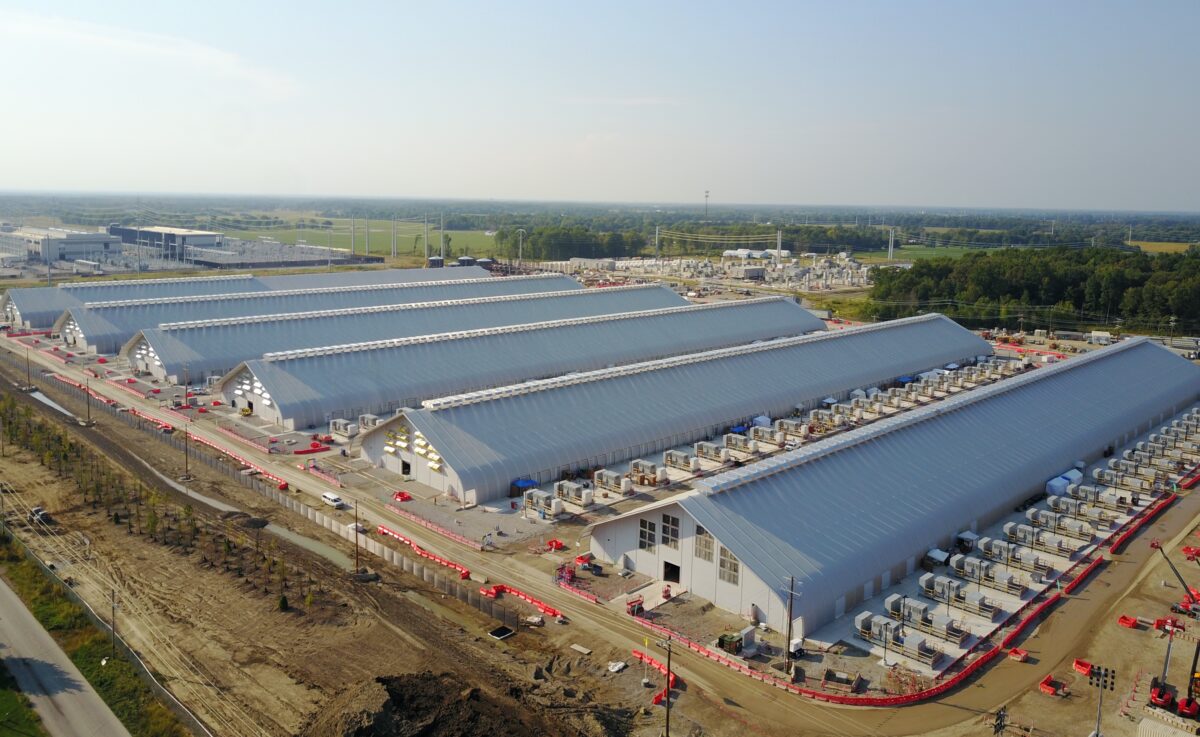
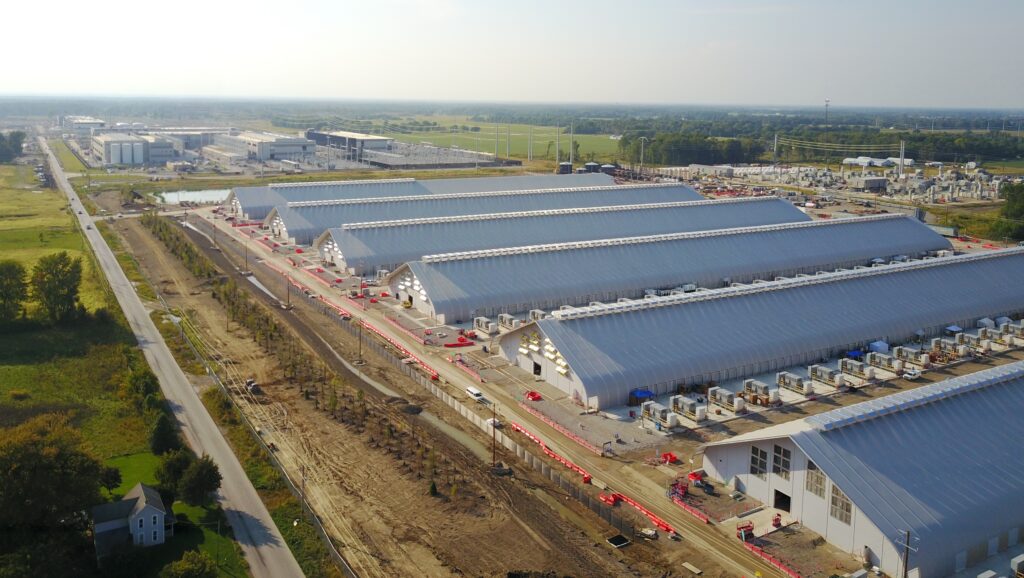
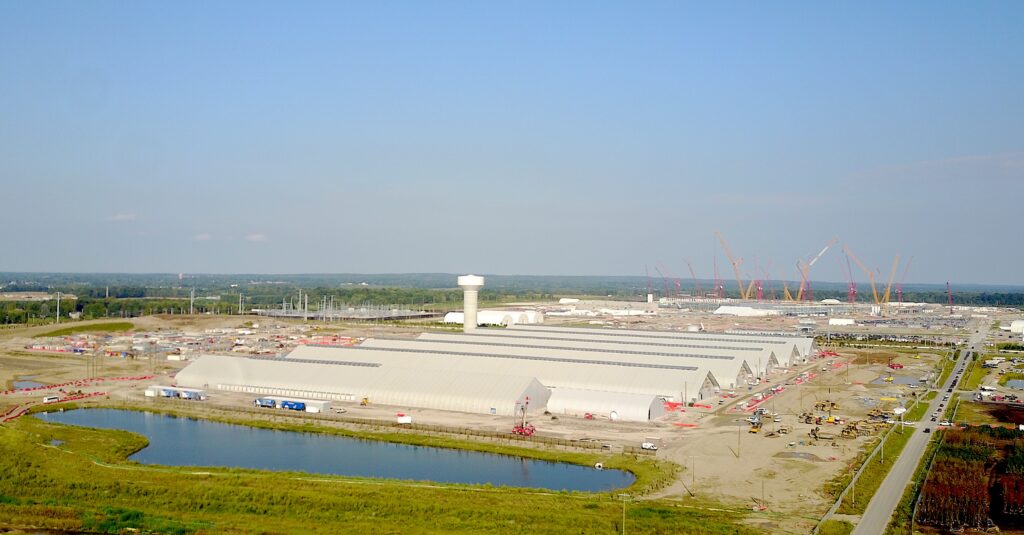
The Columbus metro area hosts more than half of Ohio’s 240 data centers, 49 of which are in Licking County – the most of any county in the state. And most of the Licking County centers are in or near the New Albany International Business Park in western Licking County.
Licking County was not included in the chamber of commerce study, however, because comparable data for the county were not as readily available, said Demetrius Thomas, executive director of the Ohio Chamber of Commerce Research Foundation, and the study focuses on where data centers could be located rather than where they are already operating, being built or planned.
He also said the chamber study didn’t go farther than 2030 because forecasting farther out than that is challenging, in part because of evolving technology.
Thomas said he would “push back on the notion that we’re rapidly increasing the water usage with data centers.”
The study by his office says data centers currently use about 2% of the total water consumed in central Ohio, and that is expected to tick up to 8% by 2030.
“I wouldn’t call that a rapid increase in demand for water,” Thomas said, adding that changes in technology for cooling data centers have reduced their demand for water. He and the study noted, however, that on-site power plants being built to electrify data centers could become a bigger water consumer than the data centers they power.
The chamber study said that “scenario analysis shows that by 2030, direct data-center water use could rise significantly, but water consumption associated with supporting electricity generation could be even larger, especially if the generation mix leans heavily on water-intensive fuels like nuclear or steam-based thermal plants.”
That, too, raises concerns for farmers.
“Every year, we face extreme situations ranging from heavy rain to drought conditions,” said Bryn Bird, vice president of the Ohio Farmers Union and whose family raises produce on a small farm in Licking County. “Agriculture will always be left out of these conversations. We are 2% of the population. I don’t think people in economic development care. They just don’t care.”
Thomas said that at the chamber of commerce, which has a mission to promote Ohio businesses and business development, “everyone within our walls understands that agriculture is our roots and that it has to continue to be fruitful for our economy and our lives.”
“I’m majorly concerned about how we protect our farming industry,” Thomas said, adding that the chamber does “a lot with the farming community to make sure we are providing support and the need for protections there. I don’t think anyone in this office has forgotten farmers.”
And yet, it feels that way at times to farmers who hear business leaders and government officials dismiss their concerns about data centers as being rhetoric whipped up by China amid the global competition to win the artificial-intelligence race.
“They’re saying critics of data centers are getting bad information from China – that if you are against them, you are somehow being influenced by China,” Bird said. “They are saying it’s China, but it’s people’s lived experiences – people who live near data centers and pay those electric bills and water bills and hear that constant hum from the equipment.”
She said the American Farm Bureau Federation, which she described as “conservative and funded by big business,” has been vocal about the impact of data centers on agriculture – specifically on land consumption, land values, and protection of natural resources.
“Cooling systems for data centers can require substantial amounts of water, which raises concerns in agricultural regions where water supplies are often limited,” the national organization says on its website. “Increased demand can lead to competition for scarce water resources and create risks for local watersheds. While emerging technologies, including more water efficient cooling systems, such as closed loop cooling, offer ways to reduce these impacts, transparency around water use and accountability measures remain essential to maintaining trust and protecting shared resources.”
Closer to home, the Ohio Farm Bureau supported an end to tax breaks for data centers in Ohio and is pushing for protection of prime farmland.
“Farmland loss remains one of the top concerns raised by Ohio Farm Bureau members,” according to its website. “According to USDA data, Ohio has lost nearly 1 million acres of farmland over the past 20 years. Any land that is developed, regardless of what it’s converted into, is nearly impossible to return to a state of productive, agricultural use. As additional data centers, and development projects, are proposed across the state, members are urging policymakers to pursue smart growth strategies that balance economic development with the protection of prime farmland, natural resources and landowner rights.”
The state organization and others also successfully fought a proposal by the Ohio EPA to allow data centers to discharge millions of gallons of water used for cooling into nearby streams rather than into sanitary sewers. The EPA withdrew that proposal earlier this year under pressure from farmers and environmental groups.
When it comes to water availability, Vinayak Shedekar, an assistant professor of agricultural water management in Ohio State University’s Department of Food, Agricultural and Biological Engineering, said he is concerned about seasonal variables in rainfall – and that the Ohio Chamber of Commerce Foundation study only briefly mentions droughts.
Ohio experienced droughts three years in a row during the summers of 2023, 2024 and 2025 – and the last two were extreme. Some parts of the state were headed into drought in July of this year during a critical period in the growing season. Then came uncharacteristically heavy rains in August in parts of Ohio, but the wet weather came too late in some fields, so ears of corn were left only partially filled with kernels. Other fields were swamped so frequently that crops failed altogether.
Shedekar said central Ohio receives about 40 inches of precipitation annually, which he said is a sign of a water-rich region. But the situation is more nuanced for farmers.
“Overall, I do agree that on an annual basis, we have a lot of water to go around,” he said. “About 20 inches is lost to evaporation. It goes right back into the atmosphere, which means about 20 inches remains on the ground, and about 4-5 inches of that goes down to the groundwater.”
“The remaining 10-15 inches is what we call overland surface water,” Shedekar said. “Out of that 15 inches, more than half is generated from about October through June, and October and November months don’t generate much runoff, because they tend to be dry months. … So we have a disproportionate amount of water on land during wet months. And in peak demand months, which are July, August and September, you might see water scarcity.”
Shedekar and others in the agriculture community want decisionmakers in business and government to look farther down the road than three years.
“We’re not thinking about it right now, but 50 years from now, Ohio’s summer will look like summer in Arkansas,” he said, describing a more arid state than Ohio. “So who is talking to their planners about how to manage our water resources? We’ve never had to think about this before. We are blessed with water resources, but we can get smart about managing our water.”
The Ohio Chamber of Commerce Foundation report concurs on that point.
On page 47 of the 47-page report, it says “Ohio’s near-term question is not whether the state has enough water to support data center growth, but whether planning, infrastructure delivery, siting discipline, and public transparency, including community engagement, can keep pace with that growth.”
The report says about central and southwestern Ohio that “the physical water resource base in both priority corridors appears strong. The more consequential need is effective governance: aligning utility capacity, permitting, facility design, watershed protection, and early community engagement to minimize local impacts, maintain delivery momentum, and preserve public confidence.”
Alan Miller writes for TheReportingProject.org, the nonprofit news organization of Denison University’s Journalism program, which is supported by generous donations from readers. Sign up for The Reporting Project newsletter here.