

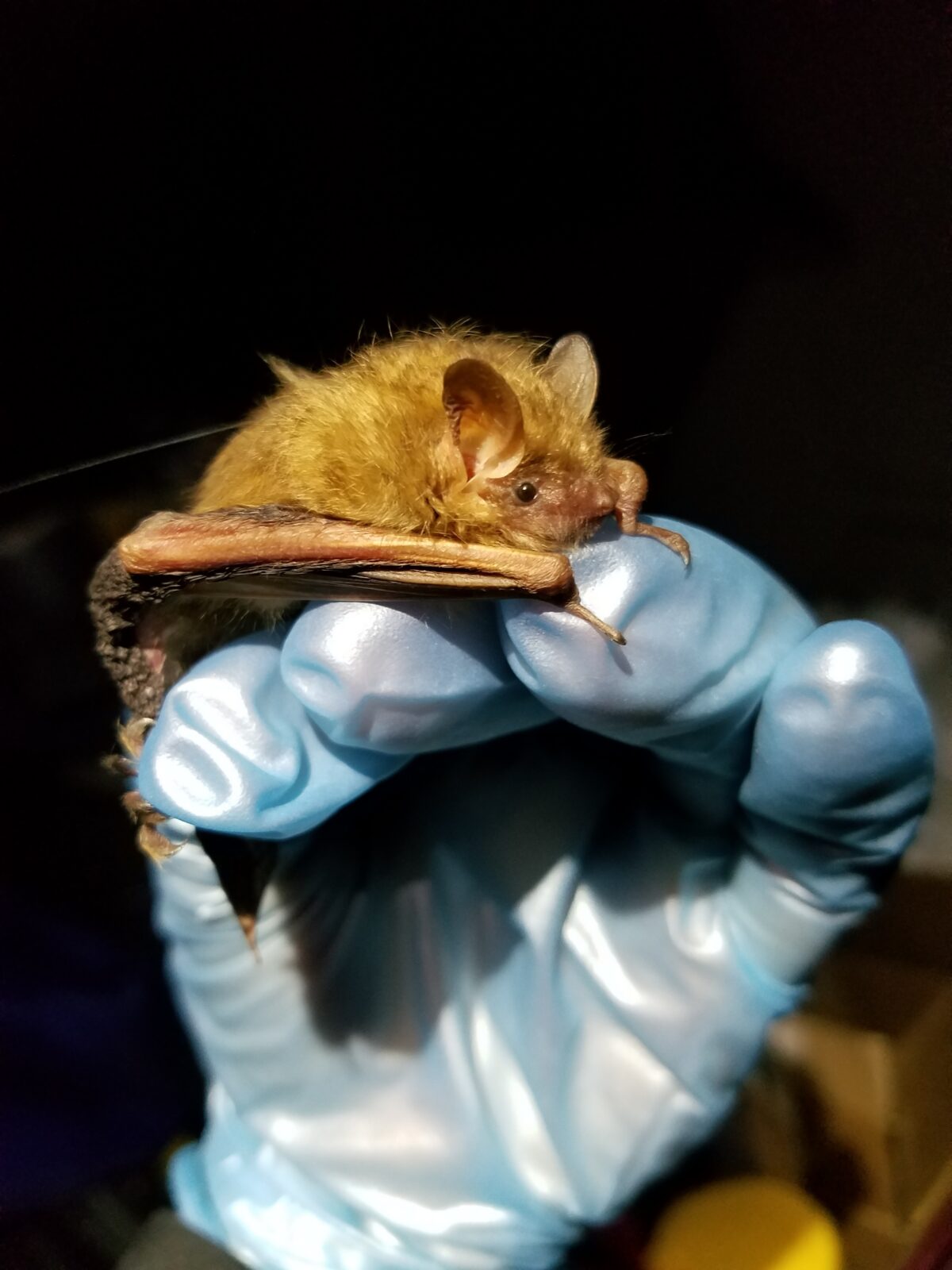
Licking County has gone a bit batty.
Since the beginning of the year, Licking County residents have sent the health department 50 bats to be tested for rabies.
This is a county record – the Licking County Health Department usually only receives around 10 bats to be tested each year according to Scott Morris, director of outdoor environmental health at the health department.
In August alone, the health department received and tested 30 bats. Thankfully, none of the 50 bats have tested positive for rabies.
“It’s been abnormal with the amount of bat incidents in the county,” Morris said.
Morris said he does not know the reason for the sudden uptick in bats brought into the health department. Neither does the Ohio Department of Natural Resources (ODNR).
ODNR does not have updated information regarding increases in bats received by the Licking CountyHealth Department (LCHD) according to Erin Hazelton, a wildlife administrator with ODNR’s Division of Wildlife.
But this past June and July, something strange happened with bats all over Ohio.
“We did see an increase in the number of bats that were being reported, specifically because they were young bats, so the pups, just learning to fly, and a lot of them were down and were sick,” Hazelton said.
Bats, the only flying mammals, typically learn to fly early on in their life. Ohio is home to ten different bat species who help to control mosquito and other insect populations throughout the state.
But this is the second year in a row that biologists have observed these trends in Ohio. In large barns, it’s possible to find hundreds of grounded bats.
This pattern is not unique to Ohio: It’s happening across the midwest. ODNR is working with multiple states including Illinois, Indiana and Wisconsin to coordinate efforts to study this strange phenomenon.
“Science can’t answer everything yet, but at least we’re going to make an attempt to try to understand what’s going on,” Hazelton said.
One common trend the LCHD noticed: Many of the bats were found and killed by cats, who then gifted them to their owners.
“Cats are notorious for hunting and killing a lot of things,” Morris said. “Obviously people are concerned about their cat potentially being exposed to rabies.”
Rabies is a deadly virus that is typically transmitted through a bite, and once an infected person begins showing symptoms – including hallucinations, insomnia, excessive salivation, difficulty swallowing and fear of water – the disease nearly always results in death, according to the U.S. Centers for Disease Control and Prevention.
Morris said that owners of pets who find bats should make sure their pets are up-to-date on their rabies vaccines, and if not, the pet can receive emergency treatment at a veterinarian. There is also a suggested 10-day stay-at-home quarantine for pets who may have been exposed to bats.
Bats have also been getting into homes through spots like attics, chimneys, vents, open windows, or any other opening in a home. Morris said that sometimes roofing repairs may be the solution if bats and other animals are finding their way in.
People who have been exposed to or find a bat in their home should not touch the bat with their bare hands. The health department asks residents to keep people and pets away from the bat, and to call a wildlife removal company if further assistance is needed.
If it is safe to do so, the health department recommends putting the bat in a container like a cardboard box, and turning it into the Licking County Health Department’s Environmental Health Division.
It’s recommended to test a bat found in a home if someone could have been exposed to the bat. Exposure can occur through bat scratches, bites, saliva or bare-skin contact. Finding a bat in a home does not mean exposure occurred, but if the bat was found near a child or someone sleeping, that could mean exposure occurred without notice.
“Their teeth are small, and may not necessarily leave a mark anywhere if you’ve been bitten,” Morris said. “So that’s why it’s always usually the recommendation if one is found while you’re sleeping to get it tested as quickly as we can, but also go pursue the rabies post-exposure prophylaxis shot.”
If you believe exposure has occurred, or are unable to rule out exposure, contact the health department, and they can perform a rabies risk assessment and determine whether post-exposure prophylaxis is recommended. Under Ohio law, any possible rabies exposures must be reported to the local health commissioner within 24 hours. If the bat tests negative for rabies, residents do not need to receive treatment for rabies.
If you have been exposed to or have found a bat in your home, contact the Licking County Health Department’s Environmental Health Division at (740) 349-6535 or email this form to environmental@lickingcohealth.org. You can also report any wildlife sightings to the Ohio Division of Wildlife’s Wildlife Reporting System, providing much needed data to understand what’s going on with bat populations.
Maddie Luebkert writes for TheReportingProject.org, the nonprofit news organization of Denison University’s Journalism program, which is supported by generous donations from readers. Sign up for The Reporting Project newsletter here.
Luebkert is one of two Kirtley Mather Fellows at The Reporting Project. The fellowship is created in memory of Kirtley Mather, Denison Class of 1909, with the mission of providing unique opportunities for students to engage in service for the common good.