

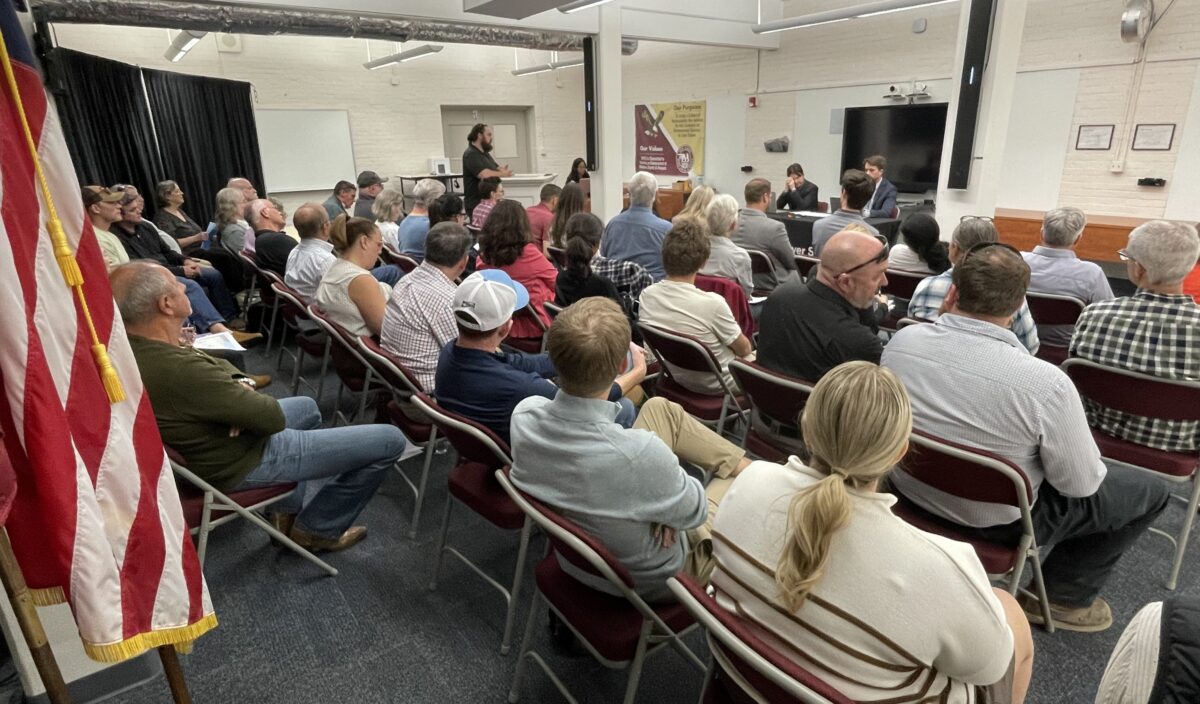
Of about 50 people who attended a hearing about a proposed gas-fired power plant in western Licking County, about half testified before the Ohio Power Siting Board and most of them opposed it.
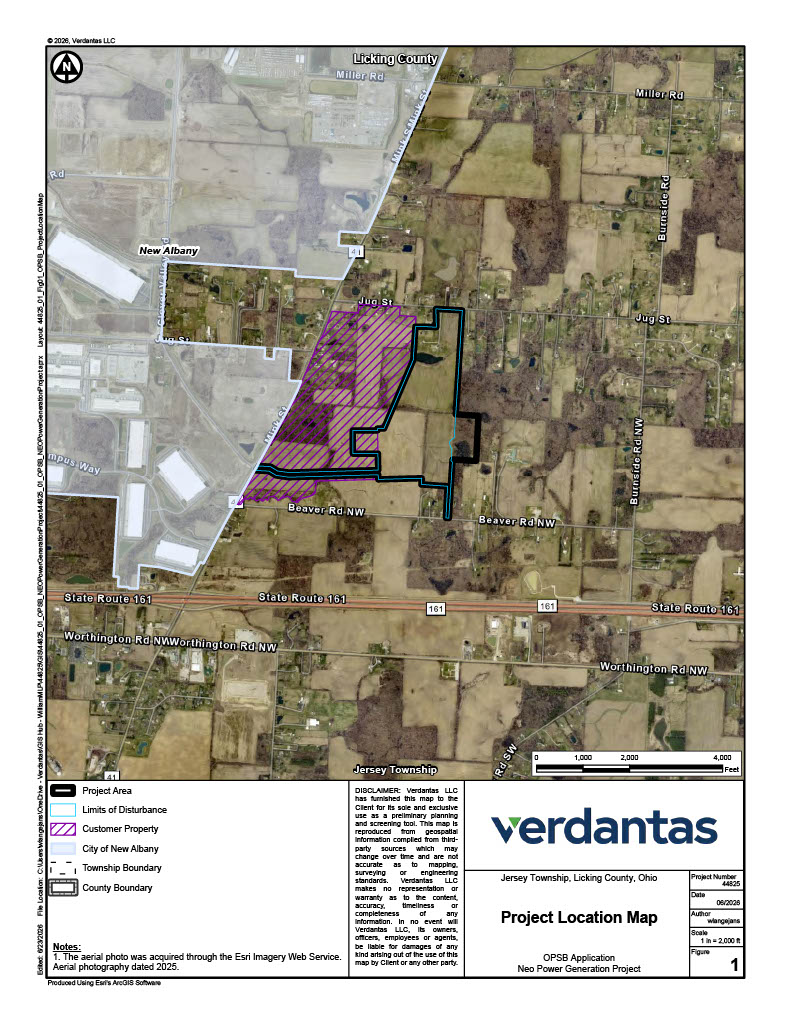
A handful of people representing industries that benefit from the construction of facilities such as the proposed 500-megawatt Neo Power Generation Facility and a 260 megawatt battery storage system proposed by Will-Power spoke in favor of the project during the hearing, which was held on Tuesday, Oct. 6, at the New Albany-Plain Local Schools Annex Building in New Albany.
About 20 people spoke against the proposal, several saying they respect the positions of those who would benefit through jobs and the sale of equipment, but they said the environmental risks aren’t worth the benefits.
The proponents spoke of economic benefits, including income-tax revenue and jobs.
Frank Uhl II, of the International Union of Operating Engineers Local 18, for example, said that the union’s 16,000 members operate heavy equipment used in construction, “and they are working on similar projects across the state.” That means jobs for thousands of Ohioans and tax revenue for communities, he said.
| Read more: Tuesday hearing about a gas-fired power plant in Licking County is among 6 proposed or under construction
Public comments still can be filed online at contactOPSB@puco.ohio.gov or go directly to a specific case docket and file a comment from a form there with the case number, which, in this case, is 26-0627-EL-BGN. An “evidentiary hearing” on the proposal will be held at 10 a.m. on Wednesday, Oct. 21, at the offices of the Public Utilities Commission of Ohio, 180 E. Broad St. in Columbus.
A hearing on another proposed power plant, the “PowerConneX New Albany 3 Energy Center,” case number 26-361-EL-BGN is scheduled for 6 p.m. the next day, Oct. 22, at New Albany High School. That 450-megawatt plant on approximately 30 acres would serve as a primary source of electricity to a data center on the same site.One such powerplant, a 200 megawatt facility called “Socrates South,” began operation in August in Licking County near the intersection of Beech and Morse roads, according to Matt Schilling, director of public affairs for the Public Utilities Commission of Ohio.
An interactive map of the power plants is available on the Ohio Power Siting Board website. Many of them are classified as “behind-the-meter” generating stations because they serve a single company’s electricity needs and do not provide electricity to the national grid. Licking County is now home to 50 data centers and six proposed power plants for them. One power plant is already in operation.
The Ohio Power Siting Board is “an independent board responsible for approving plans to construct new energy infrastructure in Ohio,” according to agency literature. “Its mission is to support sound energy policies for energy capacity and transmission infrastructure, promote the state’s economic interests, and protect the environment and land use for the benefit of Ohio’s citizens.”
On those last two points, more than 20 people lined up to provide testimony about why they think the Will-Power proposal will harm the environment to the detriment of Ohio’s citizens.
Many of the comments came from people who live or work near the site of the proposed power plant, which would provide power to Meta’s hyper-scale “Prometheus” data center campus in the New Albany International Business Park, which sits mostly in Licking County. They raised concerns about air pollution, stormwater runoff, and the environmental ripple effects of using natural gas – drilling wells, fracturing them with chemical-laden water and the disposal of that “brine.”
Drew Bidwell, who lives in a rural environment just east of Mink Street and the New Albany business park, and virtually next door to the proposed Will-Power plant, said he’s not against “progress,” but he wants to know that his children will be safe when they play on their property and drink the water.
“My kids play in that water, and they drink that water,” he said. “I want to make sure we do right by them.”
Cathy Becker of Hilliard, board president of Save Ohio Parks, a citizens group concerned about fracking of Ohio’s state parks and public lands, spoke during the Oct. 6 hearing and submitted written testimony.
She said at the hearing and in written testimony that Will-Power proposes using equipment that is less efficient and releases more pollutants than the latest generation – which is in such high demand that it is difficult to buy – suggesting that in the artificial intelligence race, the company is putting expediency ahead of efficiency and environmental protection.
Citing the company’s case details, she said the plant “would include 27 simple-cycle gas turbines and four reciprocating internal combustion engines. None of this is state-of-the-art technology.”
“Simple-cycle turbines are much less efficient and more polluting than combined cycle turbines, which use the same gas to power two different generators,” she said. “Reciprocating engines expel pollution similar to a gas car engine, only the size of a school bus.”
Becker said that “if Meta was using combined cycle turbines, the same gas would go a lot farther. But simple cycle turbines burn the gas, then send the waste heat and pollution out 30-foot stacks at 825 to 870 degrees. Again, this is next to a populated Columbus suburb.”
One of her concerns is that the demand for natural gas at the data-center power plants will increase “fracking” in Ohio state parks allowed under legislation approved by the Ohio General Assembly.
“Ohioans have made it clear in over 10,000 comments submitted to the Oil and Gas Land Management Commission since 2023 that we do not want our parks and wildlife areas subjected to oil and gas extraction,” Becker said. “Comments against these nominations routinely run 98% to 100% opposed. These lands were set aside and meant to be protected.”
Another concern, she said, is air pollution in central Ohio.
Becker said the company’s air pollution permit application to the Ohio Environmental Protection Agency said that the facility has the potential to annually create:
3,471,813 tons of greenhouse gas pollution
197.1 tons of fine particulate matter
243.3 tons of Nitrogen Oxides (NOx)
172.73 tons of Volatile Organic Chemicals (VOCs)
189.1 tons of Sulfur Dioxide (SO2)
245.2 tons of Carbon Monoxide (CO)
40,200 pounds of Hazardous Air Pollutants (HAPs)
“Even if this power plant emits only half these amounts of pollutants,” she said, “it is still a significant source of pollution.”
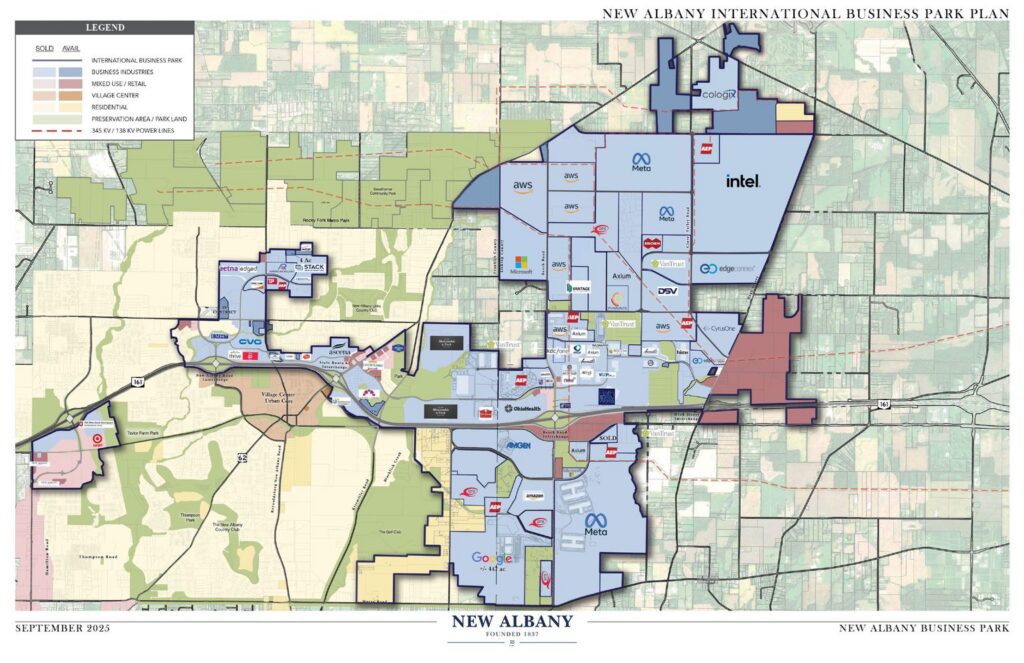
Some who spoke in opposition said they learned about the project only days before the Oct. 6 hearing and raised concerns about what they called a lack of communication with area residents. Some said they were shocked to learn about the proliferation of data centers in central Ohio and permit requests for so-called “behind-the-meter” gas-fired power plants to provide electricity exclusively to data centers.
Sandy Reed, a former New Albany science teacher and resident who now lives in Licking County’s Jersey Township, was the last to speak and said she hadn’t planned to do so.
“I came to learn,” and after a litany of detailed descriptions of specific environmental impacts, she said, “Holy smokes, did I.”
She said she fears for children in New Albany schools and in nearby parks, all a short distance from the power-plant sites. She said she moved to New Albany years ago because it was a well-planned community.
“It did such a good job,” Reed said. “What happened? Did we lose control?”
Alan Miller writes for TheReportingProject.org, the nonprofit news organization of Denison University’s Journalism program, which is supported by generous donations from readers. Sign up for The Reporting Project newsletter here.