

Why are there 49 data centers in Licking County? How will they impact the water? Why is there increased traffic near my home?
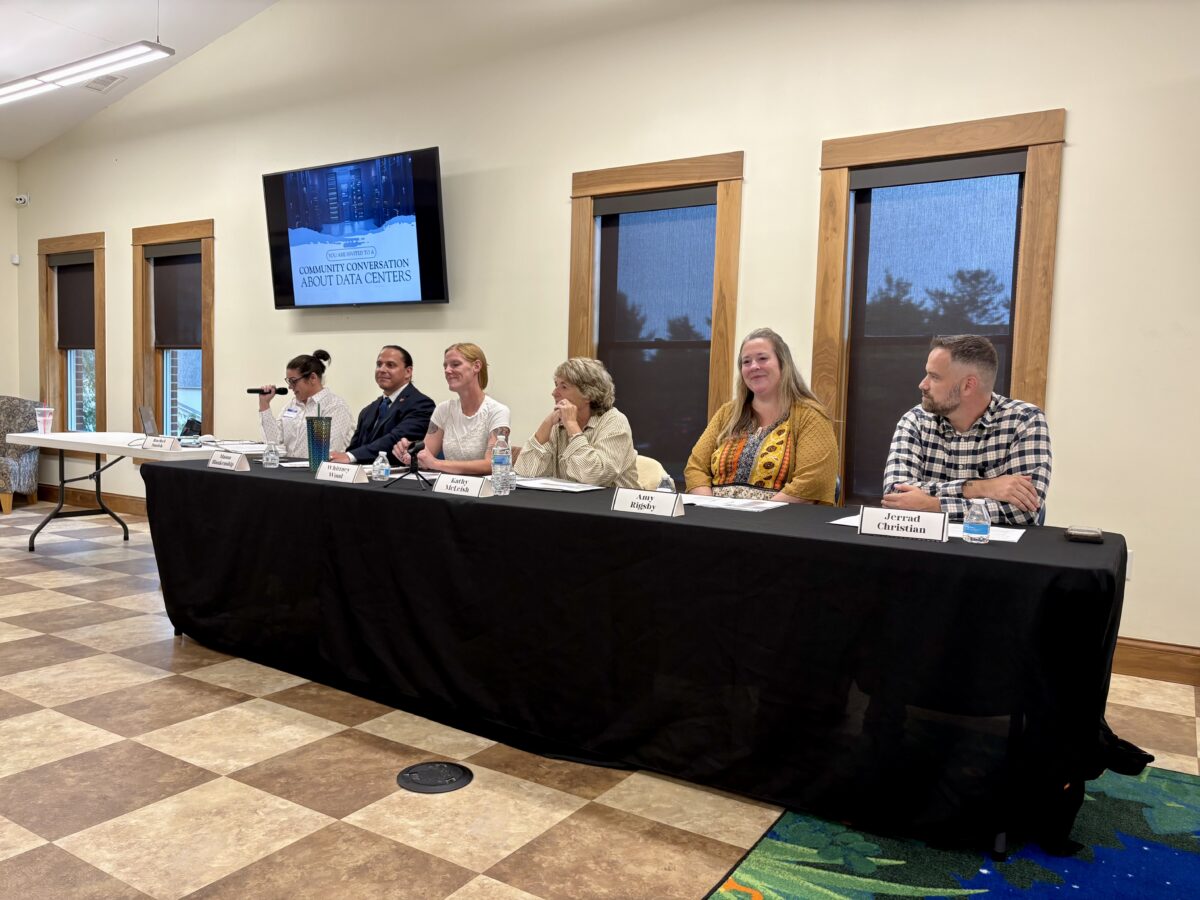
A panel of Democrats running for office in Licking County answered these questions and more during a Community Conversation about Data Centers held at the Mary E. Babcock Library in Johnstown on Thursday, Sept. 10.
The campaign for Mason Blankenship, who is running to represent District 68 in the Ohio House of Representatives, organized the event as part of a series of conversations focusing on the topics voters have said are important to them.
The panel consisted of Blankenship, alongside Whitney Wood, running for Ohio House of Representatives District 73; Kathy McLeish, candidate for Licking County commissioner; Amy Rigsby, running for Ohio House of Representatives District 69; and Jerrad Christian, running for U.S. House Ohio District 12.
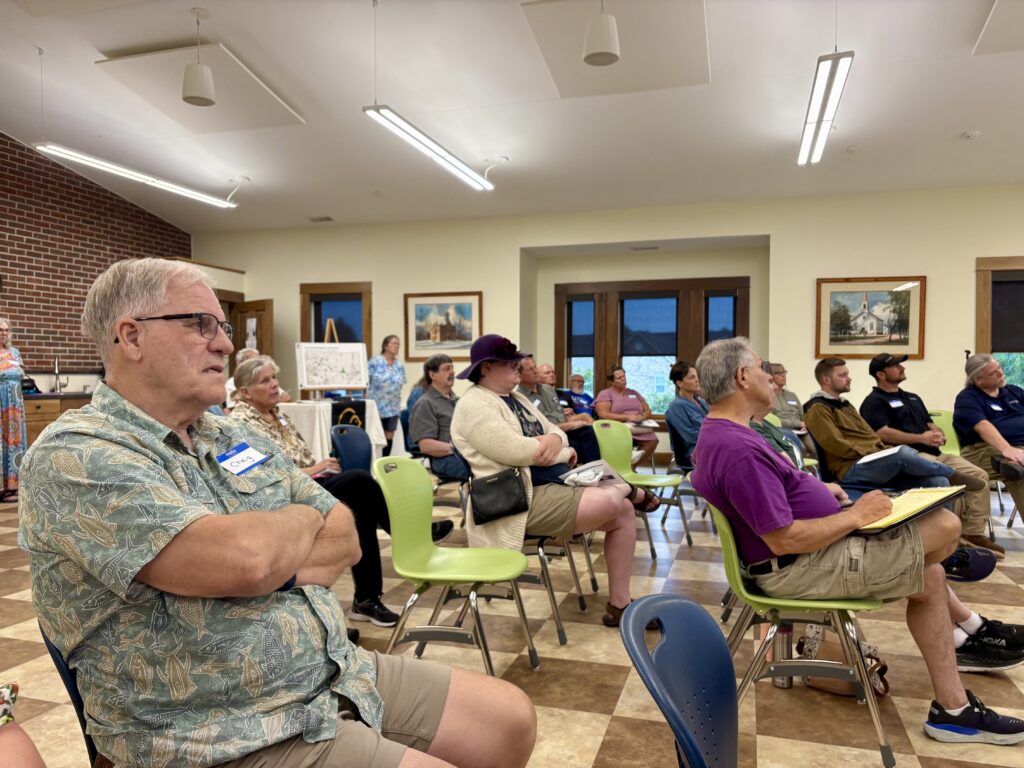
The conversation revolved around questions submitted by residents before the meeting. Although dozens of questions were submitted, a few prominent themes emerged. Here were the main topics, and the answers from the politicians on the panel:
Why are elected officials allowed to sign NDAs (Non Disclosure Agreements) with data center companies that allow plans for data centers to be made without community input?
“If we want to reinstill trust in our government, we aren’t going to start with NDAs,” Blankenship said. A focus of Blankenship’s campaign is transparency, he said, and NDAs make it difficult for a community to establish transparency. If elected, Blankenship said he would work to bar officials from signing NDAs on anything outside of proprietary information.
Christian said that more attention should be paid by citizens to their immediate local governments, and make sure they are going to meetings where conversations regarding data center planning are taking place.
“It does fall on us currently, but I think that our notification system is not robust enough,” Christian said.
If elected, how would you protect communities from air, water, and other types of pollution that could result from data centers?
“One of the ways that we protect ourselves from burning rivers like Ohio has had in the past is acknowledging that companies and factories and other things produce pollutants,” Christian said.
Christian is running against Republican incumbent Troy Balderson for Ohio’s 12th district seat in the U.S. House of Representatives. When asked how he would respond to President Donald Trump’s new EPA policy that says states will not have to provide public notice on air pollution permits, Christian said that if elected, he would fight executive overreach by reestablishing that Congress has the power to make laws.
Residents who live near Buckeye Lake who attended the discussion were concerned about how a data center near the community could affect the quality of the lake water. Rigsby said she is mainly concerned about the possibility of acid rain and how it could hurt wildlife in Buckeye Lake, as well as impact tourism in the Buckeye Lake region.
“I find this as an urgent issue,” Rigsby said.
McLeish, running for Licking County Commissioner against Republican Mark A. Van Buren and write-in candidate Brian Belcher, said that she thinks data centers should pay for the damage they may cause.
“I would propose that they have to clean up any mess that they make,” McLeish said. “They have to pay for the roads that they’re destroying. They have to pay an independent EPA to find out what the long-term damage is going to be.”
Rigsby said until the long-term impact and possible harms of data centers are known, she could not approve a data center coming into her community.
“I was talking to Jerrad (Christian) about possibly getting (Ohio University) and (Ohio State University) involved in doing some additional independent research studies, because I’m not going to okay any project that’s going to harm any of you,” Rigsby said.
Christian also raised concerns about health care, and that some could lose access to health care if they lose access to employment to artificial intelligence, and that is one reason he supports a single-payer health-care system.
“Your health care is often tied to your employment,” Christian said. “These data centers are going to implement software, AI systems, and large-language models that are ultimately going to take people’s jobs. There are a string of events that are going to cause a great many people who currently have stability to lose all of their stability.”
What kinds of benefits are data centers receiving, such as tax abatements? Who is responsible for making those decisions?
“I know that once the property is purchased, oftentimes where we can get involved is the zoning,” Rigsby said. “Because our Statehouse leaders have not done much of any regulations in this area, it’s left up to local areas. So you have to watch who’s buying the property and when it goes in front of the zoning board.”
Rigsby encouraged attendees to check the county auditor’s website to find out more information about who is purchasing land in their communities.
McLeish said that instead of data centers getting benefits, residents in the communities surrounding data centers should receive benefits for living near them, and that data centers should pay for those benefits.
“I think it could be a win-win in a lot of ways if they pay for the electricity, not just their monthly bill, but if they pay for the power grid that has to be run to do that, that’s a win-win for the whole community,” McLeish said. “But that can’t keep getting passed on to the consumer, and that’s what’s happening now.”
Who pays for data centers? Are they impacting my property taxes, electricity bills and traffic congestion? Will data centers create any jobs for locals?
Christian mentioned legislation called the Rate Payer Bill of Rights Act that is aimed at tackling this issue. Under this act, introduced to the U.S. The House of Representatives in late August, data centers using 50 megawatts of electricity or more, or at least 100,000 gallons per day, must cover project-driven costs.
“Personally, I don’t think that that’s good enough,” Christian said. “I don’t think that Ohioans or Licking County residents should pay a dime toward building a private facility for somebody else to make a buck. That’s not our responsibility to build your business for you.”
“My electric bill has also gone up significantly,” Wood said. “I see this happening around us, and the only logical answer to me is for these data centers to be responsible for all of their costs.”
Wood said she is alarmed that data centers could be passing off costs to consumers, and believes that some of the processes used to run data centers could be made more efficient. She said data centers should be on the hook for any damages made to the surrounding community.
“I would highly recommend that everyone that is concerned about these data centers and the effect on us and our environment and our children … that you research your local level officials, vote in November, get your friends and your family to register to vote and go vote as well,” Wood said.
When some residents voiced concerns about increased traffic near their homes, McLeish said residents should give their input on a website called Licking County Forward, which aims to create a growth plan informed by community input, including input on issues like traffic congestion.
“How many long-term jobs for locals? The number that I’ve come to recognize is somewhere between 20 and 50 jobs,” Blankenship said.
McLeish said that she knows electricians and building trades people who are benefitting from the construction of data centers, but they are still not creating as many jobs as she would have hoped.
If elected, what action would you take to take action to prevent data centers from coming into communities where residents don’t want them? How would you secure benefits for the community if they do want them?
“I think moratoriums are where we have to start,” Blankenship said. “I think first, what needs to happen is our legislative body needs to be more transparent with us.”
If companies proposing data centers are not willing to work with community members on a moratorium and meet community demands, Blankenship said he would petition for a ban on those data centers.
McLeish said the way to secure benefits from data centers is to ask for them. And if the companies and contractors are willing to agree, she said rules would need to be established.
“We just ask; that’s how we do it,” McLeish said. “If you ask and it’s not received well, then you start to put some rules in place, and then if that’s not received well, you say, ‘No, you can’t come here because we live here. This is our county.’”
Christian said that Ohio is a convenient place for data centers to settle in part because it offers many tax exemptions to attract business to the state.
“Ohio made itself a cheap place to be,” Christian said, and as a result, he said, Ohio has lost billions in potential tax revenue because of those exemptions.
Maddie Luebkert writes for TheReportingProject.org, the nonprofit news organization of Denison University’s Journalism program, which is supported by generous donations from readers. Sign up for The Reporting Project newsletter here.
Luebkert is one of two Kirtley Mather Fellows at The Reporting Project. The fellowship is created in memory of Kirtley Mather, Denison University Class of 1909, with the mission of providing unique opportunities for students to engage in service for the common good.